


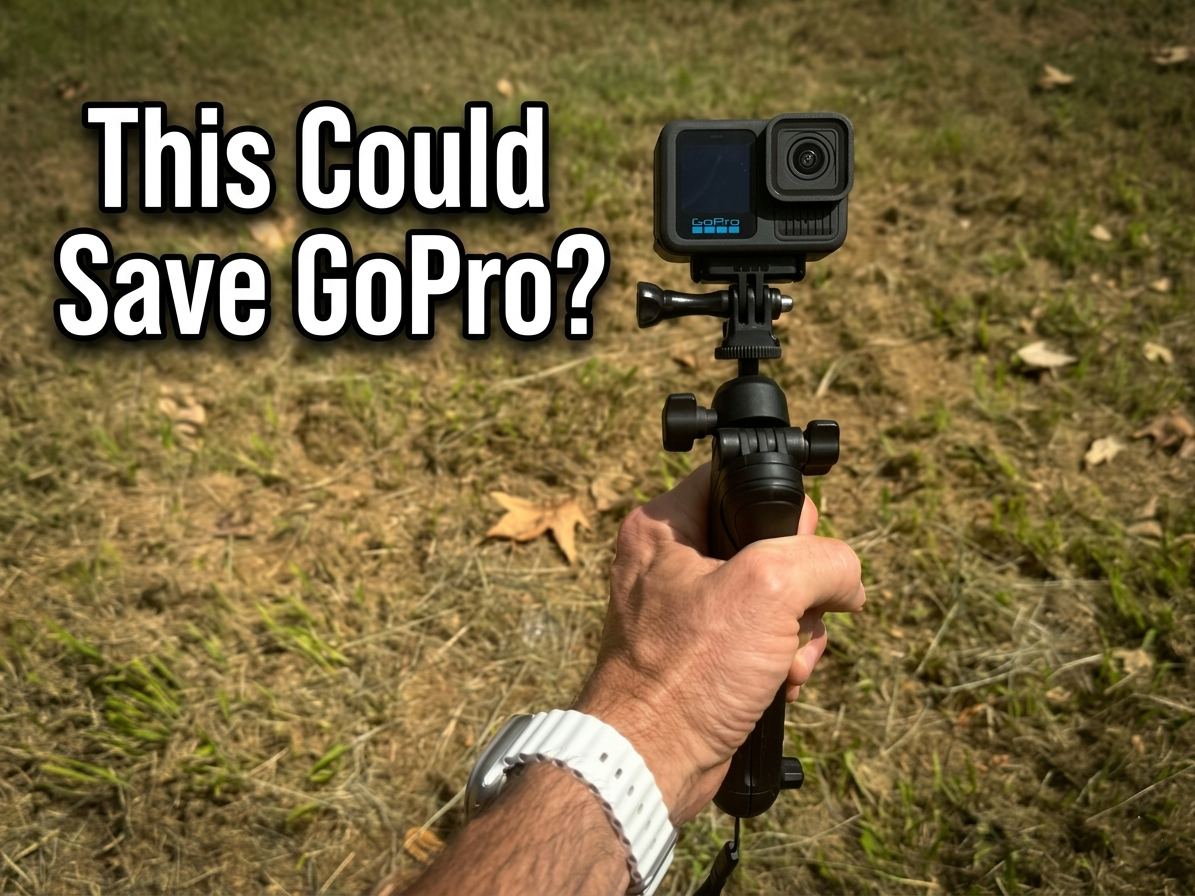
Quick Verdict: GoPro’s new camera system, powered by the GP3 5nm processor, will be officially revealed at NAB 2026 on April 19. The teasers show telephoto moon shots, cinematic underwater footage, and low-light performance unlike anything we have seen from GoPro before. Based on two decades of experience with this brand and a close study of both teaser videos, I believe GoPro is preparing to launch a 1-inch sensor camera with 8K capability and Bluetooth audio support. This is a make-or-break moment for the only American camera company in this space.
Last updated: April 2026 | 10 min read
In This Article
- Two Decades of GoPro: Why This Launch Matters to Me
- What We Know So Far: GP3 Specs at a Glance
- Breaking Down the Teaser Videos
- The 1-Inch Sensor Bet
- 8K and Beyond: Resolution and Frame Rate Predictions
- Thermal Performance: The Trust Issue GoPro Needs to Fix
- Bluetooth Audio: The Feature GoPro Needs
- The Moon Shot: Telephoto Capability Speculation
- The Only American Camera Company in This Fight
- GoPro vs. DJI vs. Insta360: Why GoPro Needs This Win
- Price Speculation: Why $600+ Is a Strong Buy
- Pros and Cons of What We Expect
- Final Verdict: Betting the Farm
- Frequently Asked Questions
Two Decades of GoPro: Why This GoPro New Camera Launch Matters to Me

I strapped my first GoPro to a Corvette roll cage in 2006. Back then, the footage was grainy, the audio was terrible, and you were lucky if the mount held through a full lap at Willow Springs. However, the promise was there. A tiny, rugged camera capturing moments no traditional camera body would survive. Twenty years later, I have watched GoPro evolve through every generation, from analog to digital, from potato-quality stills to 5.3K video, from standalone device to a full ecosystem of mods and accessories. It’s been a go to camera on my off-road adventures.
I have also watched this company struggle. Revenue dropped 19% to $652 million in 2025. Camera sales fell to 2 million units. On April 8, 2026, GoPro announced it would lay off 23% of its workforce, cutting 145 positions from its 631-person team. Therefore, when GoPro released two teaser videos for its upcoming GP3-powered cameras ahead of NAB 2026, we studied every frame. Because this is not a routine product refresh. This GoPro new camera launch is a survival move.
The NAB 2026 exhibit floor runs April 19 through 22 in Las Vegas, and GoPro will occupy Booth C5519. The company has confirmed it will debut multiple cameras, not a single model. CEO Nick Woodman stated the GP3 processor will enable GoPro “to enter the ultra-premium end of the imaging market.” For someone who has tracked this brand since the pre-HD era, those words carry weight. Specifically, they signal a fundamental shift in what a GoPro camera is designed to do.
After studying both teasers and cross-referencing everything GoPro has officially confirmed, I am ready to share my speculation. Some of these predictions are grounded in confirmed specs. Others are informed bets based on 20 years of watching this company operate. I will label each clearly so you know where fact ends and opinion begins.

What We Know So Far: GP3 Specs at a Glance
| Detail | Status |
|---|---|
| Processor | GP3: 5nm SoC with dedicated AI NPU (Confirmed) |
| Pixel Processing | 2X increase over GP2 (Confirmed) |
| Sensor Size | Larger sensors confirmed; specific size TBD (Confirmed larger, speculated 1-inch) |
| AI Features | Real-time scene recognition, subject detection, auto settings (Confirmed) |
| Low-Light Performance | “Market-leading” per GoPro (Confirmed claim) |
| Thermal Performance | “Bulletproof reliability in high heat” (Confirmed claim) |
| Number of Cameras | Multiple models: Hero 14, Max 3, Cinema Cam reported (Confirmed multiple) |
| NAB 2026 Reveal | April 19-22, Booth C5519, Las Vegas (Confirmed) |
| Availability | Q2 2026 (Confirmed) |
Breaking Down the GoPro New Camera Teaser Videos
GoPro released two teaser videos in March and early April 2026. My team and I have reviewed both multiple times. The footage is, in a word, stunning. More importantly, it raises questions about what kind of camera produced these images. Because this does not look like footage from a compact, rugged camera. Period.
The first teaser, under 30 seconds long, opens with backlit subjects and motion-heavy automotive shots. Notably, the low-light scenes show controlled highlights and detailed shadow areas with noise present but not aggressively smoothed. This suggests improved sensor sensitivity rather than software-based noise reduction, which typically smears fine detail. For comparison, the GoPro Hero 13 produced exceptional footage in well-lit conditions but struggled visibly once lighting conditions worsened.
The second teaser pushes further. Underwater footage of a diver shows the image holding together with bubble separation intact and background depth preserved. Slow-motion fire and rain sequences hint at higher frame rates. Meanwhile, the cinematic depth of field visible throughout both teasers points to a larger sensor than anything GoPro has previously shipped. Industry observers at Digital Camera World, T3, and PetaPixel all noted the same thing: this footage “doesn’t look like it was shot on an action camera.” Consequently, this GoPro new camera system raises the bar for what a compact body produces.
The 1-Inch Sensor Bet: My GoPro GP3 Prediction
Here is where I move from confirmed facts to informed speculation. If I were a betting person, I would bet this new GoPro camera ships with a 1-inch sensor. The evidence lines up.
First, GoPro officially confirmed “larger sensors” in its NAB 2026 announcement. Second, the teaser footage displays shallow depth of field and bokeh, which is something you do not get from the small sensors in current GoPro models. Third, the competitive landscape demands it. DJI’s Osmo Action 6 already packs a 1.1-inch sensor. Insta360’s X5 uses a 1/1.28-inch sensor. GoPro needs to match or exceed these specs to compete in the premium segment Woodman referenced.
Additionally, GoPro stated the GP3 delivers “more than double the pixel processing” of GP2. A larger sensor producing higher-resolution files requires exactly this kind of processing headroom. The 5nm fabrication process and dedicated AI NPU support this theory, since processing data from a 1-inch sensor at high frame rates demands efficient, powerful silicon. Consequently, the hardware announcements and the visual evidence from the teasers point toward the same conclusion.
8K and Beyond: Resolution and Frame Rate Predictions
The resolution of the underwater diver scene stopped me mid-frame. The detail is exceptional, with individual bubbles maintaining separation, texture visible on the wetsuit, and the reef background rendered with depth and clarity. Based on the visible detail and the confirmed 2X pixel processing increase, I would speculate 8K at 30 frames per second as a minimum. An 8K/60fps mode would not surprise me either, considering the GP3’s 5nm architecture and dedicated processing cores.
For context, DJI’s Osmo Action 6 already shoots 8K at 30fps. If GoPro delivers 8K at 60fps in the new camera, it immediately leapfrogs the competition in raw resolution and slow-motion capability at the highest quality tier. The GP3’s thermal management improvements, described by GoPro as delivering “industry-leading runtimes in the most demanding environmental conditions,” suggest the company has solved the overheating problem at higher resolutions. Overheating has historically been one of the biggest barriers to sustained 8K recording in compact form factors.
Beyond resolution, the slow-motion fire and rain sequences in the teasers suggest a high frame rate mode at lower resolutions. A 4K/240fps mode, for instance, would give content creators the slow-motion tools currently reserved for dedicated cinema cameras. GoPro’s emphasis on the GP3’s pixel processing power supports this possibility.
Thermal Performance: The Trust Issue GoPro Needs to Fix

Anyone who has owned a GoPro over the years knows the thermal problem firsthand. You are shooting in direct sun, pushing 4K at high frame rates, and the camera shuts itself down to cool off. I have experienced it during desert rides, extended time-lapses, and long-duration video sessions in summer heat. It is one of the most common complaints in the GoPro community, and it has eroded consumer confidence over multiple product generations.
If my speculation about a 1-inch sensor and 8K recording is correct, GoPro has no choice but to solve this problem with the GP3 lineup. Pushing more pixels through a compact body generates more heat. Higher resolutions demand more sustained processing power. Running 8K at 30 or 60 frames per second through a compact body without reliable thermal management would be a dealbreaker for the professional and cinematic audience GoPro is targeting at NAB. You do not sell a $500+ camera to filmmakers and then ask them to pause recording every 15 minutes while the body cools down.
GoPro seems aware of this. CEO Woodman specifically listed “bulletproof reliability in high heat conditions” and “longer runtimes” among the priorities for the GoPro new camera system. The company’s official GP3 announcement claims “industry-leading runtimes in the most demanding environmental conditions.” The 5nm fabrication process of the GP3 chip provides better power efficiency per transistor than older process nodes, though denser transistor packing introduces its own thermal challenges. The real engineering test will be sustained recording duration at maximum resolution in real-world heat. If GoPro delivers a camera body with genuinely improved thermal endurance, it addresses one of the longest-running pain points in their product line and rebuilds trust with users who have dealt with overheating shutdowns across past models.
Bluetooth Audio: The GoPro New Camera Feature Creators Need
This is a feature I have personally wanted from GoPro for years. Current GoPro models include Bluetooth connectivity for phone pairing and remote control. However, the cameras have never supported Bluetooth audio input for external microphones.
On the premise of GoPro going big, and this company needs to go big right now, I would bet the GoPro new camera lineup includes Bluetooth audio capability. Running external wireless microphones directly to the camera body without cables or adapters would solve one of the longest-standing pain points in the GoPro ecosystem. Creators currently rely on separate audio recorders or wired connections, which add bulk and failure points in action environments.
CEO Woodman specifically mentioned “improved audio capabilities” as a customer priority in his investor communications. Combined with the professional positioning of these new cameras and the shift toward cinematic content creation, Bluetooth audio feels less like a wishlist item and more like a requirement. Period.
The Moon Shot: Telephoto Capability Speculation

Here is the detail from the teasers nobody expected. One of the scenes in the first teaser shows a crisp, detailed shot of the moon. Online analysis of the frame suggests the focal length is approximately 1,000mm equivalent or greater. For a company built on ultra-wide footage, a telephoto moon shot is therefore an extraordinary departure.
This single frame has me speculating about something different from any compact camera I have seen. It looks crisp. The detail is stunning, and it piques serious curiosity about what GoPro has planned. A telephoto or zoom lens capability, whether built-in or modular, would transform the GoPro platform from a one-trick wide-angle device into a versatile imaging system.
GoPro’s Hero 13 introduced the HB-series modular lens system with ultra-wide, anamorphic, and macro options. Expanding into telephoto territory through a similar modular approach would be a logical next step. Alternatively, GoPro’s Cinema Cam model, reported as part of the multi-camera GP3 lineup, might feature an interchangeable lens mount entirely. Either way, the moon footage signals ambition beyond compact cameras. This GoPro new camera system appears designed to compete with traditional imaging tools, not pocket-sized rivals.
The Only American Camera Company in This Fight
Beyond specs and teasers, there is a competitive angle most tech coverage ignores. GoPro is the only major American-based camera company competing in this segment. DJI is headquartered in Shenzhen, China. Insta360 is based in Shenzhen as well. Every significant competitor in this space operates out of China.
When you factor in the current trade environment, this distinction carries real weight. GoPro is among more than 1,000 companies challenging tariff policies through legal action. DJI faces an FCC ban on new product authorizations in the United States, effective December 2025, and tariffs up to 145% on Chinese electronics imports compound the pressure. Previously approved DJI models remain available, but the regulatory and trade landscape makes purchasing new Chinese-made camera equipment increasingly complicated for American consumers.
GoPro does not manufacture domestically. Its cameras are assembled in China and Mexico through contract manufacturers. However, GoPro’s American headquarters, US-based engineering team, domestic customer support, and warranty infrastructure give it a structural advantage over fully Chinese-owned competitors in this trade environment. For retailers, content creators, and professional production houses making purchasing decisions in 2026, buying from an American-headquartered company with stateside support matters more than it did five years ago. Notably, this advantage strengthens if trade tensions escalate further.
GoPro GP3 vs. DJI vs. Insta360: Why GoPro Needs This Win
GoPro’s competitive position has eroded significantly over the past three years. DJI’s Osmo Action 6 now features 8K resolution with a 1.1-inch sensor and up to 4 hours of runtime in optimal conditions. Insta360’s product line has expanded aggressively, with the company reporting a 90% jump in sales while GoPro’s revenue declined. In February 2026, the ITC ruled Insta360 did not infringe five of GoPro’s utility patents on stabilization, horizon leveling, and distortion correction, though GoPro did win on design patent claims.
These are not abstract competitive pressures. GoPro’s 2025 revenue of $652 million represents a 19% year-over-year decline, and sell-through fell approximately 20%. The company projects $750 to $800 million in 2026 revenue, a target built almost entirely on the success of the GP3 camera lineup. Simultaneously, the 23% workforce reduction signals a company restructuring around a smaller, more focused operation. The GoPro GP3 launch at GoPro NAB 2026 is the centerpiece of this strategy.
However, these teasers suggest GoPro is not trying to out-spec the competition at the same game. Instead, the cinematic footage, the telephoto capability, and the larger sensor all point toward a GoPro new camera system designed to transcend the compact camera category entirely. Choosing NAB for the reveal, a broadcast and cinema industry event rather than a consumer electronics show, reinforces this professional positioning. If GoPro succeeds, it stops competing with $300 compact cameras and starts competing in a higher-margin imaging market where its brand carries more authority.
Price Speculation: Why $600+ Is a Strong Buy for the GoPro New Camera

Nobody has confirmed pricing yet, and I expect sticker shock when GoPro announces it. Memory prices are surging globally in 2026, and component costs for 1-inch sensors, 5nm processors, and high-bandwidth storage are all climbing. Factor in a larger sensor, 8K-capable pipeline, Bluetooth audio hardware, and improved thermal engineering, and the bill of materials for this camera sits well above any previous GoPro. I would not be surprised to see the flagship model cross $600.
Here is the thing: at $600 or more, this is still a strong buy if the specs land where I expect. Consider what you get for the money. A 1-inch sensor camera with 8K resolution, Bluetooth microphone support, strong low-light capability, and reliable thermal performance in a rugged, waterproof body. No mirrorless camera at twice the price gives you waterproofing and action-ready durability. Meanwhile, no competing action camera delivers this combination of sensor size, resolution, and professional audio connectivity in a single package.
Woodman’s “ultra-premium imaging market” language supports this price range. GoPro is positioning these cameras against cinema and professional tools, not $299 consumer devices. For content creators, filmmakers, and adventure photographers who currently carry both a GoPro and a separate camera for cinematic work, a $600 device replacing both is a net savings. The teaser footage suggests a camera with enough versatility to serve as a primary shooting tool, not a secondary angle. At this price point, GoPro stops competing on cost and starts competing on capability. Period.
Pros and Cons of What We Expect
Pros (Based on Confirmed and Speculated Info)
- GP3 processor delivers 2X pixel processing over GP2, confirmed by GoPro
- 5nm fabrication with dedicated AI NPU for real-time scene recognition
- Larger sensor confirmed, with teaser footage suggesting 1-inch or larger
- Multiple camera models (Hero 14, Max 3, Cinema Cam) serve different segments
- Cinematic depth of field and low-light quality visible in official teasers
- American company with domestic support, advantaged in current trade climate
- NAB 2026 debut signals professional-grade ambitions beyond action cameras
- Thermal improvements for sustained recording in demanding conditions
- At $600+, strong value if specs deliver: replaces both action camera and secondary cinema body
Cons (Risks and Concerns)
- 23% workforce reduction raises questions about long-term R&D capacity
- 2025 revenue declined 19% to $652 million, with sell-through down 20%
- Lost on 5 utility patent claims against Insta360 at the ITC, though won on design patents
- Entering the “ultra-premium imaging market” puts GoPro against Sony, Canon, and DJI simultaneously
- Teaser footage is curated; real-world performance remains unverified until hands-on reviews
Final Verdict: I Am Betting the Farm on GoPro
I have used GoPro cameras for 20 years, watching this company innovate, stumble, recover, and reinvent itself through multiple product generations. The GP3 teasers represent the most ambitious footage GoPro has ever released. Cinematic quality, the telephoto moon shot, underwater clarity, and low-light performance all point toward a GoPro new camera system designed to compete far beyond compact cameras.
The risks are real. A company cutting 23% of its workforce while projecting a revenue rebound is operating with minimal margin for error. If the GP3 cameras underdeliver on the promise these teasers set up, GoPro faces an existential credibility problem. Additionally, competing against DJI’s 8K Osmo Action 6 and Insta360’s rapidly growing product line requires GoPro to ship something genuinely superior, not incrementally better.
Still, the confirmed specs inspire confidence. A 5nm processor with AI-driven scene recognition, larger sensors, improved thermal management, and multiple camera models designed for different segments represent a coherent product strategy. Choosing GoPro NAB 2026 for the launch, ahead of the summer buying season, is a smart timing move. Woodman’s “ultra-premium imaging market” language tells you where GoPro sees its future, and it is not in the $299 price war.
My speculation: 1-inch sensor. 8K resolution at 30fps minimum, possibly 60fps. Bluetooth audio support. Telephoto capability through a new modular lens system or dedicated Cinema Cam model. If GoPro delivers on even 75% of this wish list, the GoPro new camera lineup will be the most significant product launch in the company’s history. As someone who has been with this brand since the Corvette racing days of 2006, I am watching NAB on April 19 with tremendous optimism. GoPro needs to go big. Based on everything I have seen, GoPro is going big. Period.
Frequently Asked Questions
When is the new GoPro camera coming out?
Mark your calendar for April 19. GoPro will reveal its GP3-powered camera lineup at NAB 2026 in Las Vegas, with confirmed Q2 2026 retail availability. Retail units should ship between April and June 2026. Notably, this breaks from GoPro’s traditional September launch window, putting new cameras in your hands before summer.
What processor does the new GoPro use?
The GP3 is a custom 5-nanometer System-on-a-Chip with more than 2X the pixel processing power of its GP2 predecessor. It also includes a dedicated AI Neural Processing Unit for real-time scene recognition, subject detection, and automatic settings adjustment. GoPro designed and owns this processor exclusively, which gives them full control over the imaging pipeline.
How does the new GoPro compare to DJI and Insta360?
Short answer: GoPro appears to be swinging for a higher market tier entirely. DJI’s Osmo Action 6 features a 1.1-inch sensor and 8K/30fps recording. Insta360’s X5 uses a 1/1.28-inch sensor. GoPro has confirmed larger sensors and “market-leading low-light performance” for its GoPro new camera lineup, suggesting comparable or superior hardware. However, the real differentiator is positioning: GoPro is targeting cinematic and professional creators, not competing head-to-head on spec sheets alone.
Will the new GoPro have a larger sensor?
Confirmed. GoPro officially stated its new GP3-powered cameras feature “larger sensors.” They have not specified exact dimensions. However, the teaser footage showing shallow depth of field and cinematic bokeh strongly suggests a 1-inch sensor or larger. For context, DJI’s Osmo Action 6 runs a 1.1-inch sensor and Insta360’s X5 uses a 1/1.28-inch chip.
Is GoPro still an American company?
Yes, and it is the only major one left in this segment. GoPro operates out of San Mateo, California. DJI and Insta360 are both headquartered in Shenzhen, China. With tariffs affecting electronics imports and DJI facing an FCC ban on new product authorizations, GoPro’s domestic status provides a purchasing advantage for American consumers and retailers.
What will the new GoPro camera cost?
No official pricing yet, but expect higher price points than any previous GoPro. With memory costs surging, a 1-inch sensor, 5nm processor, and 8K pipeline, I would speculate $600 or more for the flagship model. CEO Woodman’s “ultra-premium imaging market” language supports premium pricing. For what you get, a rugged, waterproof body with cinematic specs, this represents strong value compared to mirrorless alternatives at twice the cost. Official GoPro new camera pricing drops at GoPro NAB 2026 on April 19.

