


Quick Facts on Intentional Camera Movement:
- Topic: Intentional camera movement (ICM)
- Gear needed: Any camera with a slow shutter
- Helpful extras: ND filter and a tripod
- Skill level: Beginner friendly
- Starting shutter: About 1/2 second
- Cost: Free to try with gear you own
- Best for: Shooters who want abstract, painterly images
6 min read
In This Article
Intentional Camera Movement Overview
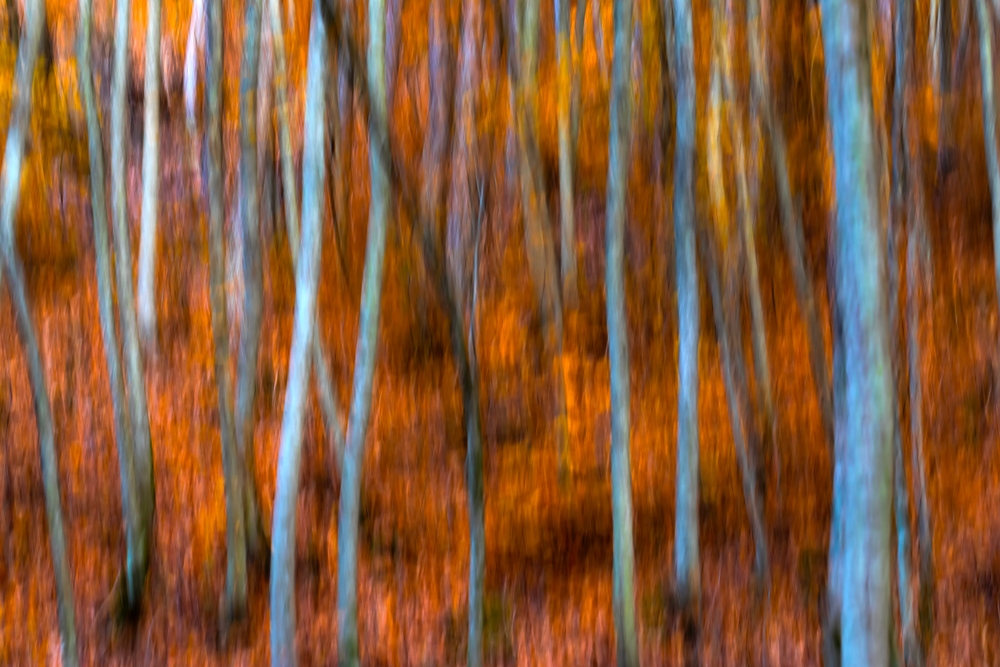
Intentional camera movement turns a plain scene into an abstract, painterly image. Instead of holding the camera still, you move it on purpose during a slow exposure. The result trades sharp detail for color, shape, and mood, so a row of trees becomes a soft wash of green.

Photographers love this technique because it needs no new gear and rewards experiments. You work with light, motion, and timing rather than megapixels. As a result, ICM feels closer to painting than to traditional sharp-focus photography, and it fits perfectly among other creative photography projects to try.
This guide covers the settings, five movements, and the subjects best suited to ICM. You will also learn how to raise your keeper rate, since blur is unpredictable by nature. Grab any camera with a slow shutter, and you are ready to start.
What Is Intentional Camera Movement?
Intentional camera movement, or ICM, is the deliberate motion of your camera during a longer exposure. The shutter stays open while you pan, twist, or zoom, so the sensor records a moving scene as streaks of tone. A photo built this way looks like a painterly blur rather than a frozen moment.
The key word is deliberate. Accidental blur from a shaky hand looks like a mistake, while a controlled sweep looks like a choice. Because you guide the direction and speed, you shape the final abstract instead of leaving it to chance.
The technique is not new, and film photographers explored it for decades. Digital cameras simply made it easier, since you review each sweep instantly and adjust. This instant feedback turns a slow learning curve into an afternoon of play.
Here is the core idea: the camera moves, not only the subject. ICM photography pairs well with long exposure work you already know, so anyone who enjoys silky water and streaking clouds will feel at home. Once you see how far the look ranges, from soft pastels to bold swirls, you will want to try it yourself. The Nature TTL guide to ICM collects strong examples worth studying.
Camera Settings for ICM
Good settings give you a shutter slow enough to record motion without a blown-out frame. Start in Shutter Priority or Manual, then work from the table below. Adjust as the light changes, because a bright beach needs different numbers than a shaded forest.
| Setting | Starting Point |
|---|---|
| Mode | Shutter Priority or Manual |
| Shutter speed | Start near 1/2 sec; explore 1/10 to 2 sec |
| ISO | 100 (lowest native) |
| Aperture | f/11 to f/22 |
| Focus | Manual, pre-focused on the subject |
| Drive mode | Continuous burst |
| Filter | ND filter in bright light |
In daylight, a low ISO and small aperture often will not slow the shutter enough. Therefore an ND filter becomes the tool for the look, exactly as it does for long-exposure landscape techniques. For deeper settings context, our guide to landscape camera settings covers aperture and ISO in detail.
Slow The Shutter
A Variable ND Filter Unlocks Daylight ICM
A variable ND filter darkens the scene by several stops, so you reach half-second shutters even at midday. Pick the size to match your lens thread.
5 ICM Movements to Try

Each movement produces a different abstract, so learn them one at a time. Practice a single motion for a whole session before you combine ideas. Below are five reliable starting points, from simple pans to a radial zoom burst. One rule applies to every move: begin the motion a moment before the shutter opens, and keep going until it closes, so the whole exposure records movement.
1. Vertical Pan
Slide the camera straight up or down as the shutter fires. Vertical strokes suit tall subjects like forests, reeds, and waterfalls, and they read as elegant streaks of color. Keep the motion smooth and even for the cleanest lines.
2. Horizontal Pan
A sideways sweep stretches a scene into calm horizontal bands. Seascapes, horizons, and city skylines respond best, since their strong flat lines survive the motion. Match your speed to the width of the subject for balance.
3. Rotation and Twist
Rotation spins the frame around the lens axis. A small twist bends straight lines into gentle curves, while a bigger turn whips them into a swirl. Flowers, foliage, and fairground lights gain real energy from it.
4. Zoom Burst
Turn the zoom ring while the shutter is open for an explosive radial effect. A zoom burst pulls the scene outward from the center, so bright points become streaks racing to the edges. Try it on city lights, holiday displays, and dense forests.
5. Arc and Figure-Eight
Trace a curved arc or a loose figure-eight for a more organic look. These free-form paths break the grid and give the image a hand-painted feel. Start slow, then let your wrist relax into the motion over several frames.

Steady Your Sweeps
A Light Tripod for Controlled ICM
A travel tripod gives you clean vertical and horizontal pans, plus a stable base for slower multi-second sweeps. This carbon model weighs only two pounds.
The Best Subjects for ICM
Strong ICM subjects share bold color, clear shapes, or bright points of light. Forests top the list, since vertical trunks turn into painterly streaks with a single upward sweep. Autumn foliage works even better, because the warm palette survives the blur.
Water and skies also reward the technique. A horizontal pan across the sea blends waves into smooth ribbons, while sunset clouds melt into color fields. City lights at night make superb zoom burst targets, as each bulb draws a glowing line.
Look for contrast between a subject and its background too. A pale birch against dark woods, or a red bloom in green grass, keeps the abstract readable. Without an anchor, an image risks turning into a muddy smear rather than a painterly blur.
How to Get More Keepers

ICM is a numbers game, so shoot many frames and expect to delete most. A burst of ten sweeps often yields one or two strong images, and this ratio is normal. Because each pass differs slightly, volume gives the good frames a chance to appear.
Vary one thing at a time as you work. Change your shutter speed, then your movement speed, then the direction, and watch how each shift alters the mood. Reviewing shots on the spot teaches your hands the timing faster than any chart.
Keep the editing light once you find a winner. A small lift in contrast and a gentle color boost usually finish the image, since the motion already did the creative work. Save your favorite settings, and your next ICM photography session starts quicker.
Once single movements feel natural, blend two ideas for fresh looks. A short twist at the end of a vertical pan adds a gentle hook, while a brief pause mid-sweep leaves one area sharper. These small combinations build a personal style over time.
Common Mistakes to Avoid
The first mistake is moving too fast. A quick jerk smears everything into gray mush, so slow your sweep until shapes survive. Aim for a calm, controlled glide across the whole exposure.
A second trap is a shutter speed left too quick. At 1/60 second, motion barely registers, and the frame looks like an accident. Drop to 1/2 second or slower, and the streaks gain real purpose.
Finally, avoid busy scenes with no clear anchor. Ten competing colors blur into sludge, while one strong shape holds the eye. Simplify the frame first, then move the camera, and your results improve at once.
Frequently Asked Questions

What is intentional camera movement?
It is a technique where you move the camera on purpose during a slow exposure. Panning, twisting, or zooming while the shutter is open turns the scene into abstract color and tone instead of a sharp photo.
What shutter speed is best for ICM?
Start near 1/2 second, then explore a range of 1/10 to 2 seconds. Faster speeds keep more shape, while slower speeds smear the scene into a painterly blur, so let the subject and light guide your choice.
Do you need an ND filter for ICM?
In bright daylight, yes, an ND filter helps a lot. Even at ISO 100 and f/22, midday light is often too strong for a slow shutter, so a variable ND filter darkens the scene enough to reach the speeds you want.
What subjects work best for ICM?
Forests, autumn foliage, water, sunset skies, flower fields, and city lights all shine. Look for bold color, clear vertical or horizontal shapes, and a bit of contrast so the finished abstract stays readable.
Should image stabilization be on or off for ICM?
Try both and compare. Some shooters turn stabilization off so it never fights their deliberate motion, while others leave it on for smoother pans. Your camera and your movement style decide the winner.
Do you need a tripod for intentional camera movement?
No, handheld work gives organic motion and is a fine way to start. A tripod helps for clean, repeatable vertical and horizontal pans, and it steadies longer multi-second sweeps.

