


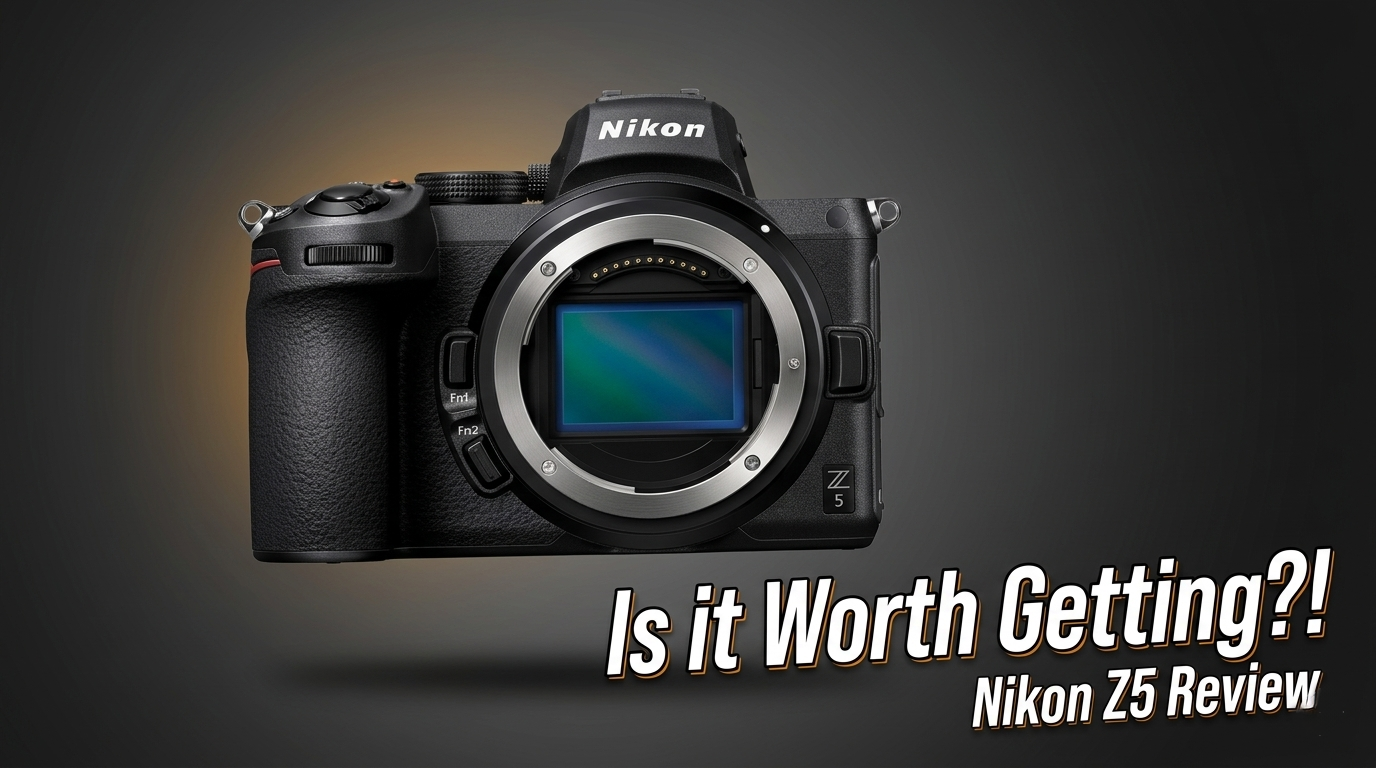
Quick Verdict: This Nikon Z5 review 2026 evaluates an affordable full frame mirrorless option worth considering as an entry-point camera, especially as prices have dropped and competitors consolidated. At $1,000-$1,600, the Z5 delivers a 24.3MP sensor, solid autofocus performance, and access to Nikon’s growing Z-mount lens ecosystem. However, this full frame mirrorless review notes limited video capabilities and slower burst speeds than competitors mean you’ll want to look elsewhere if 4K video or high-speed action are core requirements.
Last updated: April 2026 | 12 min read
In This Review
Nikon Z5 Overview: The Affordable Entry Point
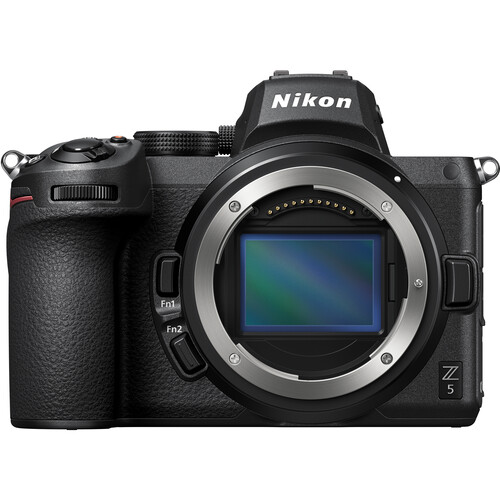
The Nikon Z5 review 2026 begins with a simple truth: this full-frame mirrorless camera remains Nikon’s most accessible gateway into Z-mount photography. Since its 2020 launch, the Z5 has maintained consistent specs while gaining value as new Z-mount lenses proliferated and the secondhand market matured. By 2026, used Z5 bodies start around $650, while new units retail at $1,000-$1,600. At these prices, the Z5 competes on both affordability and practical capability for landscape photographers, travel shooters, and enthusiasts upgrading from entry-level DSLRs.
My 17 years shooting Nikon, including the Z7 as my final Nikon body, gives me perspective on where this camera fits. The Z7 I owned shared identical body design and ergonomics with the Z5. The grip feel and button placement are the same, which means the Z5 punches well above its price class in handling. Notably, this is not a stripped-down camera; instead, it feels like a proper professional body with costs stripped down.
The Z5 created an entirely new price category. Before its arrival, full-frame Nikon mirrorless started at the Z6 ($1,995). Subsequently, the Z5 dropped the entry barrier to $1,296, making full-frame photography accessible to photographers who would otherwise settle for a DSLR like the D780 or D850. By 2026, this value proposition has strengthened further, especially as newer Z models (Z6 III, Z8) have pushed higher-end pricing upward.
Your decision between the Z5 and competing models ultimately depends on three core questions. First, is landscape or travel your primary photographic work? Second, does 1080p video satisfy your needs or does your work require 4K? Third, do you prioritize autofocus speed over affordability? If you answer yes, yes, and no respectively, the Z5 warrants serious consideration for your needs.
Key Specs at a Glance
| Specification | Details |
|---|---|
| Sensor | 24.3MP full-frame CMOS |
| Processor | EXPEED 6 |
| AF System | 273 focus points (hybrid phase-detect and contrast) |
| Autofocus Speed | 0.15 seconds in optimal light |
| Burst Rate | 4.5 fps (mechanical shutter), 5.5 fps (electronic) |
| ISO Range | 100-25,600 (expandable to 51,200) |
| Shutter Speeds | 1/8000 – 30 seconds, bulb |
| Video | 4K at 30fps, 1080p at 60fps |
| Battery Life | 330 shots (standard), 420 shots (best conditions) |
| Weight | 738g (body only), 840g (with battery and card) |
| Price (2026) | $1,000-$1,600 new; $650-$900 used |
Featured on MPB
Used Nikon Z5 Bodies from $650
MPB rates every used camera body on a 6-point condition scale. Free shipping, 6-month warranty included. Trade in your old DSLR toward a Z5 purchase.
Build Quality and Handling

The Z5 features a magnesium alloy chassis paired with a textured rubber grip, delivering substantial feel in your hand despite weighing only 738 grams. The body maintains the same ergonomic design language as the Z7, with buttons positioned intuitively so you’ll locate them without looking after a few hours of shooting. For example, the ISO dial sits on top, the shutter release is naturally positioned, and the AF/MF toggle switch occupies its expected location.
Weather sealing exists but remains limited. Nikon rates the Z5 as splash-resistant rather than fully weather-sealed, meaning it tolerates light rain and desert dust better than entry-level DSLRs but will not withstand professional use in harsh conditions. For travel and landscape photography, this protection proves adequate. However, if professional outdoor work in storm conditions is essential, the Z6 II or higher would be preferable.
One practical advantage emerges when comparing the Z5 to used DSLRs at similar prices. A used D850 or D780 costs roughly the same amount, yet both represent older systems with aging autofocus performance. The Z5, by contrast, delivers a newer AF system, more compact form factor, and access to a lens mount Nikon is actively developing. Additionally, the mirror-free design ensures faster sensor readout and superior live-view performance compared to any DSLR option.
Autofocus and Performance
The Z5 employs Nikon’s hybrid autofocus system, blending 273 phase-detect points with contrast-detect refinement. Autofocus acquires lock in approximately 0.15 seconds under good lighting, which is respectable if not exceptional compared to the Z6 II (0.1 seconds) or newer mirrorless models employing current processors. For landscape work and deliberate travel photography, this speed proves entirely adequate. However, when tracking fast-moving subjects, you’ll notice lag with autofocus performance.
Eye-detect autofocus functions reliably on static portraits, yet lacks tracking capability newer Z models provide. Subject tracking for animals or vehicles operates clumsily by modern standards, requiring you to assist the system in maintaining focus during motion. If wildlife or sports photography represents your primary objective, the Z5 will disappoint you. In contrast, landscapes, architecture, and travel portraiture receive solid AF performance from this system.
Burst performance peaks at 5.5 fps in electronic shutter mode. Specifically, the Z5 sustains this rate until your buffer fills with roughly 20-25 raw frames before slowing. This rate suffices for landscape work and relaxed travel shooting, though it falls short for sports or wildlife photography where sustained 10+ fps performance becomes essential.
Battery Life and Ergonomics

Battery life represents the Z5’s most surprising strength. Nikon rates the camera at 330 shots per charge under controlled laboratory conditions. In actual field use, particularly when you disable live view and use the optical viewfinder, you routinely exceed 400 shots. Traveling through Norway or Switzerland for two weeks requires only two additional batteries with the Z5. The EN-EL15c battery is common throughout Nikon’s lineup, making spares inexpensive and widely accessible.
The camera uses Nikon’s Z5 Mount, an L-shaped bayonet design accommodating most FX-format Z lenses (Z6, Z7, Z8, Z9). Since 2026, Nikon has released over 20 native Z lenses, so the ecosystem constraint present in 2020 has largely disappeared. You now have legitimate choices in landscape (Z 15-35mm f/2.8), standard (Z 24-70mm f/2.8 or f/4), and travel (Z 24-200mm) optics.
The camera features a single card slot accepting XQD and CFast cards. Although this represents an older standard, used cards remain inexpensive, and if you already own XQD media from a Nikon D5 or D850, it’s repurposable with the Z5. Modern mirrorless cameras employ CFexpress or SD UHS-II instead, making the Z5’s card slot feel dated despite working perfectly adequately for this camera’s intended use.
Video and the Z5’s Trade-Offs
Video represents where the Z5 makes its biggest compromise. This camera records 4K UHD (3840×2160) at 30fps maximum, with no 60fps 4K option available. For 1080p, you receive up to 60fps with full autofocus capability. Codec options remain limited, specifically H.264 only with no H.265 support, and the camera lacks an external microphone jack, restricting audio input to the internal microphone. These gaps explain why I left Nikon for Canon’s R5 in 2020. I needed stronger video specifications, and the Z5’s video limitations mirror the same gap I experienced with the Z7.
If video serves a secondary role, such as occasional clips for a travel blog or family recording, the Z5 suffices admirably. For serious hybrid work where you shoot video regularly, the Z5 forces you to either accept lower-resolution output or purchase a second body. The Z6 II adds 60fps 4K and a microphone input, establishing it as the minimum threshold for hybrid shooters. Similarly, the Z9 and Z8 provide even more capabilities, including 8K recording.
Z5 vs. Z6 II: Which Should You Choose?
In our Nikon Z5 review 2026 comparison, the Z6 II costs approximately $1,200-$1,400 more than the Z5, making direct Z5 vs Z6 comparison justified only if you’re budget-conscious and the price difference holds significance. If you afford the Z6 II, buy it instead. The 24MP sensor matches the Z5 identically, but the Z6 II adds 60fps 4K video, faster burst rates (11 fps), improved autofocus performance, and superior low-light AF capability. Additionally, the Z6 II prices $300-$500 cheaper on the secondhand market compared to the used Z5, further narrowing the value gap by 2026.
The Nikon Z5 review 2026 shows the case for choosing the Z5 over the Z6 II rests on three specific scenarios. First, you prioritize cost above performance and accept either 30fps 4K or no video work. Second, the Z5’s lighter weight matters for travel, though this argument weakens because the Z6 II shares identical dimensions. Third, you’re upgrading from an aging DSLR and don’t require the Z6 II’s additional performance. Under this scenario, the Z5 represents a clear forward step in every meaningful aspect. For most photographers weighing both options, the Z6 II’s superior AF and video capabilities justify the premium investment.
Pros and Cons
Pros
- Affordable entry point at $1,000-$1,600 new, $650-$900 used, making full-frame accessible
- Excellent 330+ shot battery life in field conditions, best in its price class
- Compact, lightweight form factor (738g) ideal for travel and hiking
- Professional-grade build quality and ergonomics matching the Z7
- Growing Z-mount lens ecosystem with 20+ native options by 2026
- Responsive 273-point AF system adequate for landscapes and travel work
- 24.3MP sensor prints to 30×40 without noticeable degradation
- Access to Nikon’s refurbished program for certified discount bodies
Cons
- Limited video (4K at 30fps maximum, no 60fps 4K option)
- Slow burst rate (5.5 fps) inadequate for sports or wildlife
- Autofocus speed (0.15s) trails newer Z models and competitive mirrorless
- No eye-tracking AF or animal tracking, requiring manual subject selection
- Splash-resistant design insufficient for professional harsh-weather work
- Single card slot (XQD/CFast) uses older media format; slower than CFexpress
- No microphone input for external audio; internal mic only
- Buffer fills after 20-25 raw frames at burst rate
Trade In Your Old Gear
Sell Your DSLR, Upgrade to the Z5
MPB gives instant quotes on your old Nikon DSLRs. Apply the trade-in value toward a used Z5 and switch to mirrorless for less.
Final Verdict

The Nikon Z5 review 2026 confirms this affordable full frame camera makes sense for a specific shooter: someone upgrading from a DSLR who values landscape and travel photography above speed and video capability. At $1,000 new or $700 used, the Z5 delivers full-frame mirrorless imaging quality, professional ergonomics, and access to Nikon’s modern lens ecosystem without requiring financing. This full frame mirrorless camera doesn’t excel at any single task, yet remains competent at everything a landscape photographer needs.
Your actual decision involves choosing which Z5 model to pursue rather than whether to buy one. A new body from an authorized retailer includes a warranty and condition assurance. A used body at $700-$800 provides dramatic savings if you’re comfortable with potential cosmetic wear and hidden issues (though cameras remain mechanically straightforward). A refurbished Z5 directly from Nikon at $900-$1,100 splits the difference, offering warranty protection at a discount.
The used Nikon D850 buyer’s guide explains why trading your old DSLR for a used Z5 makes more sense in 2026 compared to 2021. The Z7 II review covers what you gain in performance if you increase your budget further. For entry-level full-frame or travel photography where affordability matters, this Nikon Z5 review confirms the Z5 delivers consistently. However, if your work includes video or wildlife photography, the Z6 II’s additional $1,200-$1,400 investment becomes worthwhile. The best affordable full frame camera for beginners considering an upgrade into full-frame photography often starts with the Nikon Z5 before eventually moving upward. Our nikon z5 mirrorless camera review shows why this full frame mirrorless option remains popular with landscape photographers on a budget.
Frequently Asked Questions
Is the Nikon Z5 still worth buying in 2026? (Nikon Z5 Review 2026)
Yes, especially if you value landscape and travel photography and cannot justify the Z6 II’s higher cost. The Z5’s price has dropped into accessible territory, battery life remains exceptional, and the Z-mount ecosystem has matured. However, if video or animal AF tracking represent core requirements, look elsewhere. The Z5’s real strength is affordability without obvious compromise on build or image quality.
How many shots do you get from one battery charge?
Nikon rates the Z5 at 330 shots per charge using the LCD screen. In field conditions using the optical viewfinder, you’ll regularly exceed 400 shots. Notably, two batteries provide enough capacity for a full day of shooting without needing a charger, and USB recharging is available if needed.
Can you use DSLR lenses on the Z5?
Only with the Nikon FTZ adapter, which adds cost and reduces autofocus speed. Native Z-mount lenses deliver better AF performance and prove increasingly affordable. The adapter functions well but introduces a mechanical layer that limits the benefits of mirrorless design.
What’s the difference between the Z5 and Z6 II autofocus? (Z5 vs Z6 AF)
The Z6 II adds improved low-light AF (-6.5 EV vs. -4 EV for the Z5), faster focus speed (0.1 seconds vs. 0.15 seconds), and animal eye-detect tracking. For landscapes and travel, the Z5’s AF is sufficient. For portraits of people or animals in motion, the Z6 II’s AF system noticeably improves reliability.
Does the Z5 have weather sealing?
The Z5 is splash-resistant but not fully weather-sealed. It handles light rain and dust adequately for travel and hiking but shouldn’t be used in heavy rain or snow without protection. Professional weather-sealed bodies start with the Z6 II and higher.
Is the Z5 good for landscape photography?
Excellent. The 24.3MP sensor produces clean, detailed files for large prints. The compact form factor and light weight appeal to hikers and travelers. Battery life exceeds expectations. The Z-mount ecosystem includes excellent landscape lenses like the Z 15-35mm f/2.8 and Z 24-70mm f/4. Landscape photographers rarely report dissatisfaction with the Z5’s capabilities after purchasing one.


Comments are closed.