


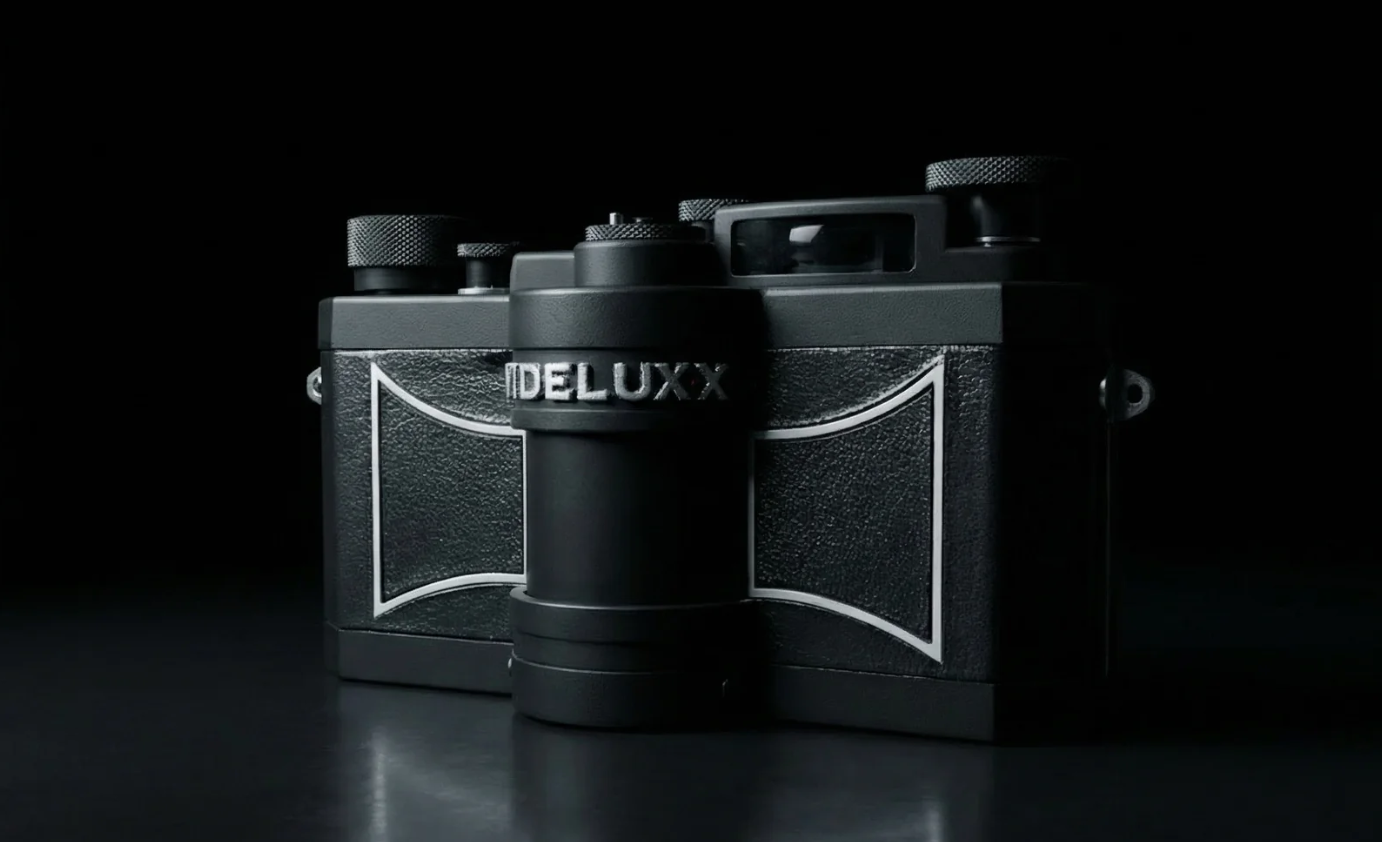
Quick Verdict: Jeff Bridges’ SilverBridges company opened preorders on April 28, 2026 for the WideluxX F10, a 35mm panoramic film camera reviving the long-dormant Widelux line at $4,400 per unit. The first production run is capped at 350 cameras, and roughly 50 sold inside the first 15 minutes of preorders. First shipments are expected in six to eight months, with the full run completing four to six months after the initial deliveries. For panoramic film photographers, the new Widelux camera replaces a 20-year-old secondhand market with a new, warrantied option built in Germany.
Last updated: April 2026 | 7 min read
In This Article
The WideluxX F10 in Brief

If you have followed 35mm film cameras over the past two decades, you know the Widelux camera occupies a specific cultural slot. The original Panon Widelux became one of the more iconic cameras of all time thanks in part to Oscar-winning actor Jeff Bridges, who carried one on movie sets for decades and published collections of his on-set panoramic portraits. After the Panon factory burned down more than 20 years ago, the camera, its parts, and its repair network all disappeared. Working photographers who wanted the look had to chase 20-year-old bodies on the secondhand market, often at prices not far from what new gear used to cost.
The drought ended on April 28, 2026 when SilverBridges, the company Bridges co-founded specifically to revive the line, opened preorders for the WideluxX F10. Pricing on the new Widelux camera lands at $4,400, the body ships from Germany, and the first 350 buyers receive theirs in six to eight months. SilverBridges also confirmed the full first run will take an additional four to six months to complete after the initial cameras ship, putting later 2026 buyers well into 2027 territory.
For working film shooters and serious enthusiasts, the moment matters because the Widelux camera market has been a closed loop of aging Widelux F8 bodies and unreliable parts since the early 2000s. The Jeff Bridges camera revival reopens the market with a new, warrantied production option, which resets the calculation for working film photographers. Notably, the new body keeps the original swing-lens design and 140-degree field of view, so the look photographers chased the original Widelux camera for stays intact.
Key Specs at a Glance
| Specification | Detail |
|---|---|
| Camera type | Mechanical 35mm panoramic film camera, swing-lens design |
| Lens | Fixed 26mm f/2.8, moving exposure across the frame |
| Frame size | 24 x 58mm on 35mm film |
| Frames per roll | Approximately 21 panoramas from a 36-shot roll |
| Shutter speeds | 1/15, 1/125, 1/250 second |
| Field of view | 140 degrees |
| Focus range | Fixed, 1.5 meters (about 5 feet) to infinity |
| Weight | 880 grams (1.9 pounds) |
| Build | Handcrafted in Germany, optional engraved initials |
| Warranty | Two years |
| Price | $4,400 USD |
Featured Product
WideluxX F10 Panoramic Film Camera
Reserve a spot in the first production run of 350 cameras at $4,400. First shipments are scheduled for six to eight months from preorder.
How the Widelux Came Back from Extinction
The road to the WideluxX F10 started in September 2024, when Bridges and his wife, photographer Susan Bridges, announced a partnership with Marwan El Mozayen and Charys Schulder of SilvergrainClassics. The four formed SilverBridges with one stated goal: bring the Widelux camera back to life. By the time of the announcement, the original Panon factory had been gone for two decades, and no surviving manufacturing infrastructure remained.
The team’s first task was reverse engineering existing F8 bodies and machining replacement parts from scratch. Many components had to be redesigned because the original tooling no longer existed, and modern materials and tolerances had moved past mid-century manufacturing. SilverBridges has since published prototype updates through 2025, including the first photographer field tests in April 2026, only one week before preorders opened.
For Jeff Bridges himself, the project closes a personal loop. He has documented his use of the original Widelux F7 and F8 cameras for years, including books of his on-set work using the swing-lens design to capture cast and crew in single, sweeping frames. As a result, the Widelux camera carries both technical lineage and personal narrative weight, which helps explain why this Jeff Bridges camera revival saw preorder demand spike so fast at launch.
Inside the Camera and How It Shoots

The Widelux camera is a fully mechanical 35mm panoramic body with a swing-lens design. Instead of a fixed lens projecting onto a flat sensor or film plane, the lens itself rotates during exposure, sweeping the image across a curved 24 x 58mm frame on standard 35mm film. The mechanism delivers the camera’s signature 140-degree field of view, and the moving lens explains why a 36-shot roll produces only about 21 panoramas instead of the usual 36 frames.
Inside the body, the fixed 26mm f/2.8 lens covers a focus range from 1.5 meters to infinity. No autofocus or metering exists, so exposures rely on three shutter speeds (1/15, 1/125, 1/250 second) and the photographer’s chosen aperture. For shooters used to digital workflows, the constraints are real, but they reflect what the original Widelux did and what the cult around the Widelux camera celebrates. Visually, the swing-lens design produces straight horizontal lines without the fisheye bulge a wide rectilinear lens would introduce, and viewers see landscape and architecture as a continuous ribbon, the exact look Bridges captured on film sets for decades. Specifically, the ribbon-style panoramic frame does not exist anywhere else in modern analog photography outside the secondhand market.
At 880 grams, the body sits on the heavier side for a 35mm camera but stays manageable for handheld work. SilverBridges builds each unit in Germany and offers optional engraved initials, with additional customization options expected later in the production process. Therefore, the WideluxX F10 reads less like a mass-market film body and more like a small-batch precision instrument, which suits both the price tag and the audience.
Pricing, Production Run, and Early Demand
At $4,400, the WideluxX F10 sits roughly in line with what clean Widelux F8 bodies fetch on the used market, and well above typical 35mm film cameras. SilverBridges argues the new price reflects two things: handcrafted German build quality and a two-year warranty, neither of which a 20-year-old secondhand body offers. Buyers also get the option to add engraved initials at no extra noted cost, plus access to additional customization choices later in the production cycle.
Early demand has matched the small-batch ambition. The first run will sell out before SilverBridges completes the four to six month production stretch following the initial shipments, if the launch-day pace holds. Late buyers face two practical risks: a longer wait, and the possibility of pricing or availability shifts on subsequent runs. Buyers should also know shipping adds $172 on top of the camera price.
For shoppers debating the spend, the calculation comes down to whether you want a working camera now or a working camera with new-build reliability and a warranty. Used Widelux F8 bodies still exist, but they ship with no support, no replacement parts, and the inherent risk of any aging mechanical camera. The WideluxX F10 collapses both unknowns into a single, warrantied purchase, which explains why the early sell-through is moving as fast as it is.
WideluxX F10 vs the Original Widelux F8
The new WideluxX F10 inherits the core swing-lens mechanism, the 140-degree field of view, the 24 x 58mm frame on 35mm film, and the basic shutter and aperture layout from the F8. SilverBridges intentionally preserved the optical and mechanical signature so images shot on the F10 read consistently with archival F7 and F8 work. For photographers building bodies of work over years, this continuity matters as much as the specs themselves.
What is new on the F10: refined modern materials, tighter manufacturing tolerances, German build quality, optional engraved initials, planned customization paths, and a full two-year warranty. The original Widelux F8 had none of those upgrades because the company building it no longer exists. While the F10 does not introduce any radical new feature like autofocus or metering, the upgrades target the failure points 20-year-old F8 owners know all too well: parts availability, repair access, and long-term reliability.
Final Take
The WideluxX F10 is the rare camera launch where the news matters more than the specs. A new Widelux camera at $4,400 is not chasing volume or mainstream attention. It is replacing an extinct production line with a working, supported alternative for a small but committed audience of panoramic film photographers. For this audience, the F10 collapses 20 years of secondhand-market risk into a single, warrantied purchase.
Beyond the core audience, the launch reads as a notable data point in the broader film photography revival. New analog photography production at this price point continues to find buyers, which signals the analog photography market has moved past nostalgia and into a smaller but stable demand curve. SilverBridges’ production cap at 350 units for the first run reflects the reality of small-batch craftsmanship rather than mass-market ambition, and the early sell-through suggests they read the demand correctly.
Photographers ready to commit should reserve a slot soon, because the 350-unit cap will not stretch. Anyone curious about panoramic film for the first time should hold and watch. The look the Widelux camera produces is unique among modern cameras, but the workflow is demanding, and the price is high enough to reward only photographers who already know they want this specific Jeff Bridges camera revival.
Frequently Asked Questions
How much does the WideluxX F10 cost?
The WideluxX F10 lists at $4,400 USD per unit during the initial preorder window opening on April 28, 2026. Each camera is handcrafted in Germany, includes a two-year warranty, and offers optional engraved initials at no additional noted cost.
When will the WideluxX F10 ship?
SilverBridges expects to begin shipping the first cameras within six to eight months of the April 28, 2026 preorder opening. The full first run of 350 units will take an additional four to six months to complete after initial shipments begin, which puts later buyers into 2027.
What is the WideluxX F10 camera?
Built by SilverBridges, the company co-founded by actor Jeff Bridges and his wife Susan Bridges, the WideluxX F10 is a fully mechanical 35mm panoramic film camera. This Widelux camera uses a swing-lens design with a fixed 26mm f/2.8 lens rotating during exposure to capture a 140-degree, 24 x 58mm panoramic frame.
How does the WideluxX F10 compare to the original Widelux F8?
The WideluxX F10 keeps the swing-lens mechanism, 140-degree field of view, and 24 x 58mm frame size from the F8. Improvements come from modern materials, tighter manufacturing tolerances, German build quality, optional customization, and a two-year warranty. Production on the original F8 ended over 20 years ago.
Why is Jeff Bridges making a camera?
Jeff Bridges has used the original Widelux for decades on film sets and published books of his panoramic on-set portraits. He co-founded SilverBridges with his wife and the team behind SilvergrainClassics specifically to revive the discontinued Widelux line, after the original Panon factory burned down more than 20 years ago.
Does the WideluxX F10 use regular 35mm film?
Yes. The WideluxX F10 takes standard 35mm film. Because the swing-lens mechanism produces a wider frame (24 x 58mm), a 36-exposure roll yields approximately 21 panoramas instead of 36 frames. Any color, black-and-white, slide, or specialty 35mm stock works.
Where do you buy the WideluxX F10?
Preorders are available directly through the SilverBridges shop at shop.wideluxx.com. The first production run is capped at 350 units, with about 50 selling inside the first 15 minutes after preorders opened on April 28, 2026.

