


Quick Facts:
- Topic: The most expensive photographs ever sold at auction and private sale
- Current record: Man Ray’s “Le Violon d’Ingres” at about $12.4 million (2022)
- Prior records: Peter Lik’s “Phantom” ($6.5M) and Andreas Gursky’s “Rhein II” ($4.3M)
- Common threads: Scarcity, a famous name, and a strong concept
- Best for: Photographers curious about the fine-art market and what makes an image collectible
9 min read
In This Guide
Overview: Photography as Fine Art
For decades, critics argued over whether photography belonged in the same room as painting and sculpture. The auction record settles part of that debate. While the priciest photographs still trail the priciest paintings, the gap has narrowed, and a single print can now command a fortune.
The current record holder is Man Ray’s “Le Violon d’Ingres,” which sold for roughly $12.4 million in 2022 and surpassed every photograph on the classic list below. Before that, Peter Lik’s “Phantom” held the crown at $6.5 million, ahead of Andreas Gursky’s “Rhein II” at $4.3 million.
As a landscape photographer myself, I find it telling that several record breakers are landscapes. Gursky’s river, Lik’s misty rivers, and Ansel Adams’s moonrise all prove that a quiet scene, printed and presented as fine art, can outsell far flashier work. Here are 19 of the most expensive photographs ever sold, plus the names that have since topped them.
The Most Expensive Photographs Ever Sold: Full List
The figures below are reported sale prices, ranked from highest to lowest. Treat them as the headline numbers from each auction or private sale. Each photograph’s name links out to a reference page where you can view the work and read more.
A note on the images: Most of the photographs below are still under copyright, so we cannot reproduce them all here. Instead, we researched and compiled the full ranking, embedded the few works that are in the public domain or openly licensed, and linked every entry to a page where you can view the actual image. Just click any photograph’s name in the table to see it.
| Photograph | Photographer | Price | Year |
|---|---|---|---|
| Le Violon d’Ingres | Man Ray | ~$12.4 million | 2022 |
| Phantom | Peter Lik | $6.5 million | 2014 |
| Rhein II | Andreas Gursky | $4.34 million | 2011 |
| Untitled #96 | Cindy Sherman | $3.89 million | 2011 |
| Dead Troops Talk | Jeff Wall | $3.67 million | 2012 |
| 99 Cent II Diptychon | Andreas Gursky | $3.35 million | 2007 |
| The Pond-Moonlight | Edward Steichen | $2.93 million | 2006 |
| Untitled #153 | Cindy Sherman | $2.7 million | 2010 |
| Billy the Kid (tintype) | Unknown | $2.3 million | 2011 |
| Tobolsk Kremlin | Dmitry Medvedev | $1.75 million | 2010 |
| Nude | Edward Weston | $1.6 million | 2008 |
| Georgia O’Keeffe (Hands) | Alfred Stieglitz | $1.47 million | 2006 |
| Georgia O’Keeffe (Nude) | Alfred Stieglitz | $1.36 million | 2006 |
| Untitled (Cowboy) | Richard Prince | $1.25 million | 2005 |
| Dovima with Elephants | Richard Avedon | $1.15 million | 2010 |
| Nautilus | Edward Weston | $1.08 million | 2010 |
| One | Peter Lik | ~$1 million | 2010 |
| Untangling | Jeff Wall | $1 million AUD | 2006 |
| Joueur d’Orgue | Eugene Atget | $686,500 | 2010 |
| Andy Warhol | Robert Mapplethorpe | ~$643,200 | 2006 |
| Moonrise, Hernandez | Ansel Adams | $609,600 | 2006 |
Standouts Worth Knowing
Numbers tell part of the story. The pictures behind them are more interesting, so here are the ones worth a closer look.
Le Violon d’Ingres by Man Ray
The current record holder did not make the classic list, but it belongs at the top of any discussion of value. Man Ray’s 1924 image turns the back of his muse Kiki de Montparnasse into a musical instrument, with two painted f-holes echoing the curves of a violin. A defining work of Surrealist photography, it sold for roughly $12.4 million at Christie’s in 2022, the most ever paid for a photograph at auction. The price reflects both its place in art history and the surreal wit that still makes viewers look twice.
Rhein II by Andreas Gursky
Gursky photographed a flat stretch of the Rhein, then digitally removed walkers and buildings to leave only bands of water, grass, and sky. He defended the edits as a way to show an honest image of a modern river. The minimalist result held the auction record for years and remains the most famous example of landscape pushed toward pure abstraction.
Phantom by Peter Lik
Lik’s black-and-white image of a beam of dust and light inside Antelope Canyon reportedly sold privately for $6.5 million in 2014. The Australian landscape photographer is as known for his marketing as his images, and many critics questioned the price. Either way, it stood as the most expensive photograph on record until Man Ray surpassed it.
Untitled #96 by Cindy Sherman
Sherman’s staged self-portrait of a young woman lying on the floor became one of the priciest photographs by a woman when it sold in 2011. Like much of her work, it casts the artist as an ambiguous character and invites the viewer to invent her story. That open-ended intrigue is exactly what collectors paid for.
The Pond-Moonlight by Edward Steichen
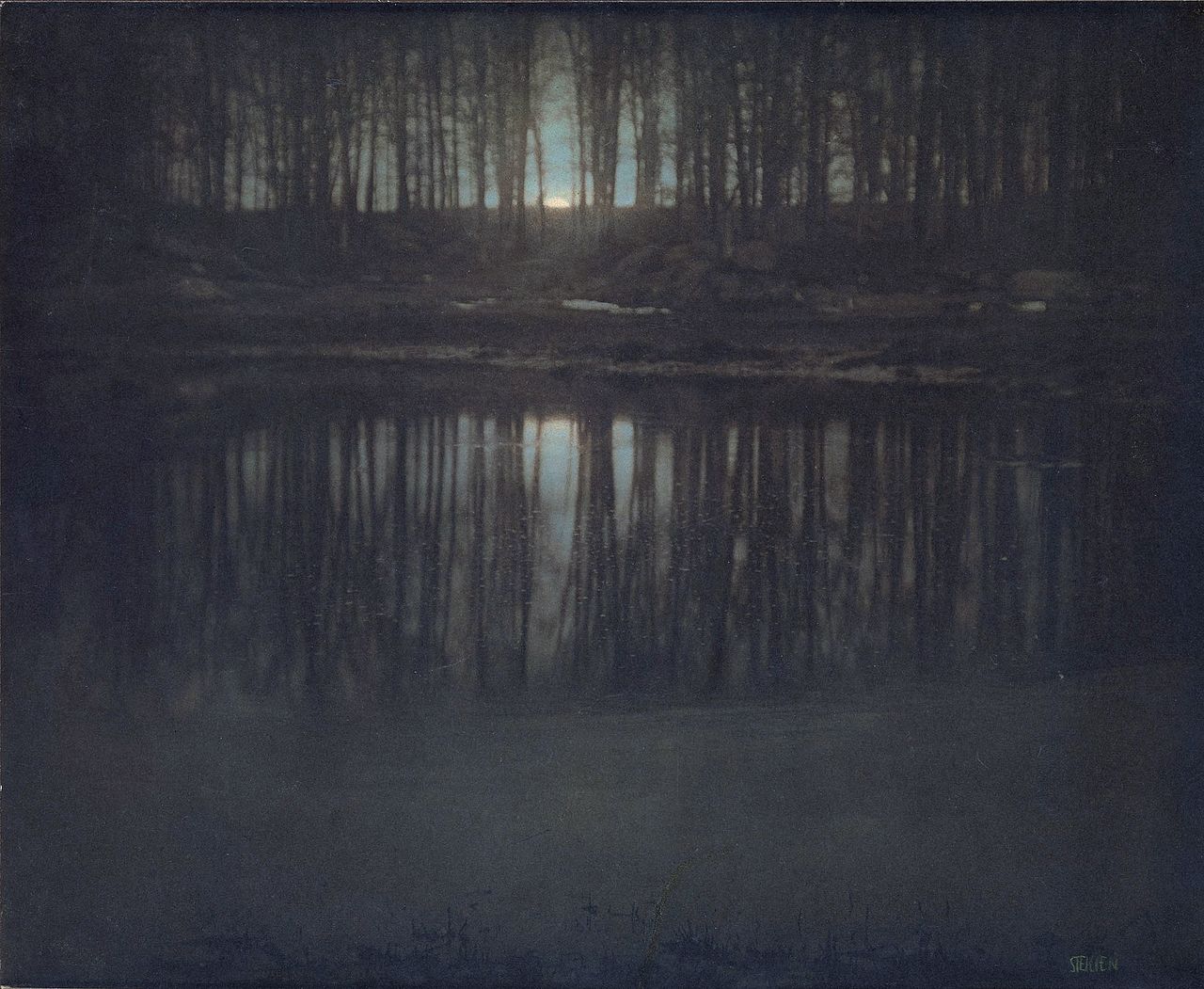
Made in 1904, this dreamlike pictorialist scene predates reliable color film, yet Steichen layered light-sensitive gums by hand to suggest color. Only three known versions survive, and each is slightly different. That scarcity helped make it the most expensive photograph in the world when it sold in 2006.
Dovima with Elephants by Richard Avedon
Avedon’s 1955 fashion image places the model Dovima between two elephants in a flowing gown, a collision of elegance and raw power first published in Harper’s Bazaar. The negative for this version reportedly vanished, leaving a single print, and that one-of-a-kind status drove the sale.
Moonrise, Hernandez by Ansel Adams
Captured in New Mexico in 1941, this scene was printed more than a thousand times over the photographer’s life, and Adams refined the look with each pass. Even with so many prints, demand stays high, a reminder that a defining image from a master landscape photographer holds its value for generations.
99 Cent II Diptychon by Andreas Gursky
Gursky appears twice on this list, and his second entry could not be more different from the empty calm of the Rhein. This two-panel image packs a supermarket interior with rows of brightly colored products stretching to the horizon. The overwhelming abundance turns a mundane store into a comment on consumer culture, and the price made headlines when it sold in 2007.
Billy the Kid by an Unknown Photographer
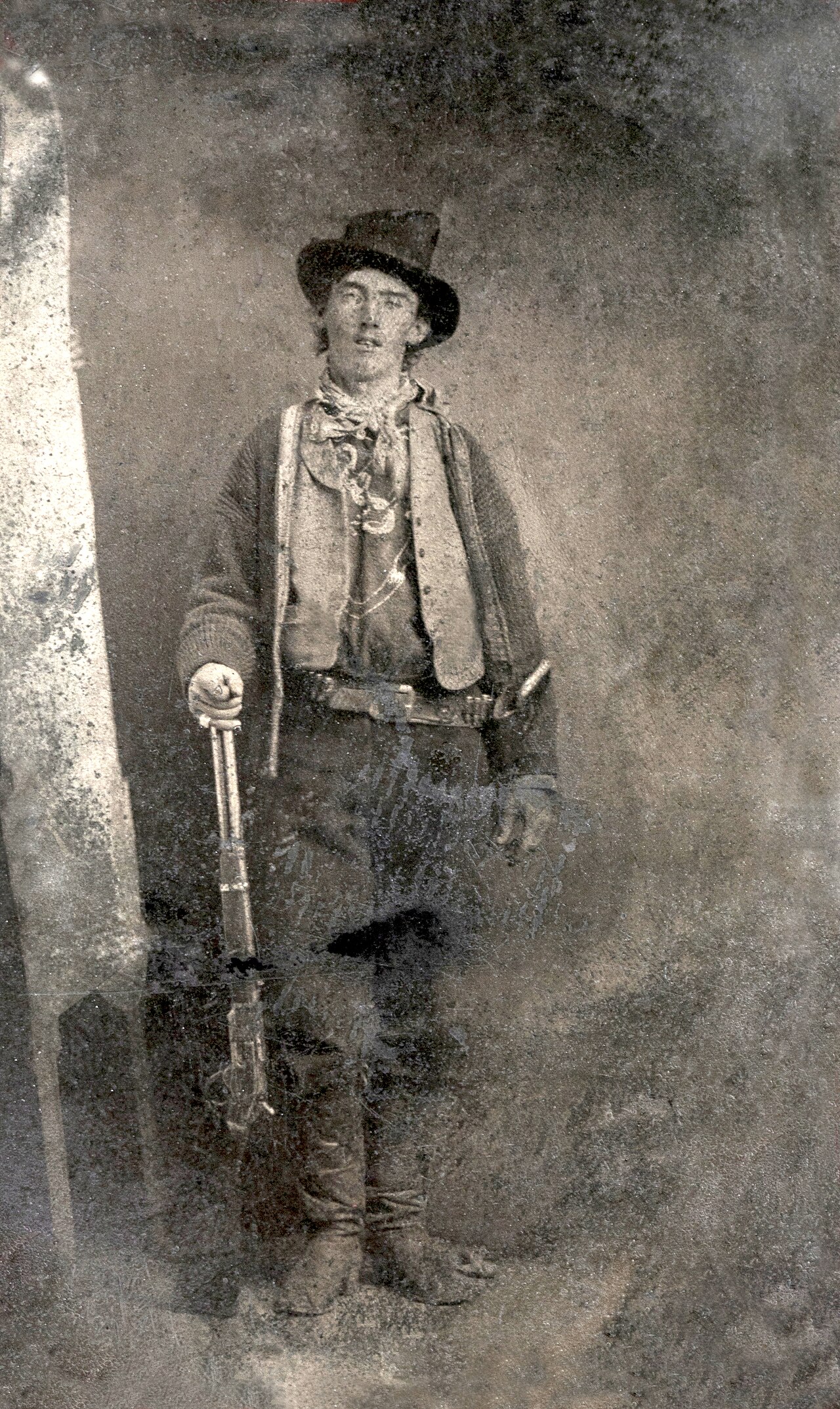
Not every record breaker comes from a celebrated artist. This tiny tintype is the only authenticated portrait of the outlaw Billy the Kid, and its maker is unknown. When it sold for $2.3 million in 2011, the buyer paid for history rather than artistry, proof that rarity and subject can matter as much as the name behind the camera.
Tobolsk Kremlin by Dmitry Medvedev
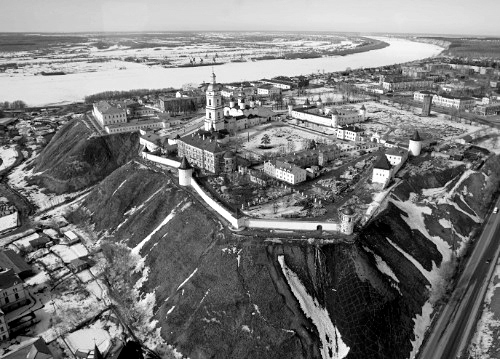
One of the more surprising names on the list belongs to a head of state. Dmitry Medvedev, then president of Russia, took this aerial view of the Tobolsk Kremlin, and it sold for $1.75 million at a 2010 charity auction in Saint Petersburg. The price reflects the seller far more than any photographic technique.
Untitled (Cowboy) by Richard Prince
Prince built his name on appropriation, rephotographing existing images and presenting them as his own art. “Cowboy” is a reshot frame from a cigarette advertisement, and it became the first such rephotograph to clear a million dollars. Its sale forced the art world to wrestle with hard questions about authorship and originality.
Nautilus by Edward Weston
This glowing nautilus shell came out of a 1927 session that Weston began after seeing shells painted in a fellow artist’s studio. The image, with its simple form and luminous tones, is widely seen as a turning point that helped establish him among the great photographers of the twentieth century. A print sold for more than a million dollars in 2010.
Georgia O’Keeffe by Alfred Stieglitz
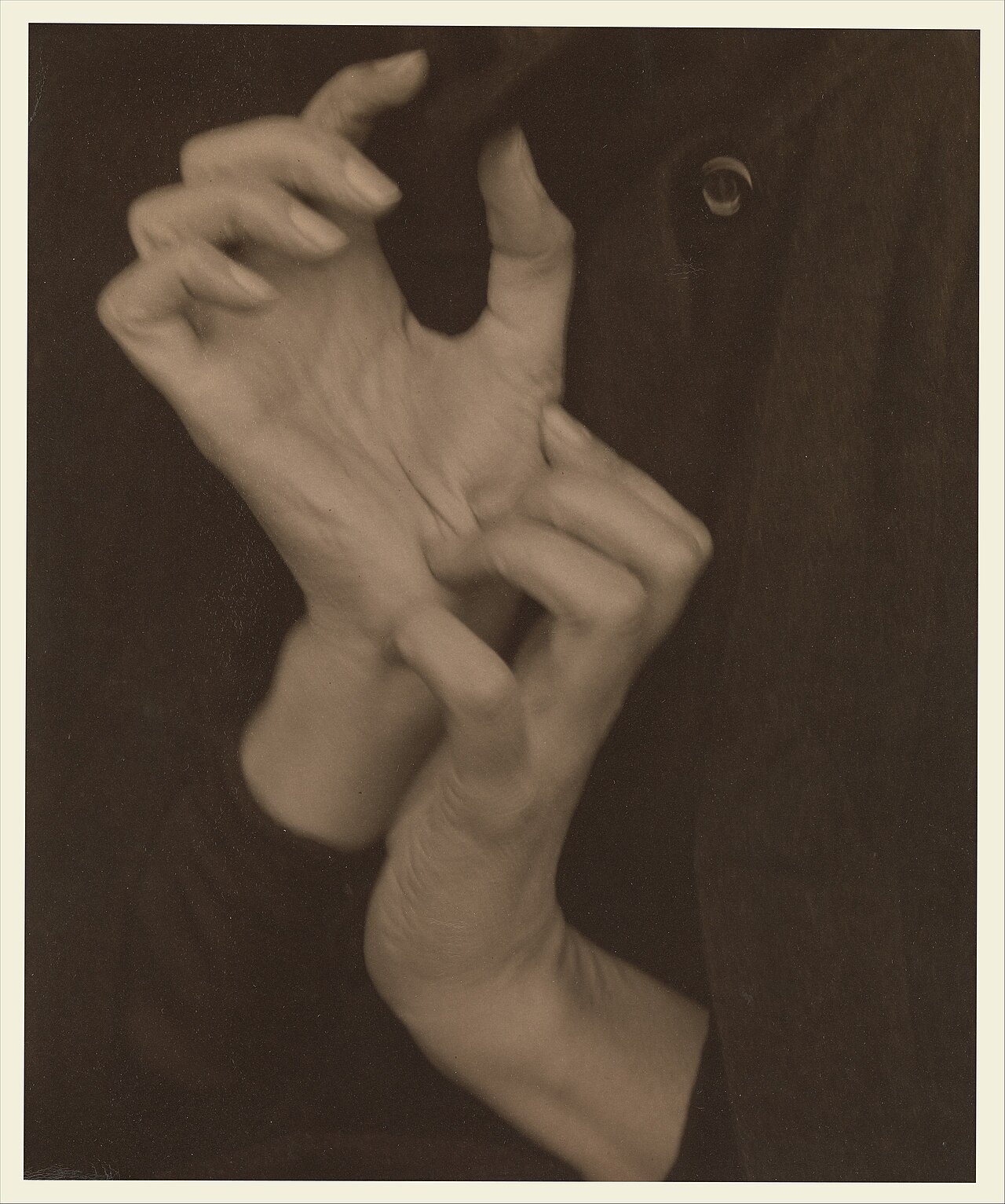
Stieglitz made more than three hundred photographs of the painter Georgia O’Keeffe, treating individual hands, gestures, and the body as portraits in their own right. Two images from the series appear on this list, and eight of the nine highest prices ever paid for his work are pictures of O’Keeffe. Few bodies of work show so clearly how a single muse can define a career.
Andy Warhol by Robert Mapplethorpe
Mapplethorpe photographed many figures from the art world, and his unconventional 1986 portrait of Andy Warhol stands out for its restraint. Estimated at $300,000, it sold for more than double that in 2006. The pairing of two boundary-pushing artists, one behind the lens and one in front of it, gave the image a pull that collectors could not resist.
Joueur d’Orgue by Eugene Atget
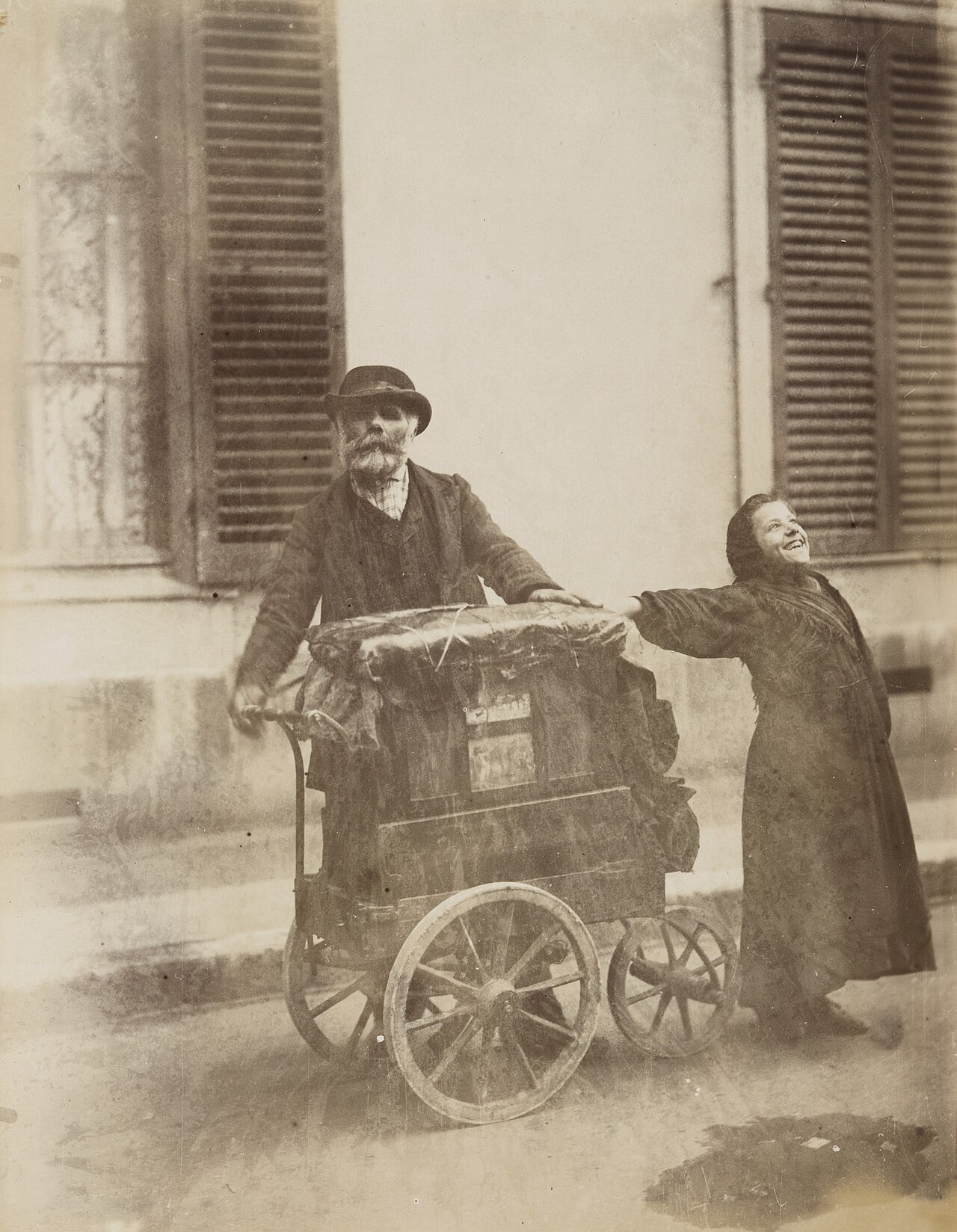
Atget spent decades quietly documenting the streets of Paris around the turn of the twentieth century, and his work later became a touchstone for documentary photography. This gelatin silver chloride print, made around 1898, was estimated at roughly $150,000 yet sold for more than six times that in 2010. The result shows how a humble street scene can gain enormous value once history recognizes the photographer behind it.
Study the Masters
Fine-Art Photography Books
Monographs from Adams, Weston, Sherman, and others are the most affordable way to study what makes a record-setting image work.
As an Amazon Associate, PhotographyTalk earns from qualifying purchases.
What Makes a Photograph Worth Millions
Look across this list and a few patterns explain the prices. Scarcity comes first. A single surviving print, a lost negative, or a tiny edition turns a reproducible medium into a unique object, and uniqueness is what collectors chase.
A famous name comes next. Works by Gursky, Sherman, Adams, and Man Ray carry decades of reputation, and that history reassures buyers that the value will hold. A strong concept seals it, whether that is Sherman’s shifting identities or Gursky’s vast, edited landscapes. Provenance matters too, since a clear chain of ownership and a place in museum shows can lift a price well beyond the estimate.
There is a practical lesson here for any photographer. Presentation and permanence add value, which is why turning your best frames into physical prints matters, as our canvas print company shootout explores. It is also striking how many genres appear, from the intimate nudes of Weston and Stieglitz, covered in our guide to nude photography, to the staged figures of portrait work. If you want to build toward your own collectible images, start by mastering the exposure triangle and keep learning from there.
Frequently Asked Questions
What is the most expensive photograph ever sold?
Man Ray’s “Le Violon d’Ingres” holds the record, selling for roughly $12.4 million in 2022. It surpassed Peter Lik’s “Phantom,” which had reportedly sold privately for $6.5 million in 2014.
Why are some photographs worth millions?
Three factors drive the price: scarcity, such as a single surviving print; a famous photographer with a lasting reputation; and a strong, memorable concept. Together those turn an image into a collectible asset.
Are landscape photographs among the most expensive?
Yes. Andreas Gursky’s “Rhein II,” Peter Lik’s “Phantom,” and Ansel Adams’s “Moonrise, Hernandez” are all landscapes, which shows that quiet, well-printed scenes can command top prices.
Where are these photographs sold?
Most change hands at major auction houses like Christie’s, Sotheby’s, and Phillips, though a few of the highest prices, including Lik’s, came from private sales rather than public auctions.
Can a modern photographer’s work become this valuable?
It is rare, but possible. Most record holders built reputations over decades, produced limited editions, and developed an instantly recognizable style before their prints reached these prices.

