


I’ve been lucky enough to travel to most corners of the world. From the fjords of Norway to the deserts of the American Southwest, I’ve stood in front of scenes that stopped me cold. Not every one of the places I’ve visited produced a great photograph, though. Some of the most breathtaking moments I’ve ever witnessed translated into flat, forgettable images. Others, places I wasn’t even that excited about before arriving, produced shots I still hang on my wall today. Those experiences did more than broaden my perspective as a traveler. They taught me something I couldn’t have learned from a book: why certain places simply photograph better than others.
The answer isn’t only about camera gear or shooting technique, although those matter. It runs deeper than that. It’s rooted in how your brain processes light, color, and space, and what emotional triggers cause a scene to register as visually compelling. Understanding the psychology of travel photography changes how you see locations before you even lift your camera. It also changes how you think about what to do with your best shots when you get home. A great travel photo deserves more than a screen swipe. It deserves to live on your wall.
Quick Facts:
- Topic: Psychology of travel photography and what makes locations photogenic
- Skill level: All levels, beginner to advanced
- Key concepts: Light science, color psychology, visual perception, emotional resonance
- Print partner: Shiny Prints, ChromaLuxe HD metal prints
- Best for: Travel photographers who want to understand why certain shots work and how to display them
- Print sizes available: 8×8 to 48×96, custom shapes and outdoor options
8 min read
In This Article
- What the Psychology of Travel Photography Explains
- The Science of Light: Why Timing Changes Everything
- Color Psychology and Why Certain Palettes Stop You Cold
- How Your Brain Reads Visual Composition
- Emotional Resonance: The Hidden Variable in Photogenic Places
- From Screen to Wall: Why Travel Photos Deserve to Be Printed
- Final Verdict
- Frequently Asked Questions
What the Psychology of Travel Photography Explains
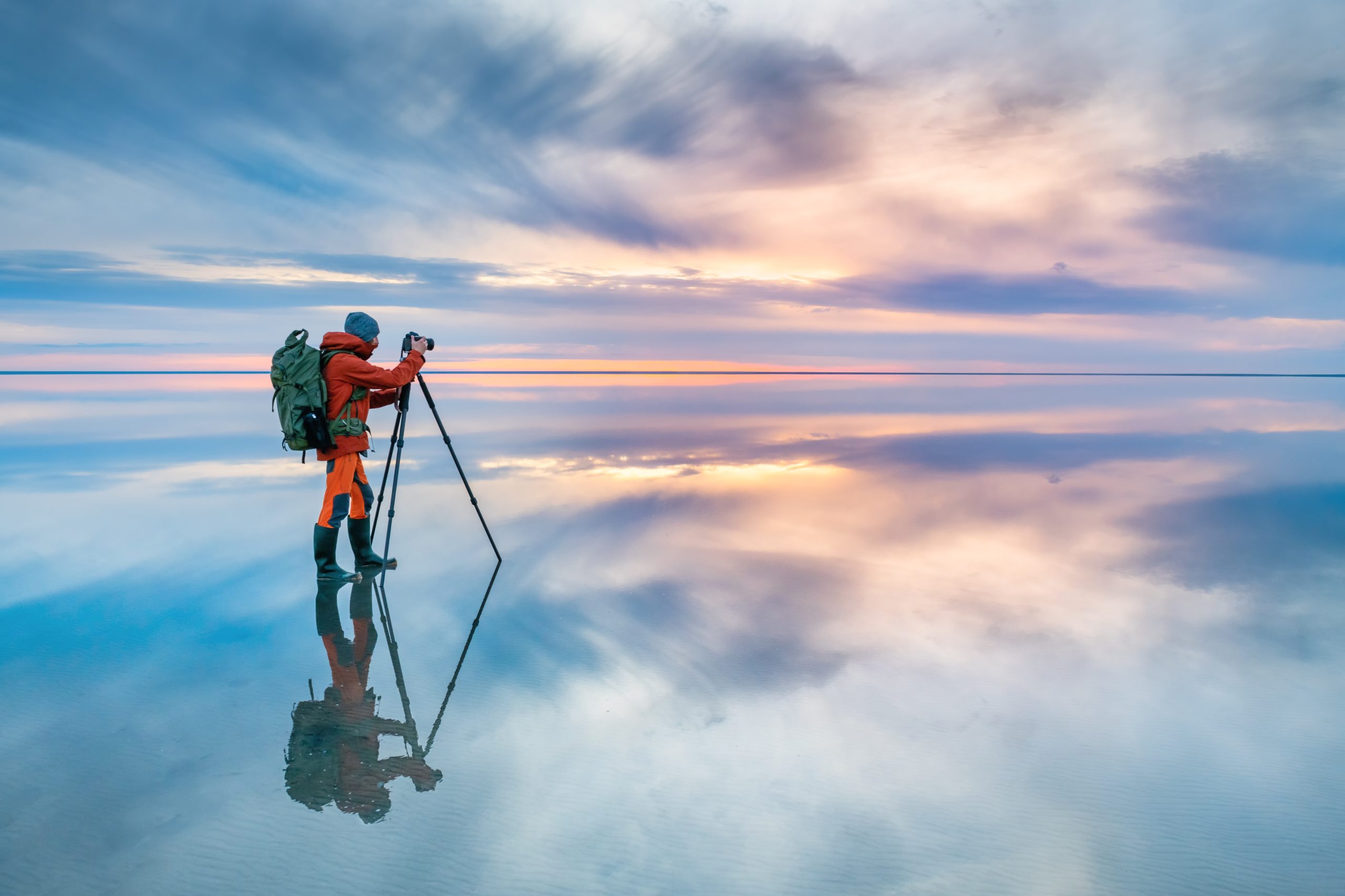
The psychology of travel photography sits at the intersection of visual perception, cognitive science, and emotional memory. When you feel pulled to raise your camera at a particular location, that response isn’t random. Your brain reacts to a constellation of environmental signals. These signals include light quality, color temperature, spatial depth, and cultural associations, each triggering specific emotional responses. Research published in the journal Tourism Management found that natural elements like coastlines, flora, and wide countryside vistas are consistently associated with arousing, pleasant feelings in travel images. Cultural and historical subjects produce a different but equally powerful sense of engagement, one tied to intellectual curiosity. Both categories work because the brain responds to real environmental qualities, not to subject matter alone.
For most photographers, this process happens instinctively. You walk around a corner in Lisbon or Kyoto, and something hits you. Your eyes and your gut both say “shoot this.” What you’re responding to are specific perceptual triggers. Your brain has been wired to notice them, many of them rooted in evolutionary biology and reinforced by aesthetic experience. Understanding those triggers puts you in control of the process instead of waiting for lightning to strike.
The Role of Novelty and Expectation
Novelty is one of the strongest photographic motivators in travel. Research in tourism photography consistently shows that unfamiliar visual environments activate heightened attention and emotional arousal. However, novelty alone doesn’t make a place photogenic. The locations that photograph best tend to balance novelty with a kind of visual coherence. Scenes feel new but also feel complete. A chaotic, visually overwhelming environment is fascinating in person but nearly impossible to frame effectively. Your brain perceives those environments as stimulating but not beautiful, and that distinction matters when you’re trying to make a photograph.
The Science of Light: Why Timing Changes Everything

Of all the variables determining whether a location feels photogenic, light quality is the most powerful and the most misunderstood. Most travelers photograph at midday, when light is overhead, harsh, and flat. Professional photographers know the golden hour differently. The golden hour is the period roughly one hour after sunrise and one hour before sunset. During this window, sunlight travels through a greater depth of the Earth’s atmosphere before reaching the surface. That additional distance filters out blue and violet wavelengths through a process called Rayleigh scattering, leaving behind warmer reds, oranges, and yellows. The result is soft, directional light that reduces harsh shadows, adds texture and depth to landscapes, and is measurably more flattering on skin tones than direct overhead sun.
This explains why the same location at noon and at 6:00 PM feels like two completely different photographs. The Colosseum in Rome bathed in warm raking light at sunset looks ancient and powerful. The same structure under flat midday sun looks like a postcard. Light isn’t solely a technical consideration; it changes how your brain interprets the emotional content of a scene. Warm, soft light signals safety, warmth, and beauty to the human visual system. This is why so many people describe golden hour photographs as feeling “alive” in a way midday shots simply don’t.
Blue Hour and Overcast Light
Golden hour gets most of the attention, but blue hour produces equally compelling light for different reasons. Blue hour is the window shortly before sunrise or after sunset when the sky turns deep cobalt. During blue hour, the sky becomes an enormous soft box, eliminating directional shadows entirely. Overcast conditions do something similar. Both work exceptionally well for urban photography and architectural subjects, where even, diffused light brings out color saturation and detail without the blown-out highlights that direct sun creates. Many of my favorite city images from Tokyo and Amsterdam came from overcast mornings when most tourists had written off the weather entirely.
Color Psychology and Why Certain Palettes Stop You Cold

Color is one of the most powerful psychological triggers in photography, and photogenic locations often succeed because of their color relationships, not their visual subjects alone. Color psychology research confirms that warm tones, including red, orange, and amber, create feelings of energy, excitement, and intimacy. Cool tones like blue and green produce calm, trust, and spaciousness. The locations that feel most photogenic often feature strong color contrasts that leverage these psychological responses simultaneously. Think of the terracotta walls of Morocco against a deep blue sky. Or the emerald rice fields of Bali under bright equatorial clouds. The neon-soaked, rain-slicked streets of Tokyo at night deliver the same effect.
Goethe’s research on color relationships established that complementary colors, those opposite each other on the color wheel, create a visual tension that draws and holds attention. That’s the same principle at work when you photograph an orange canyon wall against a blue sky, or a red fishing boat against a gray sea. Your brain registers the contrast as visually significant. This is also why these images translate so effectively to large-format prints. The relationship between colors holds its power at scale. In many cases, the contrast becomes more striking when it fills a wall rather than a phone screen.
Color Saturation and Location
Not all locations are equal in their color relationships. This disparity explains why some places are more photogenic than others even before you consider light or composition. Locations near the equator or at high altitude often feature intensely saturated colors because of the quality of their light. Others, like the desaturated greens and grays of northern coastlines, produce a quieter, more melancholic palette. Both produce compelling results, but they generate different emotional responses in viewers. Knowing which emotional register a location naturally inhabits helps you choose the right subjects and the right time of day. It also helps you find the right framing to work with the environment rather than against it. Understanding this disparity is one of the most practical travel photography tips you take away from any serious study of how locations photograph.
How Your Brain Reads Visual Composition

Beyond light and color, the psychological experience of a photogenic place is shaped by how it naturally presents compositional structure. The human visual system is wired to follow lines, respond to scale contrasts, and seek points of visual rest. Locations that offer these elements organically feel easier to photograph because the compositional work is partly done for you. A winding Tuscan road, a canyon corridor narrowing toward a bright sky, a lone tree on an open plain: each provides leading lines, scale relationships, and focal points. These are the elements your brain uses to organize and interpret a visual scene.
Research using big data analysis of travel photography on TripAdvisor found a significant correlation between highly rated tourist sites and a preference for wide-angle photographs among visitors. The researchers connected this to the “broaden-and-build” theory of positive emotion: when people are in emotionally positive states, their visual attention broadens. Great locations make you feel good, and feeling good expands how you see. You take in more of the scene. You shoot wider. Those wider frames also tend to convey more of the environmental context that makes travel photography meaningful to anyone who wasn’t there with you.
Print Direct from Shiny Prints
Your Best Travel Shots Deserve to Live on Your Wall
Shiny Prints uses ChromaLuxe HD panels and Epson F-Series printers to produce metal prints that hold color, contrast, and depth in sizes from 8×8 to 48×96.
Emotional Resonance: The Hidden Variable in Photogenic Places

Light, color, and composition are teachable. Emotional resonance is harder to pin down, but it is the most important factor in separating a technically good travel photo from one that stops people cold. Emotional resonance in photography describes the degree to which an image transfers a feeling from the person who took it to the person who views it. Locations that carry strong cultural meaning, historical weight, or personal significance tend to produce images with higher emotional resonance. The photographer brings emotional investment to the frame, and that investment shapes what gets captured.
This dynamic also explains why the same place feels wildly photogenic to one person and unremarkable to another. A Civil War battlefield in Virginia produces deeply moving images for an American traveler. To someone with no cultural connection to that history, it registers as an open field. A night market in Chiang Mai feels alive and urgent to a first-time visitor but routine to someone who grew up nearby. The emotional charge you bring to a location shapes what you see and, therefore, what you photograph.
Novelty’s Diminishing Returns
This emotional dynamic also explains why professional travel photographers frequently return to the same places. On a first visit, novelty drives strong emotional arousal and wide-ranging visual attention. On a return visit, you already know the light patterns, the best angles, and the times the crowds thin out. You’re no longer reacting. You’re making intentional decisions grounded in real knowledge of the location. Consequently, some of the technically best travel images come not from first encounters but from second and third visits. At that point, the photographer’s emotional familiarity deepens the compositional intelligence of the work. If you’ve only photographed a place once, it’s worth going back.
Once you start seeing locations through this framework, the images you bring home take on different weight. They represent something you actually understood, not just witnessed.
From Screen to Wall: Why Travel Photos Deserve to Be Printed

Understanding what makes a place photogenic raises a question most photographers avoid: what do you do with those images? Research on travel photography and memory consistently shows that photographs serve as emotional anchors, connecting us to the experiences we had when we took them. A digital file buried in a cloud drive doesn’t fulfill that function effectively. A print does. Specifically, a large-format print that occupies real space and demands visual attention re-activates the emotional experience of being there in a way a screen image doesn’t. Printing travel photos on metal is one of the most effective ways to honor what you captured.
Metal prints are particularly well-suited for travel photography because of how they handle the specific qualities that make travel images compelling. Color saturation, tonal depth, and fine detail in shadows and highlights are all preserved with exceptional fidelity on ChromaLuxe aluminum panels. When the deep blue of an Icelandic sky or the warm amber of a desert sunrise needs to come through at full emotional impact, the medium matters. Shiny Prints specializes exclusively in metal printing. Their entire process, from ChromaLuxe HD panels to Epson F-Series printers, is optimized for exactly this kind of work. If you want to understand what types of images work best on metal, travel photography is consistently near the top of the list.
Choosing the Right Size for Travel Prints
One practical consideration for printing travel photos on metal is scale. The psychological impact of a print scales with its size in ways that aren’t linear. For a smaller space, a 12×18 print works well. At 24×36, though, a print commands a room. Go up to 30×40 or 40×60, and you get the kind of immersive visual experience that approximates the scale of standing in front of a great landscape. Shiny Prints offers prints from 8×8 all the way up to 48×96, with custom shapes and outdoor-rated panels also available. For the images that genuinely deserve a wall, going large is the right call. You’ve also seen our full Shiny Prints review covering how they perform across size categories and finish options.
Final Verdict
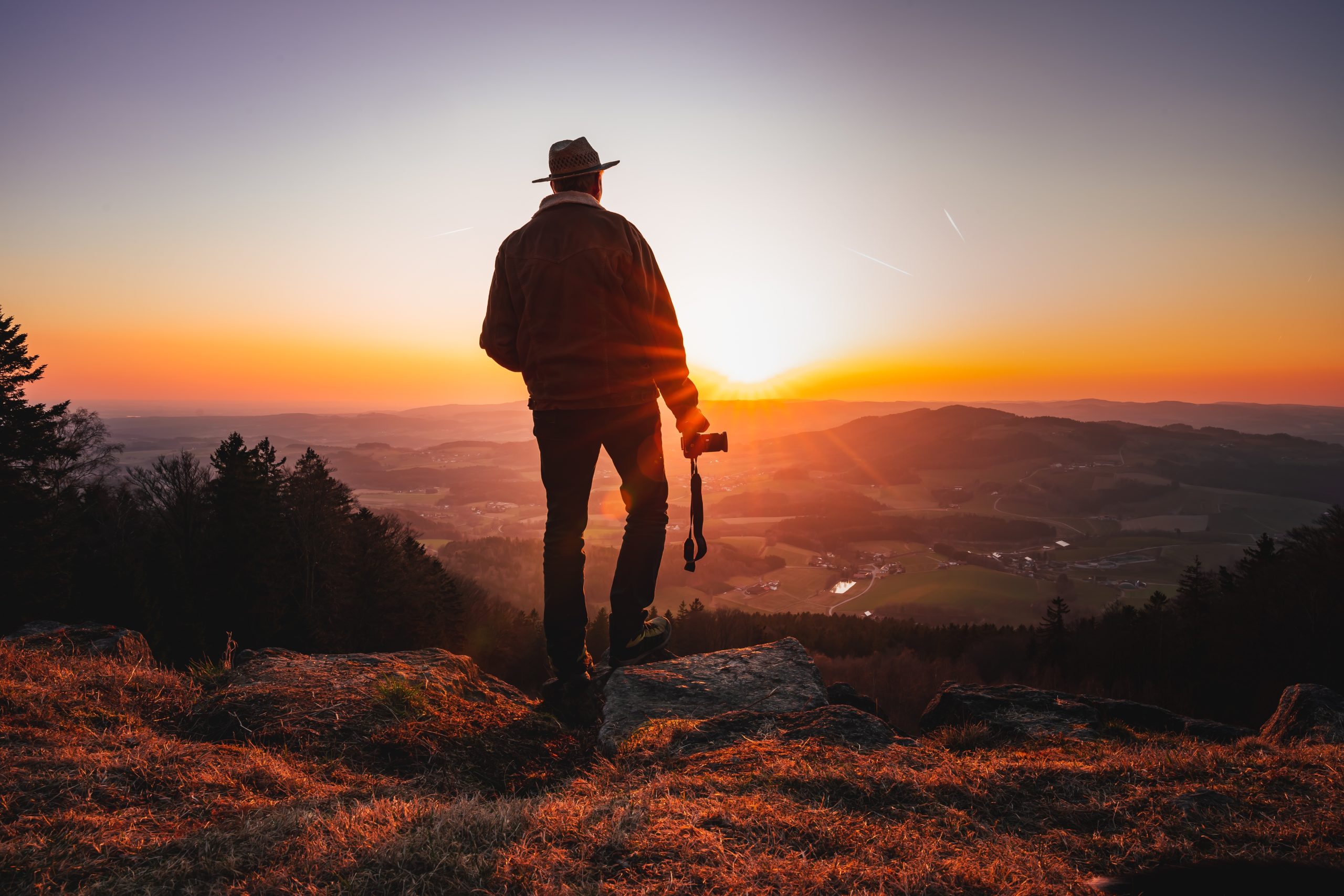
The psychology of travel photography is, at its core, a framework for understanding why you feel what you feel when you stand in front of a great location. Light quality, color relationships, compositional structure, and emotional resonance all work together to produce that instinctive pull to raise your camera. When you understand the science behind those responses, you stop waiting for great shots to happen. You start actively placing yourself in the conditions that make them likely. Early light, strong color contrast, and scenes with natural compositional structure all work in your favor. So does having genuine emotional investment in the locations you choose to photograph. These are the variables that separate good travel photography from great travel photography.
However, understanding what makes a place photogenic is only half the equation. The other half is deciding what to do with the images you capture. Travel photography preserves emotional experiences that are genuinely irreplaceable. A print, specifically a large-format metal print from a dedicated lab like Shiny Prints, transforms those digital files into permanent, emotionally resonant objects. The color, depth, and detail that ChromaLuxe HD metal printing delivers makes it the right medium for travel images. Travel photography depends heavily on tonal richness and color fidelity to convey what the place felt like. To understand what metal prints are and why photographers love them, start with Shiny Prints. They’ve been the benchmark for metal print quality for more than a decade.
If you’re a travel photographer still leaving your best work in a cloud drive, it’s time to change that. Your shots from the most photogenic places on Earth deserve to live on your wall, not in a folder you open twice a year.
Ready to Print Your Travel Photos?
Turn Your Best Shots Into Wall Art That Lasts
Shiny Prints offers a limited lifetime warranty, free shipping over $99, and custom sizes up to 48×96. ChromaLuxe panels are proven to last over 65 years.
Frequently Asked Questions
Why do some places photograph better than others?
The answer involves several overlapping factors that explain why some places are more photogenic: light quality, color relationships, compositional structure, and emotional resonance. Locations that offer strong directional light, high color contrast, and natural leading lines tend to produce more compelling images because they satisfy multiple psychological triggers simultaneously. Beyond those physical qualities, your personal emotional connection to a place also shapes what you notice and how you frame it.
What makes a location photogenic?
A photogenic location typically offers at least three of the following: distinctive light quality during golden or blue hour; strong color saturation or contrast; natural compositional elements like leading lines or scale relationships; and cultural or emotional meaning. Locations near coastlines, at high altitude, or with strong architectural geometry tend to score well across multiple categories. That’s why they appear so consistently in travel photography portfolios.
How does golden hour light change travel photography?
During the golden hour, sunlight travels through more of the Earth’s atmosphere, which filters out blue wavelengths via Rayleigh scattering and leaves warm reds, oranges, and yellows. The result is soft, directional light that reduces harsh shadows, adds texture to landscapes, and is more flattering on skin tones than midday overhead sun. These optical properties produce technically stronger images at the same location compared to shooting at noon.
Should I print my travel photos?
Yes, and the research supports it. Studies on travel photography and memory show that physical prints serve as stronger emotional anchors than digital files viewed on screens. Printing travel photos on metal and displaying them at home re-activates the emotional experience of being in that location in a way a screen swipe doesn’t. Metal prints, specifically, preserve the tonal depth and color saturation that make travel photography emotionally resonant long after the trip ends.
What is the best way to print travel photography on metal?
Metal printing on ChromaLuxe aluminum panels delivers the best combination of color fidelity, tonal depth, and durability for travel photography. Shiny Prints is the benchmark lab for this process, using Epson F-Series printers and ChromaLuxe panels rated to last over 65 years. For travel images with strong color contrast, such as wide landscape skies and vibrant street markets, metal prints hold those qualities at a level paper and canvas printing doesn’t match. See why metal is the right choice for travel photography in our full breakdown.
Why does color psychology matter in travel photography?
Color is one of the most direct psychological triggers in visual perception. Warm tones create feelings of energy and intimacy; cool tones create calm and spaciousness. Locations with strong complementary color contrasts, like warm earth tones against cool skies, register as visually significant. The brain is wired to notice and remember those contrasts. Understanding color psychology helps you identify which scenes are worth your time and how to frame them to maximize their emotional impact.
A quick heads-up: If you snag something through our affiliate links or check out our sponsored content, we might earn a commission at no extra cost to you. But fear not, we’re all about recommending stuff we’re truly stoked about!

