


Quick Facts:
- Topic: Why premium point-and-shoot compacts surged in price
- Price range: $150 to $2,000 depending on model and service history
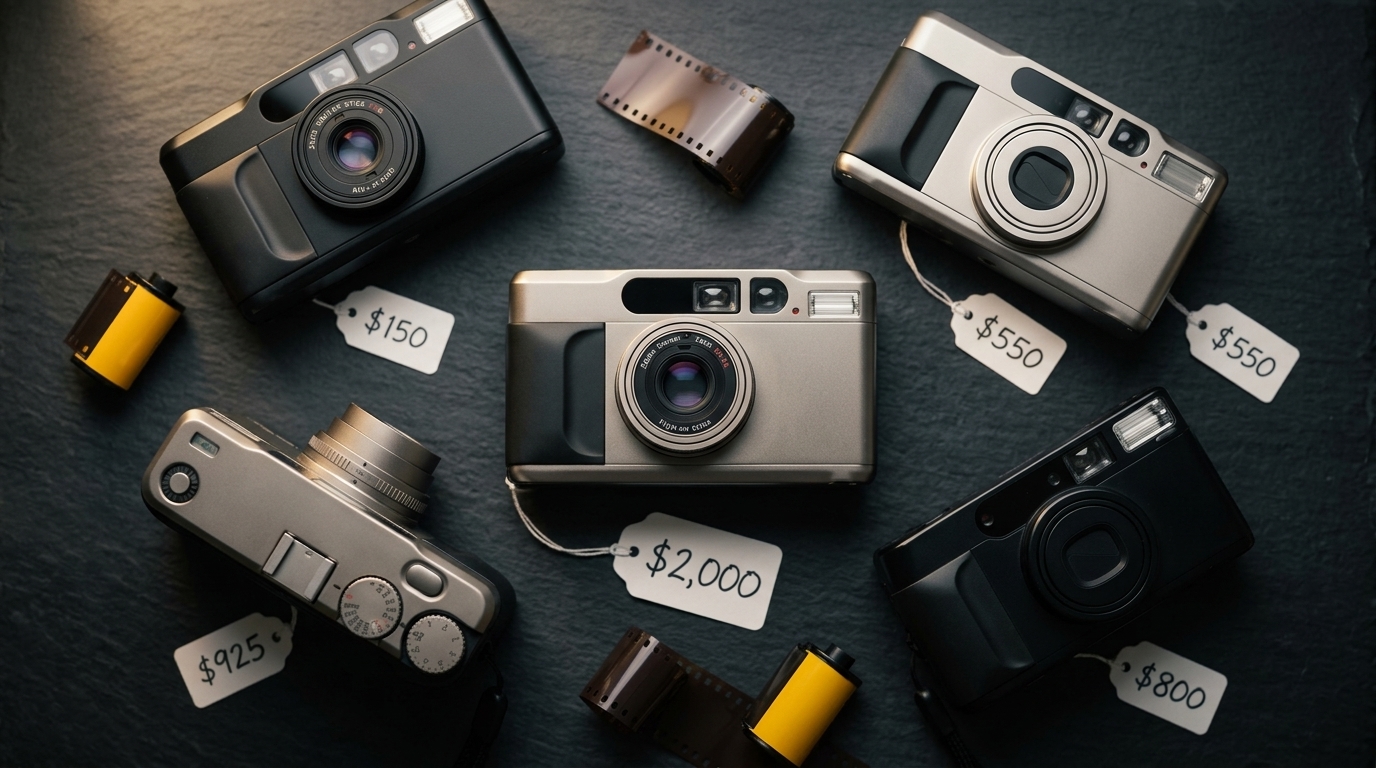
- Priciest: Contax T2, around $1,000 raw and near $2,000 serviced in 2026
- Best value pick: Olympus mju II, around $250
- Main price driver: The film revival plus scarce, aging supply
- Biggest risk: 30-year-old electronics with costly repairs
- Best for: Shooters who will carry a compact weekly, not display collectors
8 min read
In This Guide
- Point and Shoot Film Cameras: The Cult Compacts Explained
- Key Specs and Prices at a Glance
- Why Are Point and Shoot Film Cameras So Expensive?
- The Cult Compacts Driving the Market
- Reliability and What Breaks First
- Cheaper Point and Shoot Film Cameras Worth Buying
- Contax T2 vs Olympus mju II: Which Should You Buy?
- Final Verdict
- Frequently Asked Questions
Point and Shoot Film Cameras: The Cult Compacts Explained
Point and shoot film cameras have turned into one of the strangest stories in photography gear. A clean Contax T2 ran about $250 a decade ago. Today the same body sells for roughly $1,000, and a serviced example reaches close to $2,000 in 2026. Meanwhile a humble Olympus mju II still trades near $250. The gap between those numbers confuses most buyers, so this guide explains the surge and shows you how to spend wisely.
These compacts appeal to two distinct groups. First, working shooters want a pocket camera with a sharp lens for street, travel, and everyday frames. Second, collectors and trend buyers want the look, the brand, and the social cachet. Because both groups chase the same scarce supply, prices climbed fast during the recent analog boom.
This is not the same crowd buying a film SLR system. If you want a full kit with interchangeable lenses, our roundup of the best 35mm film cameras covers it. Here the focus stays on premium compacts, the models behind the hype, and the real cost of ownership.
Key Specs and Prices at a Glance
The table below lists the headline cult compacts, their glass, and typical 2026 used prices. First, use it as a quick map before the detailed breakdowns. Prices reflect recent sold listings and shift with condition and service history.
| Camera | Year | Lens | Typical used price (2026) |
|---|---|---|---|
| Contax T2 | 1991 | Carl Zeiss Sonnar 38mm f/2.8 | $1,000 ($2,000 serviced) |
| Minolta TC-1 | 1996 | G-Rokkor 28mm f/3.5 | $925 |
| Ricoh GR1v | 2001 | Ricoh GR 28mm f/2.8 | $800 |
| Nikon 35Ti | 1993 | Nikkor 35mm f/2.8 | $800 |
| Yashica T4 | 1990 | Carl Zeiss Tessar 35mm f/3.5 | $550 |
| Olympus mju II | 1997 | Olympus 35mm f/2.8 | $250 |
Shop Used Compacts
Find a Tested Point and Shoot at MPB
MPB grades every body, photographs the actual camera, and backs purchases with a six-month warranty. Skip the eBay gamble.
Why Are Point and Shoot Film Cameras So Expensive?
Three forces explain the price story, and supply sits at the front. Kyocera, Ricoh, and the rest built finite runs of these bodies in the 1990s. After 35 years, far fewer good copies survive. Many are lost, broken, or waiting on repairs nobody wants to fund. Therefore the pool of clean, working cameras keeps shrinking each year.
Demand pushes from the other side. The film revival pulled a new wave of shooters toward analog, and premium compacts became the trophy of the moment. A few celebrity sightings poured fuel on the fire. Kendall Jenner, Zendaya, and others appeared with a Contax T2, so the model jumped from camera to status symbol almost overnight.
Scarcity and hype together create the markup you see today. According to Japan Camera Hunter, a clean Ricoh GR1 or Contax T2 ran about $250 a decade ago. Now buyers pay $700 and up for older, more worn copies. The same nostalgia drove the broader analog revival, from instant film to 35mm point and shoot bodies. Premium glass and pocket size simply made these compacts the easiest trophies to chase.
The Cult Compacts Driving the Market
Six models dominate the conversation and set the price ceiling. Notably, each one earns attention for a specific reason, whether glass, build, or pure scarcity. Below you will find what makes each body special and where the money goes.
Contax T2: The Priciest Cult Compact

The Contax T2 arrived in 1991 with a titanium shell and a Carl Zeiss Sonnar 38mm f/2.8 lens. It weighs about ten and a half ounces and slips into a coat pocket. Aperture-priority exposure, autofocus, and a built-in flash round out the feature set. In particular, the lens delivers edge-to-edge sharpness on Portra 400, which explains much of the love. Still, you pay roughly 70 percent for optics and build and 30 percent for collector heat.
Ricoh GR1v: The Street Shooter Favorite

Ricoh closed its film GR line in 2001 with the GR1v. The 28mm f/2.8 GR lens stays famously sharp, and the magnesium body weighs almost nothing. In addition, manual ISO, aperture priority, and snap-focus presets give street shooters real control. However, the LCD data panel often dies with age, and a dead panel drags resale value down. Budget for the risk before paying around $800.
Yashica T4: Zeiss Glass on a Budget

The Yashica T4 put a Carl Zeiss Tessar 35mm f/3.5 lens in a plain plastic body in 1990. Marketed then as a premium compact, it sold as the affordable Zeiss option next to the T2. The Super and Super D versions add a waist-level finder and weather sealing. Because the build leans on plastic, the camera stays light and discreet. Watch the film advance motor, which sometimes fails without warning around the $550 mark.
Nikon 35Ti: The Analog Dial Icon

The standout feature sits on the top plate: a small analog dial reading aperture, exposure compensation, and frame count. Nikon built the 35Ti in 1993 around a titanium body and a sharp Nikkor 35mm f/2.8 lens. Likewise, collectors love the design, and shooters praise the fast autofocus. One catch stands out: shutter speed tops out at 1/250 in aperture-priority mode. Even so, demand keeps clean copies near $800, while the 28Ti sibling climbs higher.
Minolta TC-1: The Tiny Titanium Jewel

The Minolta TC-1 packs a G-Rokkor 28mm f/3.5 lens into one of the smallest 35mm bodies ever built. Released in 1996, it pairs titanium construction with crisp, contrasty rendering. In addition, aperture priority and manual focus presets push it closer to a serious tool than a casual snapper. Because production stayed low, prices hover around $925 and rarely dip. Street photographers who want pocket size with control gravitate here.
Olympus mju II: The Value Champion
The Olympus mju II, sold as the Stylus Epic in the United States, shipped in 1997. Specifically, a fixed 35mm f/2.8 lens hides behind a sliding clamshell door, and the body resists light weather. At around $250 it remains the smartest entry into this club. Reliability still varies, since the electronics age like any other compact. For most new buyers, though, this model offers the best ratio of image quality to cost.
Compare Prices
See What These Compacts Cost Today
Stock and prices move weekly. Check current inventory and condition grades before you commit to a body.
Reliability and What Breaks First
Every camera here turns 25 to 35 years old, so age shapes the buying decision. The electronics inside these bodies were never meant to run forever. Autofocus motors slow down, light seals shrink, and battery drain creeps in. As a result, a beautiful body sometimes hides an expensive fault.
Specific weak points repeat across models. For example, the Yashica T4 advance motor fails suddenly. Similarly, the Ricoh GR1v LCD panel fades or dies. Meanwhile, the Olympus mju II light seals around the lens deteriorate and leak. On the Contax T2, a proper clean and calibration runs $400 to $500 because parts grow scarce. Therefore, a serviced camera with a warranty often beats a cheaper raw listing.
Inspection protects your money. Fire the shutter at several speeds, open the back against a bright window to spot leaks, and test autofocus in dim light. Our guide on what to check on a used camera walks through each step. Buy from a grader who tests bodies, and you avoid most of these traps with used film cameras.
Cheaper Point and Shoot Film Cameras Worth Buying
You do not need $2,000 for excellent film frames. Several overlooked compacts produce results within a hair of the famous names. Better still, they cost a fraction and break the bank far less often. Consider these picks before you chase the hype.
The Olympus mju I, the older sibling of the mju II, trades near $100 with the same easy handling. The Nikon L35AF from 1983 runs on common AA batteries and sells around $200. Likewise, the Konica Big Mini offers a bright f/2.8 lens for roughly $200. For waterproof fun, the Canon Sure Shot WP-1 covers beach and pool days near $150.
Film SLRs offer another escape from compact prices. For example, a used Nikon F4 film SLR delivers pro build and interchangeable lenses for less than a hyped compact. A modern fixed-lens digital compact chases a similar cult look with no film costs. Each route sidesteps the worst of the 90s point and shoot markup.
Contax T2 vs Olympus mju II: Which Should You Buy?
After weighing the cheaper options, two cameras still anchor the premium compact market. The Contax T2 wins on glass, titanium feel, and prestige. In contrast, the Olympus mju II wins on price, pocketability, and weather resistance. Therefore, your budget and your shooting habits decide the answer.
Choose the T2 if you shoot weekly and want the Zeiss Sonnar rendering with a status object in hand. Choose the mju II if you want strong results, low risk, and money left over for film. The T2 costs about four times more, yet the image gap stays smaller than the price gap suggests. For most readers, the mju II makes the smarter first move, while the T2 rewards committed shooters who accept repair risk.
Final Verdict
Premium point-and-shoot compacts earn part of their reputation and inflate the rest. The lenses are genuinely excellent, the bodies feel special, and the shooting experience stays fun. Therefore, for someone who carries a compact several times a week, a model like the Contax T2 or Ricoh GR1v rewards the spend.
For casual shooters, the math falls apart. A camera used twice a year does not justify four figures, especially with aging electronics waiting to fail. In this case, the Olympus mju II or a budget alternative delivers the same film look for far less stress. Match the camera to your real habits, not the hype cycle.
If you want one recommendation, start with the Olympus mju II and step up only after the habit sticks. Either way, a serviced body with a warranty beats a cheap raw listing with hidden faults. The film revival shows no sign of cooling, so prices on the headline models will likely hold. Shop tested inventory, inspect carefully, and you will land a compact worth carrying.
Ready to Buy?
Check Today’s Price on a Tested Compact
MPB ships graded, warrantied bodies with real photos of the exact camera. Find your point and shoot with less risk.
Frequently Asked Questions
Why are 90s point and shoot film cameras so expensive?
Two forces collide. Supply of clean, working bodies keeps shrinking after 35 years, while the film revival drives fresh demand. Celebrity sightings and scarce stock then push premium compact prices well past their original retail.
Which film compacts are worth the most money?
The Contax T2 leads, with serviced copies near $2,000 in 2026. The Minolta TC-1, Ricoh GR1v, and Nikon 35Ti follow in the $800 to $925 range. Each pairs strong glass with titanium or magnesium build and limited supply.
Is the Contax T2 worth it in 2026?
It depends on use. For weekly shooters who want the Zeiss Sonnar look, the T2 justifies the spend. For occasional users, the price reflects collector hype as much as performance, so a cheaper compact makes more sense.
What are cheaper alternatives to the Contax T2?
The Olympus mju II near $250 leads the value picks. The Yashica T4 offers Zeiss glass around $550, while the Nikon L35AF and Konica Big Mini sell near $200. Each delivers a strong film look for far less.
Where should you buy used film cameras safely?
Buy from a grader who tests and warranties bodies rather than a random seller. Reputable dealers photograph the exact camera and rate its condition. Our look at buying used gear safely compares the major options.

