


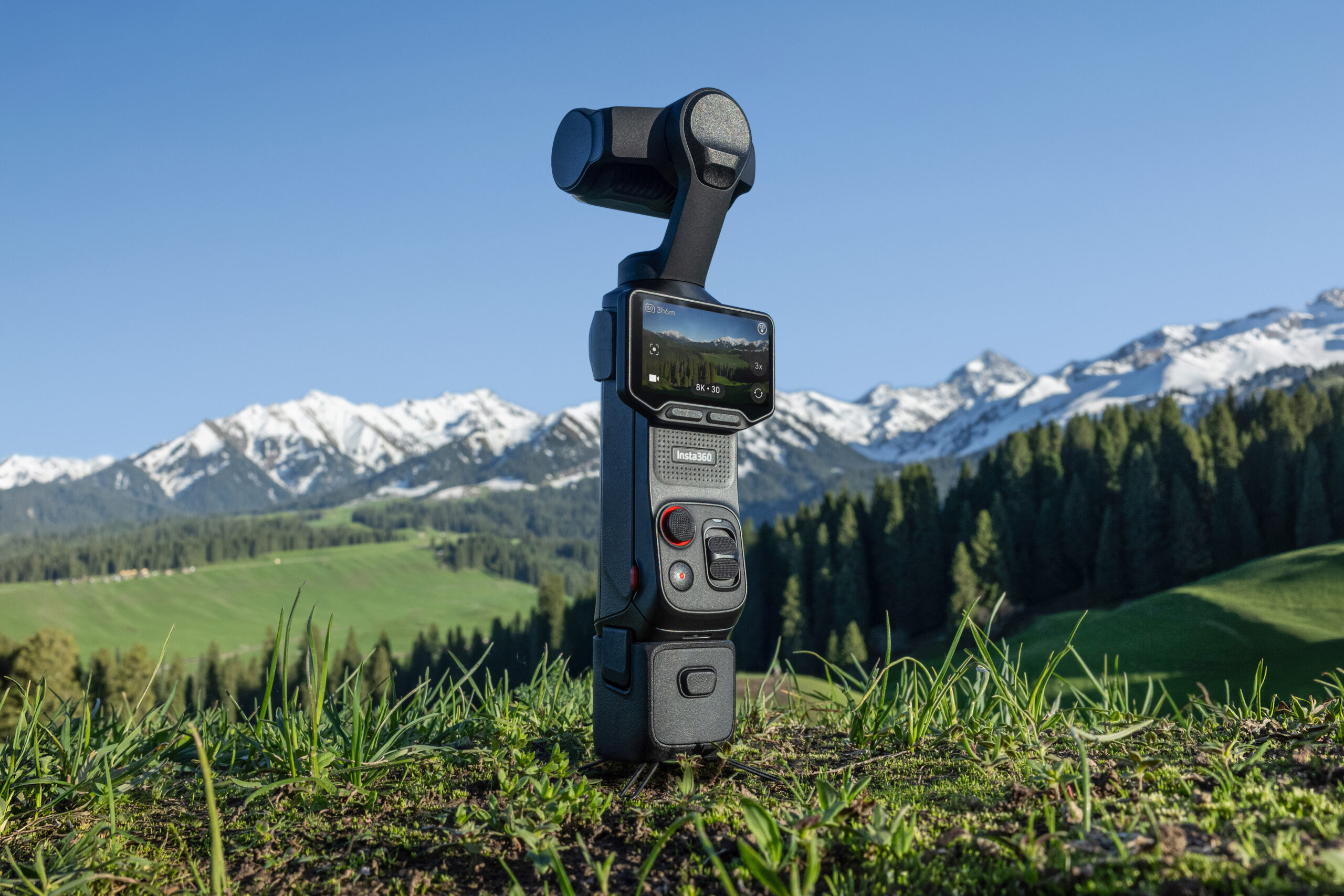
Quick Facts:
- Product: Insta360 Luna Ultra gimbal camera
- Sensors: Dual lenses, 1-inch 8K main plus 1/1.3-inch telephoto
- Main optic: Leica Summicron lens
- Top video: 8K30 Dolby Vision, 10-bit I-Log
- Photos: 37MP UltraPhotos, 200MP Scenic Panorama
- Screen: Detachable 2-inch OLED, wireless to 20 meters
- Battery: 1550mAh, up to 4 hours, 80% in 23 minutes
- Colors: Cosmic Black, Stellar White
- Price: $769.99
- Best for: Solo creators and mobile filmmakers
6 min read
In This Article
Insta360 Luna Ultra Goes Official After a Messy Reveal
The Insta360 Luna Ultra is now official, and it launches today, June 10, at $769.99. Insta360 pulled the cover off its first Leica co-engineered gimbal camera after months of staggered teasers. The full announcement confirms a dual-lens design, 8K30 video, a detachable screen, and AI-powered tracking. For creators tracking this launch, the spec sheet finally matches the hype.
The timing tells its own story. B&H listed the camera and its $769.99 price a day early, which appears to have forced Insta360’s hand. Industry reports indicate the company moved its embargo up from next week to today, only hours after the retailer leak went live. Our earlier Luna Ultra leak details set the stage for this rushed reveal.
Insta360 frames the Luna Ultra as a new direction for the brand. The company built its name on action cameras and 360 capture, so a dedicated gimbal marks fresh territory. Max Richter, VP of Marketing and Co-Founder of Insta360, summed up the ambition in the launch statement.
“Luna Ultra marks Insta360’s arrival in the gimbal camera space, backed by the full strength of our imaging expertise. We believe this category is ready for a new standard, defined by smarter technology, stronger performance, and a more intuitive user experience.”
Key Specs at a Glance
The numbers below come from Insta360’s official launch materials. Together they outline a compact gimbal aimed at solo shooters and mobile filmmakers.
| Specification | Details |
|---|---|
| Camera type | Three-axis stabilized gimbal camera |
| Main lens | Leica Summicron, 1-inch 8K sensor |
| Telephoto lens | 1/1.3-inch sensor, f/2.0, five focal lengths |
| Zoom | Up to 12x digital, with 6x lossless |
| Top video | 8K30 Dolby Vision, 10-bit I-Log, 14 stops dynamic range |
| Photos | 37MP UltraPhotos, 200MP Scenic Panorama |
| Low light | PureVideo Mode up to 4K60, Triple AI Chip |
| Screen | Detachable 2-inch OLED, HD transmission to 20 meters |
| Battery | 1550mAh, up to 4 hours, 80% in about 23 minutes |
| Storage | 47GB built in, microSD to 1TB |
| Weight | Around 200 grams |
| Price | $769.99 (Cosmic Black or Stellar White) |
Imaging and Optics
The Luna Ultra pairs a Leica Summicron lens with a 1-inch 8K sensor for its main camera. A second telephoto lens uses a 1/1.3-inch sensor and an f/2.0 aperture, which adds natural bokeh across five focal lengths. Together the two lenses reach up to 12x digital zoom, including 6x lossless zoom. As a result, this dual setup gives solo creators framing range single-lens pocket gimbals lack.
Specifically, video tops out at 8K30 in Dolby Vision, with 10-bit I-Log capture for flexible grading in post. The system also promises up to 14 stops of dynamic range, so highlights and shadows hold detail. For stills, the Luna Ultra shoots 37MP UltraPhotos and 200MP Scenic Panorama shots. Low-light work leans on PureVideo Mode up to 4K60, backed by a Triple AI Chip for image processing.
Design, Battery, and Stabilization

Insta360 kept the Luna Ultra small, at around 200 grams, close to the weight of a modern smartphone. The standout feature is what the company calls an industry-first detachable 2-inch OLED touchscreen. This detachable screen pulls off the body and controls the camera remotely, with HD transmission up to 20 meters. For one-person shoots, this lets you set the camera down and still check framing.
Meanwhile, power comes from a 1550mAh battery rated for up to four hours, with fast charging to 80% in about 23 minutes. Built-in storage covers 47GB of usable space, while a microSD slot adds up to 1TB. On the stabilization side, a three-axis gimbal works with electronic image stabilization for smooth footage on the move.
Subject tracking runs on Deep Track 5.0, Insta360’s latest tracking engine. Specifically, it adds Auto Tracking, Active Zoom Tracking, Group Tracking, and Smart Framing. These modes keep moving subjects in frame and in focus, which matters for solo vloggers and run-and-gun creators. The camera then handles much of the framing work a second operator would normally cover.
A Six-Year Leica Partnership
The Luna Ultra extends a Leica partnership now spanning six years and five co-developed products. The collaboration pairs Leica’s optical heritage and color science with Insta360’s Emmy Award-winning imaging technology. Notably, Insta360 introduced the camera at Leica’s headquarters in Wetzlar, Germany, a nod to how close the two companies have grown.
Marius Eschweiler, VP of Business Unit Mobile at Leica Camera AG, tied the launch to the broader relationship.
“This launch represents more than a new product announcement. It reflects the shared vision and long-term collaboration between Insta360 and Leica, combining optical heritage with a new generation of intelligent imaging technology.”
The same partnership produced the Ace Pro 2 action camera, so the optical pedigree carries over. For buyers, the Leica name signals tuned lenses and color profiles rather than a cosmetic badge.
Creative Tools and Workflow

The Luna Ultra ships with three Leica color profiles: Leica Natural, Leica Vivid, and Leica Chrome. Alongside these, a set of cinematic filters delivers in-camera looks without heavy editing. For professional pipelines, the camera supports ACES color workflows, so footage drops into demanding color setups cleanly.
Moreover, workflow tools go further than most pocket gimbals. Built-in timecode enables multi-camera sync and editing in Final Cut Pro and Adobe Premiere Pro. In addition, QR Color Share moves color settings between devices quickly, while the Insta360 app offers AI-assisted edits, which flag key moments. For audio, a built-in wind guard cleans up outdoor sound, and the camera pairs with Insta360 Mic systems for single or dual transmitters.
Accessories widen the kit further. Insta360 offers a POV Head Tracker for hands-free capture, Black Mist filters for cinematic diffusion, a Wide-Angle Lens opening the field of view to 108 degrees, and ND filters for exposure control. Because these attach magnetically, swaps happen fast in the field.
Insta360 Luna Ultra vs DJI Osmo Pocket: How They Compare
The Luna Ultra and the DJI Osmo Pocket chase the same buyer: the solo creator who wants pocketable, stabilized video. Like the dual-camera Osmo Pocket 4P, the Luna Ultra carries two lenses on top of a three-axis gimbal. The headline difference is resolution, since the Luna Ultra reaches 8K30 while the current Osmo Pocket 3 maxes at 4K120.
Optics and tools tilt toward Insta360 on paper. The Leica Summicron lens, 200MP panoramas, and ACES support read like pro features, while DJI counters with mature software and years of accessory support. For a deeper head-to-head, see how the Luna stacks up against the DJI Pocket 4, then read our DJI Osmo Pocket 3 review for the category benchmark.
Finally, price keeps the two close. At $769.99, the Luna Ultra costs more than a standard Osmo Pocket 3 kit. For buyers who want 8K capture and a telephoto lens, the premium earns its keep. For those who value a proven platform, DJI still holds appeal.
Price and Availability
The Insta360 Luna Ultra costs $769.99 and ships in Cosmic Black or Stellar White. Sales start today, June 10, through the Insta360 Store, Amazon, Best Buy, and select retailers worldwide. Availability in some markets follows at a later date, per Insta360.
The official launch closes a strange rollout, one beginning with retailer leaks and ending with a rushed embargo. With full specs, a confirmed price, and stock on shelves, creators no longer guess at the details. Anyone weighing a pocket gimbal now has a concrete option, complete with a Leica name and an 8K sensor, at a price below a full mirrorless kit.
Frequently Asked Questions
How much does the Insta360 Luna Ultra cost?
The Insta360 Luna Ultra costs $769.99 in the United States. It comes in Cosmic Black or Stellar White at the same price. Insta360 confirmed the figure at the official June 10 launch.
When is the Luna Ultra release date?
The Luna Ultra launched on June 10, 2026. Sales began the same day through the Insta360 Store, Amazon, and Best Buy. Availability in some markets follows later.
What sensors does the Insta360 Luna Ultra use?
The main camera uses a 1-inch 8K sensor behind a Leica Summicron lens. A second telephoto lens pairs a 1/1.3-inch sensor with an f/2.0 aperture. Together they support 8K30 video and up to 6x lossless zoom.
Does the Insta360 Luna Ultra shoot 8K?
Yes. The Luna Ultra records 8K30 video in Dolby Vision with 10-bit I-Log. It also offers up to 14 stops of dynamic range for richer highlights and shadows.
How long does the Luna Ultra battery last?
The 1550mAh battery delivers up to four hours of recording. Fast charging reaches 80% in about 23 minutes. Built-in storage adds 47GB, with microSD support up to 1TB.
Did Leica help design the Luna Ultra?
Yes. Insta360 co-engineered the Luna Ultra optics with Leica, including the Summicron main lens and three Leica color profiles. The partnership spans six years and five co-developed products.

