


Quick Verdict: Wiki Loves Monuments 2025 closed its 16th edition with 3,789 photographers contributing 227,918 photos. Iranian photographers swept three of the top five spots, with Hossein Pourakbarian taking first place for his shot of the Dayr-e Gachin Caravanserai. Every winning image carries a CC BY-SA 4.0 license, so anyone giving proper credit has free use of the work.
Last updated: 5/2026 | 9 min read
In This Article
- The 2025 Contest at a Glance
- Key Numbers From the 2025 Contest
- The Grand Prize Winner
- Ranks 2 Through 5: Iran Dominates the Upper Half
- Ranks 6 Through 10: Heritage From Egypt to China
- Why Wiki Loves Monuments 2025 Matters Beyond the Trophies
- How Wiki Loves Monuments 2025 Compares to Previous Editions
- Standout Themes from the 2025 Photo Contest
- Final Take
- Frequently Asked Questions
The 2025 Contest at a Glance
The 2025 Wiki Loves Monuments contest reached its conclusion this week, with 25 international winners selected out of 227,918 submissions. As the world’s largest photo contest, Wiki Loves Monuments 2025 marked the 16th year of an annual heritage photography initiative organized by Wikimedia. First, photographers from dozens of countries shot during September and October. Then a nine-person expert jury sorted through the strongest national winners over several months.
This year’s competition leaned heavily on architectural and historical subjects. For example, caravanserais, abbeys, palaces, and bazaars dominated the top ranks. Notably, Iran produced three of the top five entries, signaling both the depth of Iran’s photographic community on Wikimedia and the visual richness of its built heritage. Specifically, the grand prize went to a sweeping landscape composition near the Dayr-e Gachin Caravanserai, an 11th-century site sometimes called the “mother of Iranian caravanserais.”
For photographers reading this, the contest matters because every submitted image lands on Wikimedia Commons under a CC BY-SA 4.0 license. As a result, your work supports Wikipedia articles, educational projects, and journalism worldwide. Moreover, the submission window opens again each September, so there is plenty of time before the 2026 edition.
Key Numbers From the 2025 Contest
| Stat | 2025 Result |
|---|---|
| Total photographers | 3,789 |
| Total photos submitted | 227,918 |
| Edition number | 16th |
| International winners | 25 |
| Jury size | 9 expert jurors |
| License | CC BY-SA 4.0 |
| Submission window | September – October 2025 |
| First place subject | Dayr-e Gachin Caravanserai, Iran |
The Grand Prize Winner
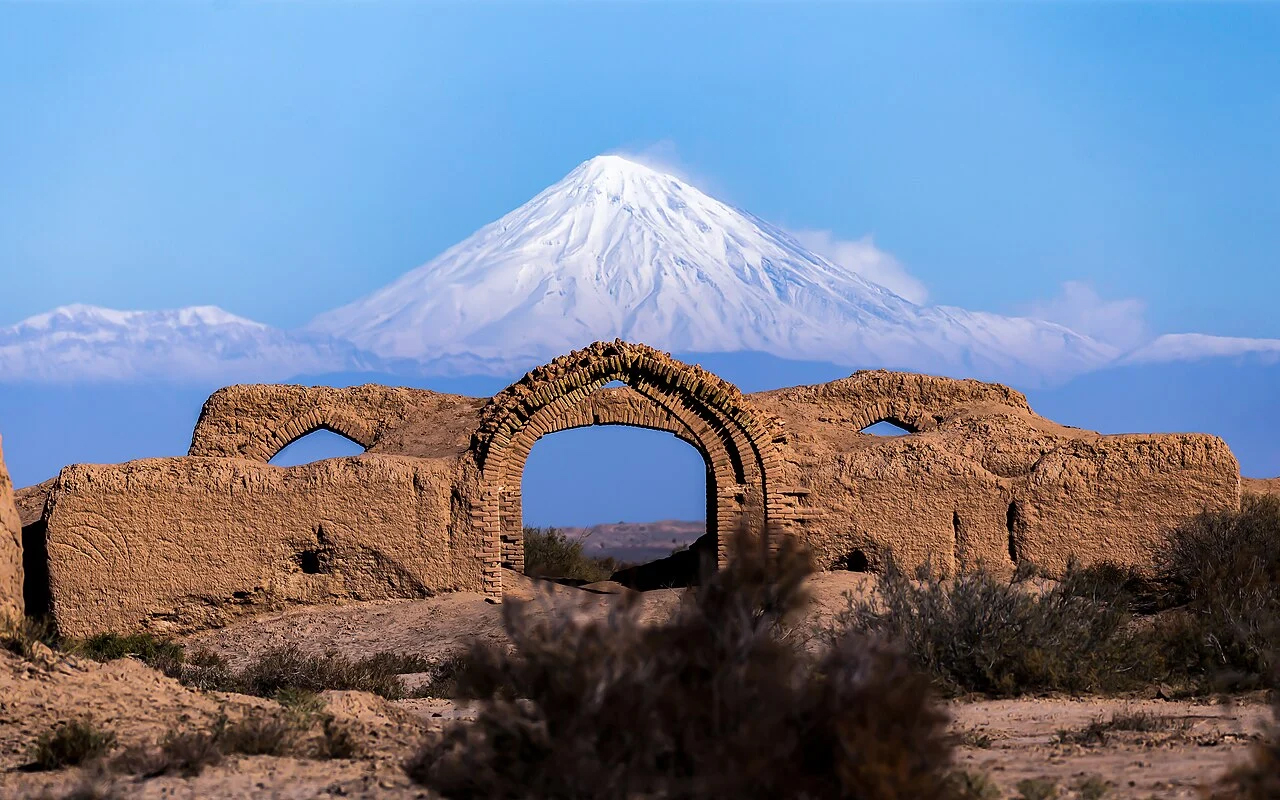
First place: Dayr-e Gachin Caravanserai, Iran. Photo: Hossein Pourakbarian / Wikimedia Commons / CC BY-SA 4.0.
Hossein Pourakbarian’s first-place photo shows a section of stone wall and gate at the Dayr-e Gachin Caravanserai in Iran’s Qomrud region, framed against distant mountains. The composition uses the rough stonework as a foreground anchor while the mountain ridge runs along the upper third of the frame. Shadow and natural light do most of the work, without obvious post-processing.
The site itself dates to roughly the 11th century, though earlier construction phases trace back further. Iranians sometimes refer to it as the “mother of Iranian caravanserais” because of its size and influence on later road inn architecture. In 2023, UNESCO inscribed Dayr-e Gachin and 53 other Iranian caravanserais together as a single World Heritage property, recognizing the network’s role in trans-Asian trade.
Within this year’s contest, the photo’s appeal goes beyond technical merit. Above all, it documents a heritage site few Western viewers will ever visit in person. Therefore, the image now becomes a lasting reference, available for use in Wikipedia articles about Iranian architecture, the Silk Road, and pre-modern logistics.
Ranks 2 Through 5: Iran Dominates the Upper Half
Three of the top five 2025 photo contest winners come from Iran, an outcome reflecting both organizing strength and aesthetic consensus among the jury.
Second Place: The Mehmandust Tower’s Lost Names

Second place: Mehmandust Tower, Iran. Photo: Darabad Andromeda / Wikimedia Commons / CC BY-SA 4.0.
By framing only the upper section of the Mehmandust Tower in northern Iran, Darabad Andromeda’s second-place image captures brick patterns and carved decoration with crisp clarity. The Seljuk Empire built the tower in 1097 as a tomb. Time has erased its dome and the names of those interred there, leaving the structure partially mysterious. The photo treats this absence with restraint, letting the stonework speak for itself rather than forcing emotion through dramatic angles.
Third Place: A Sacred Reservoir in India

Third place: Kusum Sarovar, India. Photo: Arjunfotografer / Wikimedia Commons / CC BY-SA 4.0.
Mathura District in Uttar Pradesh, India provides the setting for the third-place entry by Arjunfotografer. The subject is Kusum Sarovar, a stepped reservoir tied to Krishna and Radha legends in Hindu tradition. Calm water reflects the surrounding pavilions, with the photographer favoring a meditative composition over the wide-angle drama common in heritage photography.
Fourth Place: The Ishak Pasha Palace

Fourth place: Ishak Pasha Palace, Turkey. Photo: Volcanicaaa / Wikimedia Commons / CC BY-SA 4.0.
Volcanicaaa took fourth with a portrait of Ishak Pasha Palace in eastern Turkey. Construction began in 1685 and took roughly a century. The palace blends Anatolian, Iranian, and North Mesopotamian influences in a single complex. Today the site is a major tourist draw and a UNESCO tentative listing.
Fifth Place: Geometry at the Arak Bazaar

Fifth place: Arak Bazaar, Iran. Photo: Dehghanpourpix / Wikimedia Commons / CC BY-SA 4.0.
Dehghanpourpix’s fifth-place photo captures the Arak Bazaar in central Iran during a winter day. The bazaar’s symmetrical lines align with the four cardinal directions, an unusual layout for a Persian commercial structure. Cold February light flattens shadows, helping the geometry read clearly without competing visual noise.
Ranks 6 Through 10: Heritage From Egypt to China
Geography broadens in the second half of the top 10. Photographers from Egypt, Italy, Spain, Ukraine, and China round out the rankings, each shooting a culturally distinct subject.
Sixth Place: Luxor’s Hot Air Balloons Over Ancient Stone

Sixth place: Luxor temples with hot air balloons, Egypt. Photo: Mohamed Abdelzaher / Wikimedia Commons / CC BY-SA 4.0.
Mohamed Abdelzaher took sixth with a Luxor scene blending ancient Egyptian temple ruins and modern hot air balloons drifting overhead. Sometimes called “the world’s greatest open-air museum,” Luxor compresses thousands of years of cultural layering into one valley. Above all, the balloon presence adds scale and a hint of human activity without overwhelming the historical subject.
Seventh Place: The Sacra di San Michele

Seventh place: Sacra di San Michele, Italy. Photo: Federico Milesi / Wikimedia Commons / CC BY-SA 4.0.
Federico Milesi’s seventh-place image of Sacra di San Michele, a roughly 1,000-year-old abbey in Italy’s Piedmont region, sits on a mountaintop ridge. Atmospheric light creates a sense of elevation and isolation. Strikingly, a different photo of this same abbey placed second in Wiki Loves Monuments 2015, suggesting the site rewards repeat visits with new compositions.
Eighth Place: Romanesque Frescoes at Sant Climent de Taüll

Eighth place: Sant Climent de Taüll, Spain. Photo: Mikipons / Wikimedia Commons / CC BY-SA 4.0.
Mikipons placed eighth with Sant Climent de Taüll in Catalonia, Spain. The 11th- and 12th-century Romanesque complex carries Lombard and Byzantine architectural influences. In 2000, UNESCO added the church to the World Heritage list along with eight other Catalan churches, specifically for the frescoes by the Master of Taüll.
Ninth Place: A Wooden Church in Western Ukraine

Ninth place: Church of the Intercession, Ukraine. Photo: Yurii-mr / Wikimedia Commons / CC BY-SA 4.0.
Yurii-mr captured the Church of the Intercession, a 19th-century wooden church in a small village in western Ukraine, lit by warm summer light. However, the image carries weight beyond aesthetics. Specifically, wooden churches in Ukraine have faced damage and destruction since 2022, so each high-quality photographic record helps preserve the visual heritage.
Tenth Place: A Confucius Temple Archway in China

Tenth place: Confucius Temple, China. Photo: Kcx36 / Wikimedia Commons / CC BY-SA 4.0.
Kcx36 closed the top 10 with an interior shot of a Confucius Temple in Tonghai County, southwestern China. The composition uses a symmetrical archway to lead the eye through three layers of structure. In particular, Kcx36 is a long-time Wikimedia volunteer, a reminder of how the contest reflects an ongoing community of contributors rather than one-time entrants.
Why Wiki Loves Monuments 2025 Matters Beyond the Trophies
The contest’s commercial side stays modest. Cash prizes for the international round sit in the low thousands of dollars. However, the larger impact happens on Wikimedia Commons, where every uploaded photo carries a CC BY-SA 4.0 license.
Since 2010, Wiki Loves Monuments photographers have collectively donated millions of images to Commons. This means Wikipedia articles, school textbooks, museum websites, and journalism around the world pull from this library every day. For example, a single 2025 winning photo of Kusum Sarovar might end up illustrating a Wikipedia article on Hindu pilgrimage, a guidebook chapter on Mathura, and a high school essay in Buenos Aires within the same year.
Working photographers face a straightforward trade-off. You hand over commercial reuse rights in exchange for global exposure and a permanent place in the public visual record. Some pros refuse this deal, while others see the contest as portfolio-building infrastructure. The grand prize itself comes with a small cash component, but the ongoing visibility through Wikipedia provides the real value.
How Wiki Loves Monuments 2025 Compares to Previous Editions
Wiki Loves Monuments has run since 2010. Each edition records the same basic mechanics: amateur and professional photographers shoot heritage sites in September, national juries pick local winners, and an international jury selects the global top 25.
In 2024, the contest awarded its grand prize to Ukraine. Therefore, the 2025 sweep by Iranian photographers represents a meaningful geographic shift. India and Egypt also performed strongly in the top 10, signaling a continuing rebalancing toward heritage photography from West, South, and Central Asia.
Submission volume in 2025 stays consistent with recent years. Even so, the participating countries figure shows continued breadth: photographers contributed work from dozens of nations, each running its own local round before sending winners to the international jury.
Standout Themes from the 2025 Photo Contest
Looking at the 2025 photo contest as a whole, some patterns stand out. The lists below cover what worked best and what should improve in 2026.
What Stood Out
- Three top-five spots from Iran demonstrate organizing depth in Iran’s photography community
- Use of CC BY-SA 4.0 licensing turns the contest into a public-good resource
- 11th-century architecture dominates the top three winners
- Heavy use of architectural symmetry and geometric framing across winning images
- Seventh-place Sacra di San Michele shows how the same site rewards repeat visits
What We’d Like to See More Of
- Stronger representation from Sub-Saharan Africa beyond Egypt
- More interior architectural photography, since most contests favor exterior compositions
- Greater participation from Latin American photographers, who placed below the top 10
- Dedicated jury feedback published per country to help local entrants improve year over year
Final Take
Wiki Loves Monuments 2025 delivered exactly what the contest was designed to produce. As a result, heritage from Iran, India, Turkey, Egypt, Italy, Spain, Ukraine, and China now sits on Wikimedia Commons in high resolution, free for educational and journalistic reuse. Notably, Hossein Pourakbarian’s grand prize photo earns its top placement through composition discipline and subject importance, not through technical theatrics.
Iranian photographers’ showing this year stands out for geographic reasons. Specifically, three top-five placements from one country signals strong organizing capacity, a deep amateur-to-professional photography community, and subject matter the global jury favors. Therefore, other national chapters watching the 2026 cycle should study how Iran’s organizers built this base.
For photographers thinking about entering 2026, the entry process is straightforward. First, shoot heritage sites between now and August. Then, learn the local rules in your country. Finally, upload during September. Above all, give yourself enough time to revisit subjects under different light. For example, several 2025 winners returned to the same monuments multiple times before settling on their submitted frame.
PhotographyTalk recommends following Wiki Loves Monuments on social channels for early news on the 2026 launch and country-by-country opening dates. Moreover, the 2025 work demonstrates a high standard, but the contest has always rewarded patience and local knowledge over expensive gear.
Frequently Asked Questions
Who won Wiki Loves Monuments 2025?
Hossein Pourakbarian won first place for his photograph of the Dayr-e Gachin Caravanserai wall and gate in Iran. Darabad Andromeda took second with the Mehmandust Tower, and Arjunfotografer placed third with Kusum Sarovar in India.
How many photos were submitted to the 2025 contest?
3,789 photographers contributed 227,918 photos during the September and October 2025 submission window. National juries selected the strongest entries from each country, then a nine-person international jury picked the final 25 winners.
Are Wiki Loves Monuments photos free to use?
Yes. Every entry uploads to Wikimedia Commons under a Creative Commons Attribution-ShareAlike 4.0 license. This means you have free use of the images for editorial, educational, and commercial purposes, provided you credit the photographer and apply the same license to derivative works.
When does the 2026 Wiki Loves Monuments contest open?
Submissions open in September 2026. Countries publish their local rules and lists of eligible monuments through August. Photographers should check the country page for their region on wikilovesmonuments.org closer to the date.
What kind of photos win Wiki Loves Monuments?
Recent winners share common traits: clear composition, careful use of natural light, and a meaningful relationship between the subject and its setting. The 2025 results favored architectural photography with geometric structure and historical depth, though landscape and detail compositions also placed.
Do I need professional gear to enter Wiki Loves Monuments?
No. The contest accepts entries from amateur and professional photographers alike. Several past winners have shot on consumer-grade DSLRs and mirrorless cameras. Composition, light, and subject choice consistently outweigh equipment in the jury’s evaluation.

