


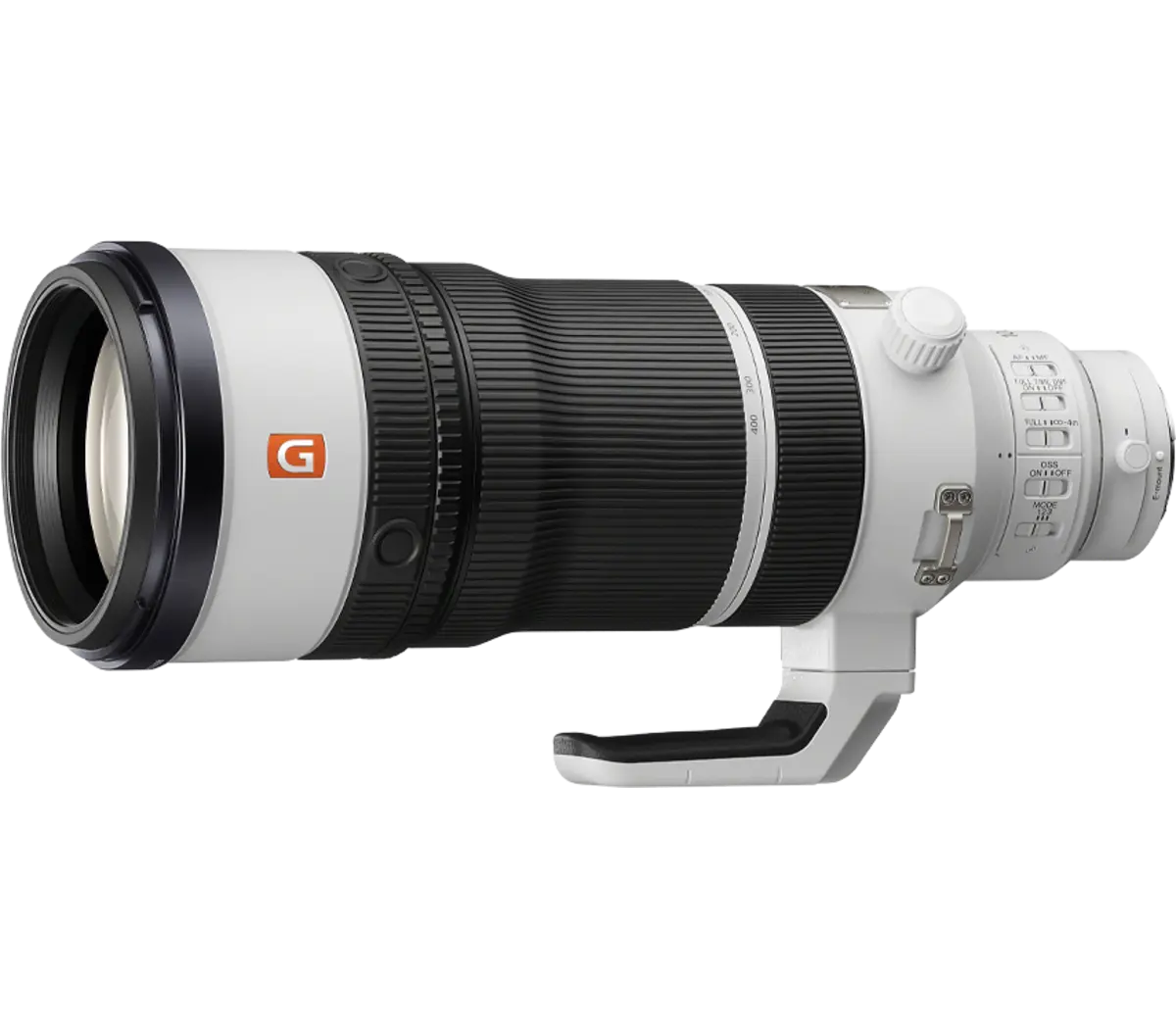
Quick Facts:
- Product: Sony FE 100-400mm f/4.5 GM OSS (SEL100400MC)
- Focal length: 100-400mm full-frame
- Aperture: Constant f/4.5 (vs the original GM’s variable f/4.5-5.6)
- Optical formula: 28 elements in 20 groups, including ED XA, XA, 2x Super ED, 3x ED
- Autofocus: Four XD Linear Motors with floating focus group, up to 3x faster than the original GM
- Stabilization: OSS with Active Mode coordination on compatible bodies
- Zoom design: Internal zoom, constant length, magnesium alloy barrel
- Weight: 1,840 g (65 oz)
- Dimensions: 328 mm long, 119.8 mm diameter, 95 mm front filter, 40.5 mm drop-in slot
- Minimum focus: 64 cm at 100mm to 1.5 m at 400mm
- Teleconverters: 1.4x (140-560mm f/6.3) and 2x (200-800mm f/9), up to 1,200mm in APS-C mode
- Price: $4,299.99 USD ($5,599.99 CAD, £4,400 UK)
- Availability: June 2026
- Best for: Wildlife, birding, sports, and photojournalism shooters
8 min read
In This Article
Sony FE 100-400mm f/4.5 GM OSS Overview: A Constant-Aperture Super-Telephoto Lands
Sony unveiled the Sony FE 100-400mm f/4.5 GM OSS today as its newest G Master super-telephoto zoom. The headline change is the constant f/4.5 aperture across the entire 100-400mm range. By comparison, the original FE 100-400mm f/4.5-5.6 GM OSS ramped from f/4.5 at the wide end down to f/5.6 by 400mm. Therefore, the new lens gathers roughly two-thirds of a stop more light at 400mm than the older GM, which holds shutter speeds higher and ISO lower for distant moving subjects.
Sony built this lens for wildlife, birding, sports, and photojournalism creators. Specifically, Sony rates the four XD Linear Motors at up to 3x faster autofocus than the original GM, with subject tracking about 50% better (both numbers measured on the Alpha 9 III). Notably, the lens supports the Alpha 9 III’s 120 fps continuous shooting with AF/AE tracking, which opens the door to peak-action sequences few super-telephotos handle as cleanly. Our Sony A9 III review covers the body’s global shutter advantages in detail.
The price stands at $4,299.99 USD with June 2026 availability. UK pricing lands at £4,400, while Canadian buyers face $5,599.99 CAD. Sony also announced the lens alongside the new Alpha 7R VI body, and a body-plus-lens kit version is available for shooters jumping into the Alpha lineup fresh. For pricing comparisons, the Sony 100-400mm price runs roughly $1,800 above the original GM’s launch.
Weight and Build Trade-Off
One trade-off worth flagging upfront: the new lens weighs 1,840 g (65 oz), about 445 g heavier than the original at roughly 1,395 g. However, hand-held shooters will feel the difference across a long day. Gimbal, monopod, and tripod operators see the weight as the cost of constant f/4.5 optics inside a magnesium alloy barrel with internal zoom design. For broader Sony body context, our roundup of the best Sony cameras places every Alpha body in the lineup.
Sony FE 100-400mm f/4.5 GM OSS Specs at a Glance
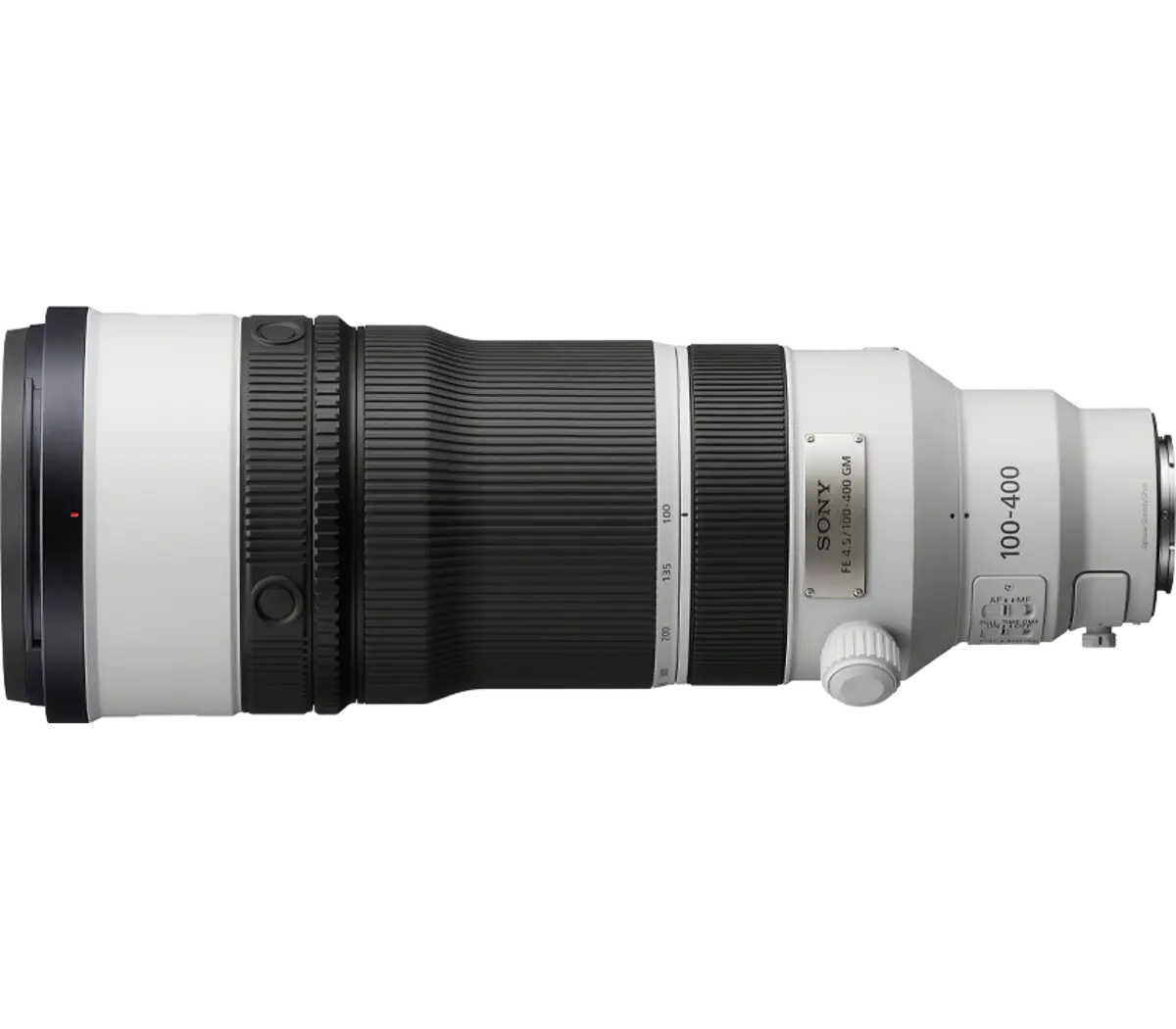
Sony’s spec sheet packs serious optical and mechanical engineering into the new telephoto. Here is the high-level rundown.
| Specification | Details |
|---|---|
| Mount | Sony E (full-frame) |
| Focal length | 100-400mm |
| Maximum aperture | Constant f/4.5 across the full zoom range |
| Optical design | 28 elements in 20 groups, including ED XA, XA, 2x Super ED, 3x ED |
| Coatings | Nano AR Coating II, fluorine front-element coating |
| Diaphragm | 11-blade circular aperture |
| Autofocus motors | Four XD Linear Motors with floating focus group |
| AF speed | Up to 3x faster than the original FE 100-400mm GM (Sony test on Alpha 9 III) |
| Stabilization | OSS with Active Mode coordination on compatible bodies |
| Minimum focus | 64 cm at 100mm, 1.5 m at 400mm |
| Weight | 1,840 g (65 oz) |
| Length | 328 mm, internal zoom |
| Diameter | 119.8 mm |
| Filter thread | 95 mm front, 40.5 mm drop-in slot |
| Teleconverters | 1.4x (140-560mm f/6.3), 2x (200-800mm f/9); up to 1,200mm in APS-C mode |
| Price | $4,299.99 USD ($5,599.99 CAD, £4,400 UK) |
| Availability | June 2026 |
Fund Your Upgrade
Sell Your Original 100-400mm GM to MPB
Free shipping, transparent quotes, and quick payouts. Turn the original FE 100-400mm GM (or older super-tele glass) into cash toward the new constant-aperture lens.
Why Constant f/4.5 Matters for Wildlife and Sports
Constant aperture telephotos solve a problem variable-aperture zooms create. Specifically, as you zoom from 100mm to 400mm on the original GM, the maximum aperture closed from f/4.5 down to f/5.6. While the two-thirds-stop change seems modest, it forces a shutter or ISO adjustment mid-action. As a result, exposure shifts as you reframe a bird in flight.
The new GM lens eliminates the shift. Specifically, constant f/4.5 across the full range means exposure stays locked while you zoom. For example, wildlife shooters tracking a perched raptor benefit immediately. Similarly, sports shooters working long-end pans face the same upside. Likewise, photojournalists working unpredictable light at events lose one variable from a fast-moving scene.
The optical formula supports the constant-aperture story. Sony built the lens around 28 elements in 20 groups. Notably, the formula includes a newly developed ED XA element, the first Sony lens combining extra-low dispersion with extreme aspherical glass in one element. In addition, the design carries one regular XA, two Super ED, and three ED elements. Nano AR Coating II controls flare and ghosting in backlit conditions, while the 11-blade circular aperture preserves the signature G Master rounded bokeh wide open at f/4.5.
One spec to flag for buyers: the constant aperture comes at a real weight cost. At 1,840 g, the new lens runs about 445 g heavier than the original GM. Internal zoom design helps because the lens never extends, which preserves balance on a gimbal. However, hand-holders shooting 8-hour wildlife days will feel the difference. A monopod or sling carry becomes more useful with this lens than with the original.
Autofocus and Stabilization
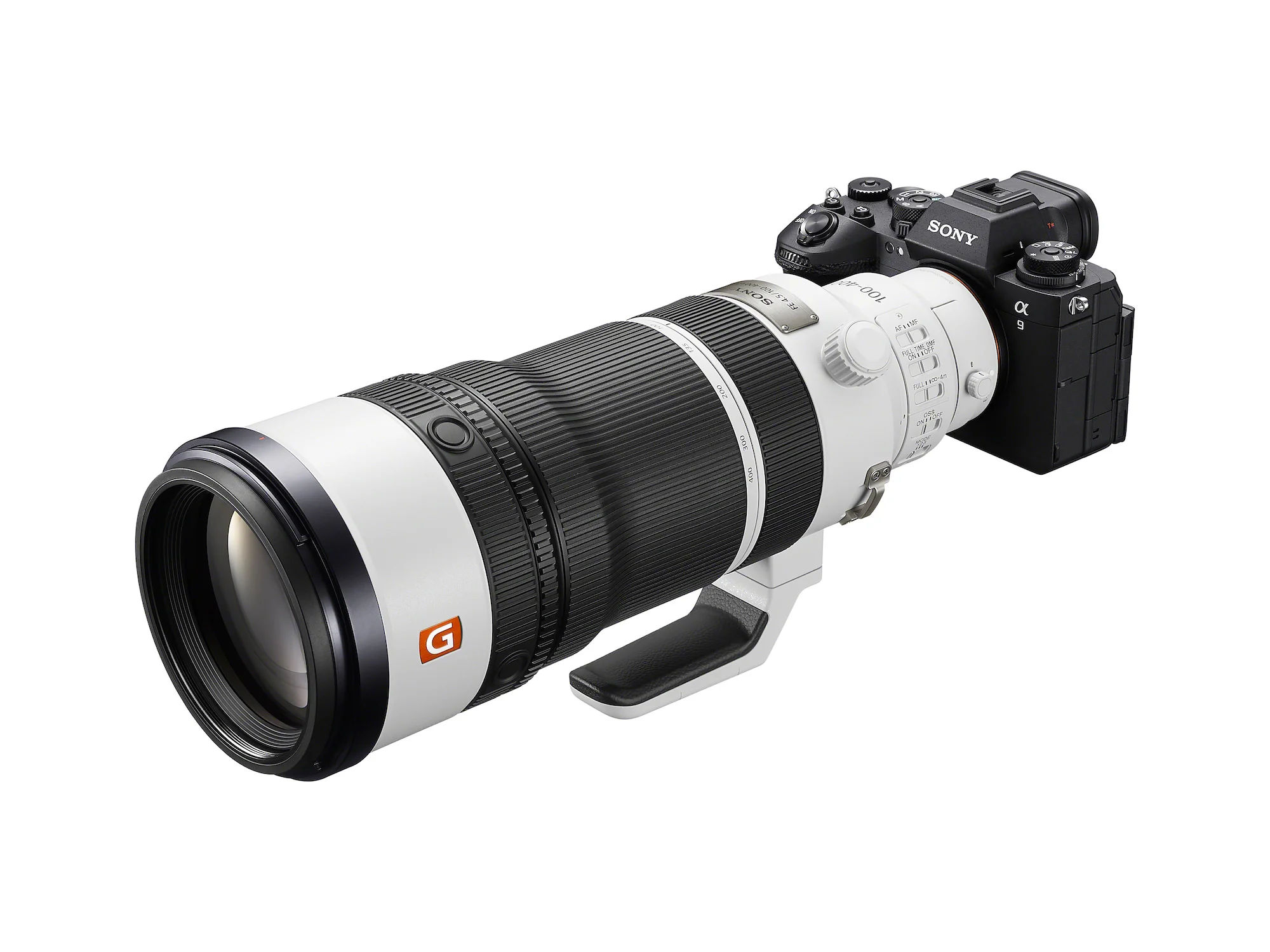
Four XD Linear Motors drive autofocus on the Sony FE 100-400mm f/4.5 GM OSS. The motors use a floating focus mechanism, where multiple optical groups move during focusing instead of one block. Sony rates AF speed up to 3x faster than the original GM, with subject tracking about 50% improved (both numbers measured on the Alpha 9 III in Sony’s test conditions). For peak-action subjects, the lens fully supports the Alpha 9 III’s 120 fps continuous shooting with AF/AE tracking.
Stabilization runs Sony’s OSS system with Active Mode coordination. On compatible bodies, the lens’s stabilization syncs with in-body image stabilization, sharing motion data for tighter correction. Sony also includes breathing compensation support, which corrects angle-of-view shifts during focus pulls in video work. Wildlife videographers and documentary shooters benefit from cleaner racks without focus-shift distortion.
Control Layout and Teleconverter Support
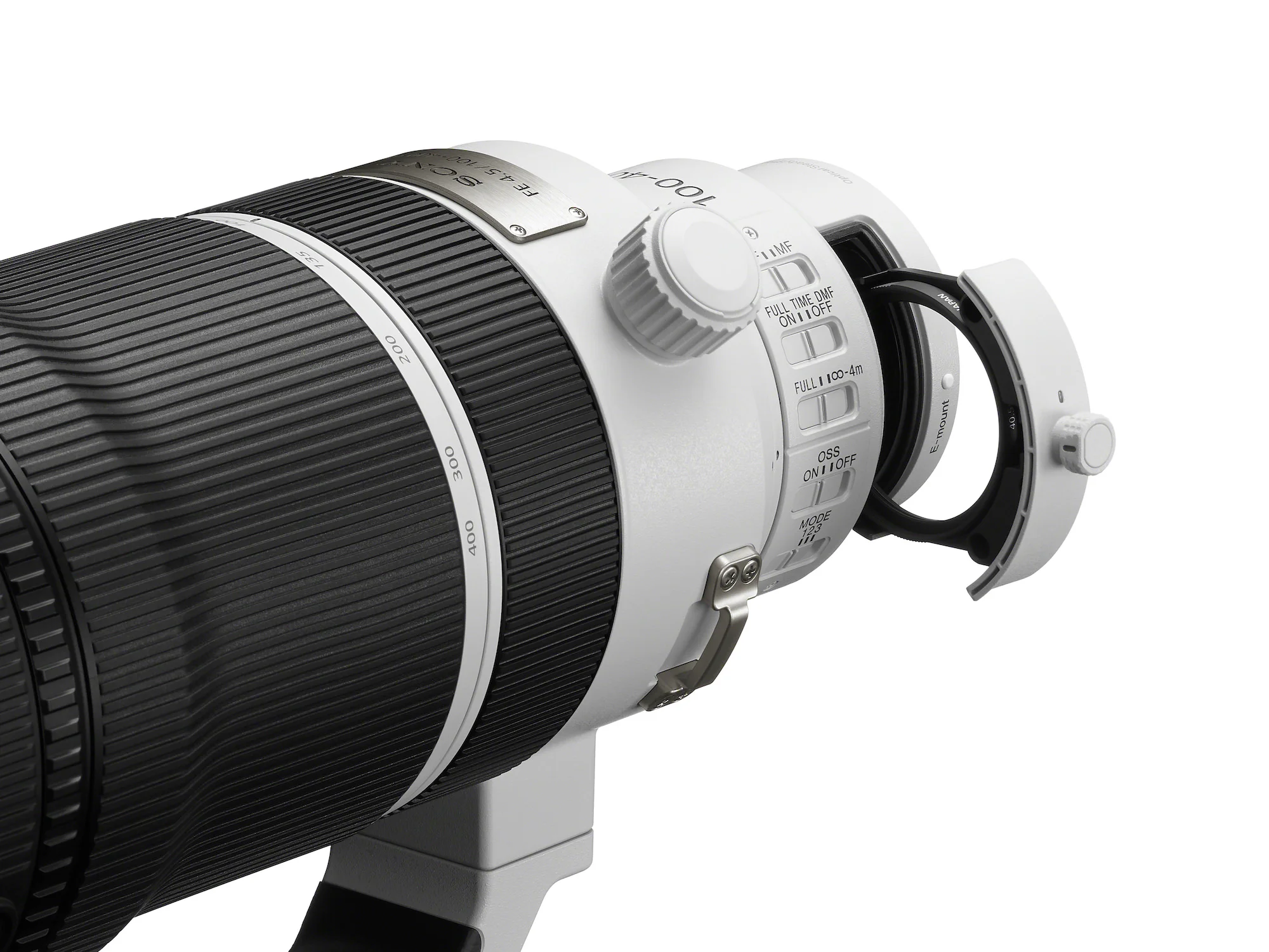
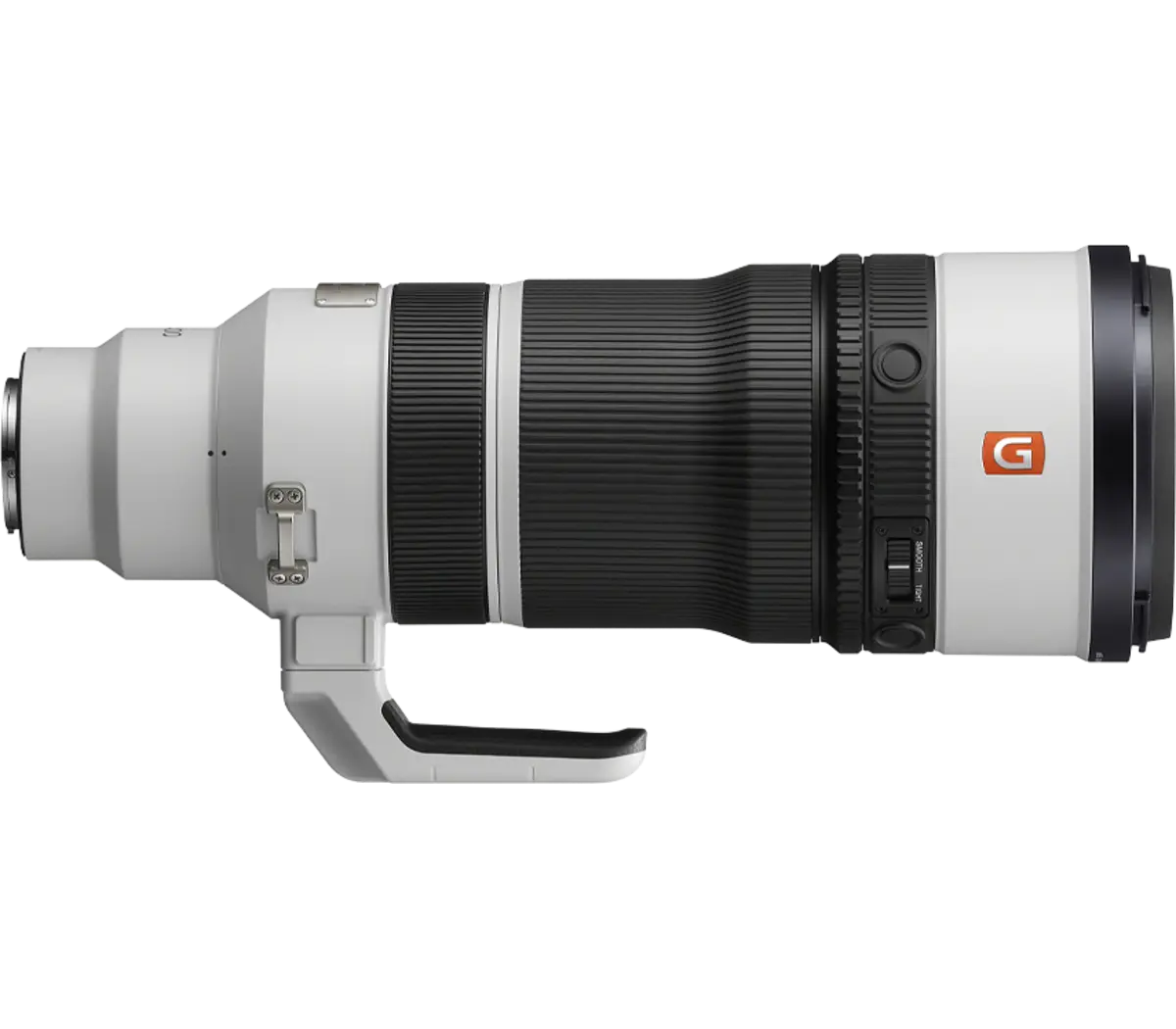
Control layout sits with four focus hold buttons spaced around the barrel, plus a function ring for assignable in-camera commands. A zoom torque switch lets users adjust the resistance of the zoom action depending on shooting style (slow torque for cinema-style pulls, fast for run-and-gun). Sony also includes a tripod foot, though it lacks an Arca-Swiss profile out of the box, which means most pro gimbal users will swap to a third-party foot.
Teleconverter support adds reach without a second lens. With the SEL14TC 1.4x teleconverter, the focal length stretches to 140-560mm at f/6.3. The SEL20TC 2x teleconverter pushes the range to 200-800mm at f/9. Also, shooters using APS-C crop mode on a compatible body extend maximum reach to about 1,200mm equivalent. For birders and distant wildlife work, this reach extension dramatically reshapes the kit.
Trade In, Trade Up
Cash In Old Super-Tele Glass at MPB
MPB pays competitive market rates for used Sony GM telephotos, Sigma sport zooms, and Canon RF super-teles. Stack the payout against the $4,299 pre-order.
New GM vs Original 100-400mm GM: What Changed
Comparing the new lens to the original FE 100-400mm f/4.5-5.6 GM OSS shows a clear pro-tier upgrade. Sony kept the focal range identical at 100-400mm and the front G Master designation, but reworked the optical formula, the AF system, and the build. Constant f/4.5 versus variable f/4.5-5.6 is the headline. The new lens gathers about two-thirds of a stop more light at 400mm, which translates to a faster shutter speed or a lower ISO when working distant subjects in mixed light.
AF performance also stepped up. The original GM used Direct Drive SSM motors paired with a linear motor for focus. The new lens runs four XD Linear Motors with a floating focus group, delivering up to 3x faster AF on the Alpha 9 III. Subject tracking gains about 50% accuracy in Sony’s testing. For sports and birding work where the focus point must hop between distant moving subjects, the AF system delivers a real generational jump.
However, the trade-offs come in weight and price. The original GM weighed roughly 1,395 g, while the new lens runs 1,840 g (a 445 g jump). The original GM launched at approximately $2,500, while the new lens lists at $4,299.99. Constant aperture and the faster AF system carry a $1,800 premium. For working pros, the math pencils out. For hobbyists, the original GM remains in production and on the used market through resellers like MPB.
Internal Zoom Design and Build
Internal zoom design represents another meaningful upgrade. The original GM used an extending zoom, where the barrel grew as you zoomed toward 400mm. The new lens stays a constant 328mm regardless of focal length. Gimbal balance stays locked, tripod ergonomics improve, and weather sealing benefits from fewer moving external parts. For broader Sony body pairing context, our Sony a7R V review covers the high-resolution body context, while the Sony A1 review covers the pro flagship.
Who the New 100-400mm GM Is For
The new 100-400mm GM OSS earns its keep with specific working professionals. Wildlife and birding photographers top Sony’s stated audience, since the constant f/4.5 holds shutter speeds at 400mm where the original GM forced ISO compromises. Combined with the AF speed gain and 120 fps a9 III pairing, the lens addresses real friction in the previous GM workflow.
Sports and photojournalism shooters benefit equally. For example, sideline work at MLS soccer matches, NFL games, or college sports demands the long end at consistent exposure. With the constant f/4.5, sports shooters lock in a faster shutter at 400mm than the original GM offered, which freezes motion in lower light. Photojournalists working unpredictable assignments gain a single workhorse super-telephoto, which handles brightly lit stadiums and dim arenas alike.
Hand-held shooters should weigh the 445 g weight gain carefully. Over all-day fieldwork, the difference adds up. Monopod and sling users see less impact, while tripod and gimbal operators see none. Pro shooters who routinely run the original GM on a gimbal or monopod will likely accept the trade-off without hesitation. Recreational birders who hand-hold for hours might find the original GM still suits their workflow.
For Sony shooters who own the original GM, the upgrade case depends on subject conditions. Specifically, if you regularly shoot at 400mm in marginal light (dawn raptors, overcast soccer, indoor arenas), the constant f/4.5 alone justifies the upgrade. For brightly lit conditions where you rarely push the long end wide open, the optical gains read smaller. Our roundup of the best Sony cameras covers the body pairings which pull the most from this lens.
Pros and Cons of the Sony FE 100-400mm GM
Pros
- Constant f/4.5 across 100-400mm range, two-thirds of a stop faster than the original GM at 400mm
- Four XD Linear Motors deliver AF up to 3x faster than the original GM (Sony test on Alpha 9 III)
- Subject tracking about 50% improved versus the original GM in Sony testing
- Internal zoom design preserves balance on gimbals and tripods
- Compatible with Alpha 9 III 120 fps continuous shooting with AF/AE tracking
- Premium optical formula: 28 elements, including new ED XA, regular XA, 2x Super ED, 3x ED
- Nano AR Coating II and fluorine front-element coating
- 11-blade circular aperture preserves G Master bokeh wide open
- Compatible with SEL14TC and SEL20TC teleconverters (up to 200-800mm or 1,200mm in APS-C)
- Magnesium alloy barrel with dust and moisture resistance
Cons
- 1,840 g weight runs about 445 g heavier than the original GM at 1,395 g
- $4,299.99 launch price sits roughly $1,800 above the original GM’s launch
- Tripod foot lacks an Arca-Swiss profile out of the box
- 328 mm length and 119.8 mm diameter need a larger camera bag than the original GM
- 95 mm front filter thread runs larger than the original GM’s 77 mm, so existing filters do not transfer
- June 2026 availability puts the lens about six weeks out from announcement
Final Verdict on the Sony 100-400mm GM
The Sony FE 100-400mm f/4.5 GM OSS earns a clear recommendation for working wildlife, birding, sports, and photojournalism shooters. Constant f/4.5 across the zoom range is the headline upgrade, since it removes the exposure shift plaguing every variable-aperture super-telephoto. Combined with AF up to 3x faster than the original GM and full 120 fps support on the Alpha 9 III, the lens delivers a generational step forward. Consequently, Sony’s sports and wildlife shooters gain real headroom for peak-action work.
The optical formula supports the headline numbers. Twenty-eight elements (with the first ED XA element Sony has produced) plus Nano AR Coating II and the 11-blade rounded diaphragm hold to G Master expectations. Mechanical engineering matches the optics: internal zoom design, magnesium alloy barrel, four focus hold buttons, function ring, zoom torque switch, and full dust and moisture sealing. For pros who pull this lens out of the bag daily, the build sits where it needs to.
However, the trade-offs deserve honest evaluation. The 445 g weight gain over the original GM is real. The $1,800 launch-price premium is real. For shooters running brightly lit conditions where the original GM rarely hits its f/5.6 limit, the upgrade math reads softer. For shooters who routinely push 400mm wide open in mixed light, the upgrade pays back fast. Working pros land on the buy side. Weekend enthusiasts running the original GM should think carefully.
My Take on the 100-400mm GM OSS
Constant f/4.5 on a 100-400mm GM is a real win for the shooters Sony built this lens for. The two-thirds-stop advantage at 400mm changes what kinds of light you handle without compromise. For wildlife, birding, and sports pros, I am bullish on the upgrade. Specifically, the constant aperture, 3x AF speed, and internal zoom design all attack friction points the original GM left on the table. However, hand-holders should test the 1,840 g weight in person before committing. The lens earns the price tag for working pros and earns a serious second look from enthusiasts ready to step up.
Ready to Buy?
Check Today’s Price on Amazon
Lock in your pre-order for the new constant-aperture super-telephoto. Sony ships the lens in June 2026 through Amazon and authorized dealers.
Frequently Asked Questions
What is the Sony FE 100-400mm f/4.5 GM OSS?
Sony’s newest G Master super-telephoto zoom, the Sony FE 100-400mm f/4.5 GM OSS, is a constant-aperture full-frame lens built for wildlife, birding, sports, and photojournalism. The lens covers a 100-400mm focal range at constant f/4.5, weighs 1,840 g, uses four XD Linear Motors for autofocus, and supports the Alpha 9 III’s 120 fps continuous shooting with AF/AE tracking.
How much does the FE 100-400mm GM cost?
The Sony 100-400mm price is $4,299.99 USD for the lens alone. UK pricing lands at £4,400, while Canadian buyers face $5,599.99 CAD. Sony confirmed the lens launched alongside the new Alpha 7R VI body, with kit bundles expected through select authorized retailers.
When does the Sony FE 100-400mm GM release?
Sony confirmed June 2026 availability for the new lens. Pre-orders opened today through Sony’s authorized retailers, including B&H Photo and Amazon, with shipping to start within the June window.
How heavy is the FE 100-400mm GM?
At 1,840 g (65 oz), the new GM lens weighs about 445 g more than the original FE 100-400mm f/4.5-5.6 GM OSS, which ran roughly 1,395 g. Hand-held shooters will feel the weight gain across long days, while monopod, sling, and gimbal users will see less practical impact.
Is the Sony 100-400mm GM good for wildlife photography?
Yes. Sony built the lens specifically for wildlife, birding, sports, and photojournalism workflows. The constant f/4.5 aperture, AF up to 3x faster than the original GM, and full compatibility with the Alpha 9 III’s 120 fps burst rate position the lens as a serious wildlife tool. Pair it with a high-resolution body for landscape-wildlife hybrid work too.
Does the FE 100-400mm GM work with teleconverters?
Yes. The lens accepts Sony’s 1.4x SEL14TC teleconverter, which extends reach to 140-560mm at f/6.3, and the 2x SEL20TC teleconverter, which pushes the range to 200-800mm at f/9. APS-C crop mode on a compatible Sony body adds another 1.5x, bringing the maximum reach to roughly 1,200mm equivalent with the 2x teleconverter attached.

