



Quick Facts:
- Product: Panasonic Lumix L10 (DC-L10) fixed-lens camera
- Sensor: 20.4MP Micro Four Thirds BSI CMOS (same family as Lumix GH7)
- Lens: Leica DC Vario-Summilux 24-75mm equivalent, f/1.7 to f/2.8
- Weight: 508 g / 1.12 lb with battery and SD card
- Burst: 30 fps electronic shutter, 11 fps mechanical
- Video: 5.6K up to 59.97p, 4K up to 120p, V-Log
- Stabilization: POWER O.I.S. optical
- Price: $1,499 (Black or Silver); $1,599 Titanium Gold limited edition
- Availability: June 2026
- Best for: Street, travel, and everyday photography
9 min read
In This Article
- Panasonic Lumix L10 Launch Overview
- Key Specs at a Glance
- The Leica 24-75mm f/1.7-2.8 Lens
- Sensor and Multi-Aspect Imaging
- Autofocus, Burst, and Stabilization
- Video Capabilities of the Panasonic Lumix L10
- Real Time LUT and LUMIX Lab v3.0
- Titanium Gold 25th Anniversary Edition
- Who Should Buy the Panasonic Lumix L10
- Pros and Cons
- Final Thoughts
- Frequently Asked Questions
Panasonic Lumix L10 Launch Overview
The Panasonic Lumix L10 puts an f/1.7 Leica zoom on a premium Micro Four Thirds compact, picking up where the discontinued LX100 II left off. Panasonic announced the fixed-lens camera on May 12, 2026, with shipments starting in June at a $1,499 entry price. Released to mark the 25th anniversary of Lumix, the L10 carries familiar DNA from the LX100 line in body shape, controls, and shooting philosophy.
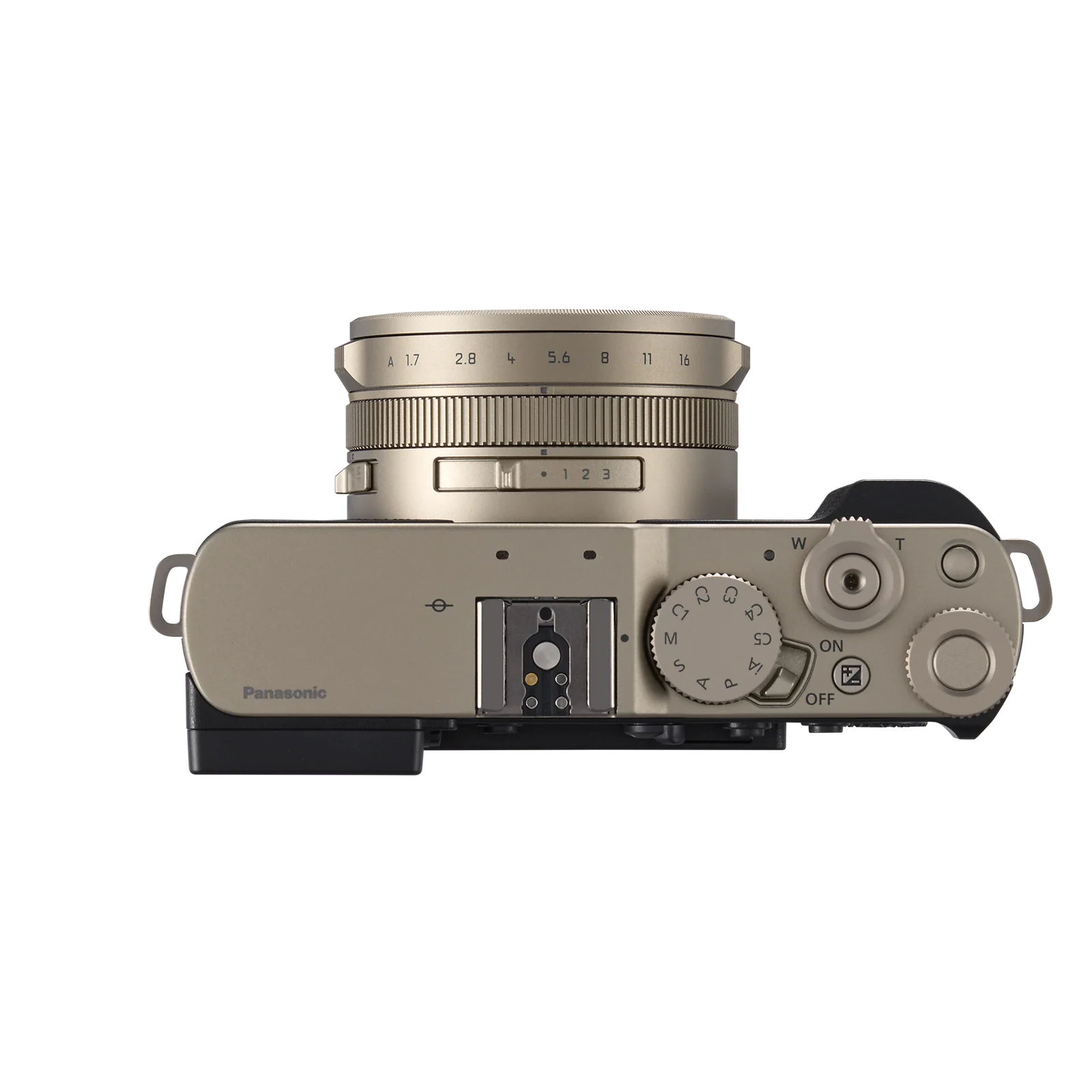
At 508 grams with battery and SD card installed, the L10 carries lighter than most premium fixed-lens cameras. Build materials include a magnesium alloy front case, a metal exterior, and a saffiano leather-textured finish. Panasonic positions the camera for street, travel, and everyday work where one-handed operation matters more than swappable optics. Specifically, the layout favors photographers shooting prints, social, and personal projects rather than working pros chasing assignments.
Behind the lens sits a 20.4-megapixel Micro Four Thirds backside-illuminated CMOS sensor. Panasonic uses the same chip family found in the Lumix GH7. Although the body looks deliberately compact, the imaging stack pulls directly from the flagship hybrid camera. Image quality should therefore track closely with what GH7 owners already know. For the full Lumix L10 specs sheet, see Panasonic’s official L10 launch announcement. This article reflects published specifications, since retail samples ship in June.
Key Specs at a Glance
| Specification | Details |
|---|---|
| Sensor | 20.4MP effective (26.5MP total) 4/3 BSI CMOS |
| Lens | Leica DC Vario-Summilux 24-75mm equivalent, f/1.7-2.8 |
| Macro | 3 cm minimum focus at wide end |
| Autofocus | Phase Hybrid AF, 779 focus points |
| Burst | 30 fps electronic, 11 fps mechanical |
| Stabilization | POWER O.I.S. optical |
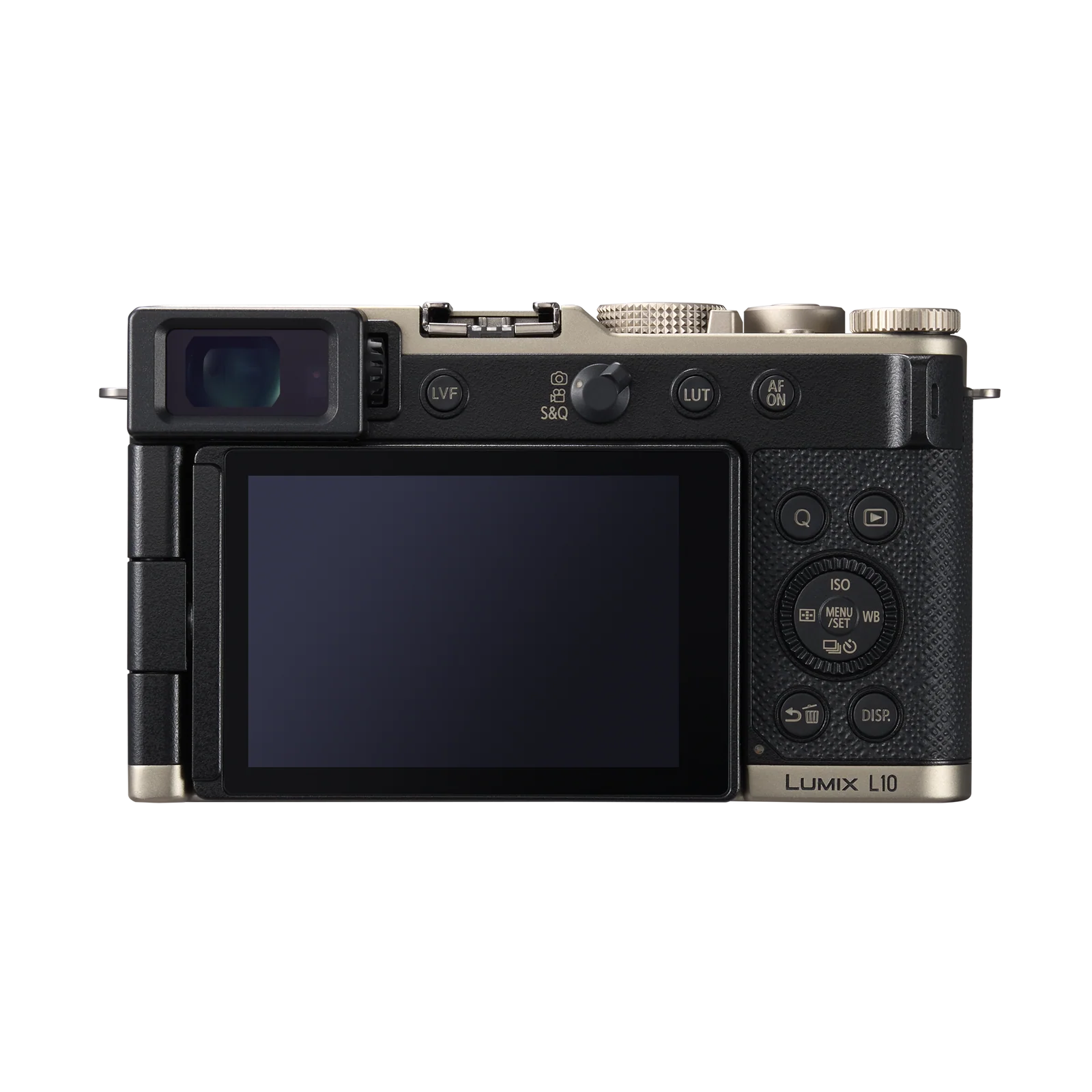
| Viewfinder | 2.36M-dot OLED |
| Rear monitor | 1.84M-dot free-angle, vertical UI support |
| Video | 5.6K 59.97p, 4K 120p, V-Log, 4:2:2 10-bit All-Intra |
| Audio | Microphone jack (no headphone jack) |
| Weight | 508 g / 1.12 lb with battery and SD card |
| Price | $1,499 (Black, Silver); $1,599 (Titanium Gold limited) |
Shop Lumix Now
Used Panasonic Lumix Cameras at MPB
Build your Lumix kit while you wait for the L10 to ship. MPB lists hand-checked used GH, S, and LX bodies with a six-month warranty and free shipping.
The Leica 24-75mm f/1.7-2.8 Lens

The Leica DC Vario-Summilux sits at the front of the L10 as its headline feature. It covers a 24-75mm full-frame equivalent range with a bright f/1.7-2.8 aperture. A precision-machined metal barrel houses a manual aperture ring. Both choices signal a tactile shooting experience aimed at deliberate framing rather than rapid-fire grabs.
At the wide end, AF macro focus closes to 3 centimeters. For coffee shop details, flower close-ups, or product flat-lays, the working distance opens framing options most fixed-lens compacts will not match. Moreover, the f/1.7 aperture delivers shallow depth of field on a sensor format often criticized for deep, flat focus.
Because Panasonic engineered the barrel from metal rather than plastic, the lens feels structured in hand. Versus the LX100 II’s optic, the L10 keeps the same focal range. However, the bright end of the zoom stretches further into the long end. Low-light street work at 75mm equivalent now opens at f/2.8, giving you an extra stop of latitude in dim venues.
Sensor and Multi-Aspect Imaging
Inside the L10 lives a 20.4-megapixel effective Micro Four Thirds backside-illuminated CMOS sensor. The total sensor pixel count is 26.5 megapixels. Panasonic sources the chip from the same family as the Lumix GH7. As a result, dynamic range and color science track closely with the company’s flagship hybrid. Dynamic Range Boost further expands shadow detail in still photography.
Multi-aspect design is the second headline. Because the sensor sits larger than the lens image circle, the L10 keeps a consistent angle of view across 4:3, 3:2, and 16:9 ratios. Pixel counts shift with each ratio. At 4:3, files capture 5,200 by 3,904 pixels. Switching to 3:2 produces 5,408 by 3,608 files. The 16:9 mode captures 5,664 by 3,192. A 1:1 square option produces 3,904 by 3,904.
For street and editorial work, the aspect switch lives on the lens itself. Reframing for vertical social, a magazine spread, or a square Instagram post happens before the shutter clicks. If aspect ratios feel new to you, our guide to understanding aspect ratio explains why this matters for composition.
Autofocus, Burst, and Stabilization
Autofocus uses a Phase Hybrid AF system with 779 focus points spread across the frame. Real-time recognition tracks eyes, faces, bodies, animals, vehicles, and dynamic urban sports scenes. Notably, the urban sports mode targets skaters, parkour, and BMX riders. The algorithm holds focus on bodies moving across the frame at high speed.
Continuous burst tops out at 30 frames per second with the electronic shutter and 11 fps mechanical. For street and travel work, 11 fps mechanical handles fast-moving subjects without rolling shutter skew. Meanwhile, the 30 fps electronic mode opens the door to peak-action shooting where silent operation matters, such as wildlife or theater.
Optical image stabilization comes via Panasonic’s POWER O.I.S. system. Hand-held shooting in low light, indoor venues, and at the 75mm long end benefits most. Although the L10 lacks the in-body sensor-shift stabilization found on Panasonic’s interchangeable lens bodies, optical stabilization plus the f/1.7 aperture should keep handheld exposures sharp.
Video Capabilities of the Panasonic Lumix L10
While the Panasonic Lumix L10 reads as a photography-first camera, video specs sit well above what fixed-lens compacts typically offer. The L10 records up to 5.6K at 59.97p and 4K at up to 120 frames per second. Codec options include 4:2:0 10-bit LongGOP for most modes. For higher-bitrate work, 4:2:2 10-bit All-Intra and LongGOP options are available.
V-Log support enables log capture for grading. Waveform monitoring appears on the rear screen for exposure control. Full pixel readout drives the video pipeline, so detail and aliasing handling should hold up against larger-sensor competitors. For social-first creators, an MP4 Lite mode produces ready-to-share files without transcoding.
One trade-off matters for hybrid shooters. The L10 includes a microphone jack but skips the headphone jack. Therefore, monitoring audio while recording requires a wireless or external solution. For run-and-gun b-roll, the omission rarely bites. Sit-down interview work calls for planning around it. Otherwise, video specs read more like a small Lumix S camera than a pocket compact.
Real Time LUT and LUMIX Lab v3.0
Real Time LUT is the L10’s color-grading shortcut. Photographers load custom LUTs directly into the camera and preview the final look while shooting. Up to two LUTs layer at once for combined adjustments. Specifically, you might pair a base color profile with a film-grain or contrast layer for a single-pass result. A dedicated LUT button on the body provides instant access.
Two new Photo Styles ship with the camera. L.Classic delivers soft tones and muted colors for a quieter, gentler look. L.ClassicGold leans into warm amber highlights and nostalgic contrast. Both Photo Styles work alongside the existing Lumix palette. Each option offers in-camera character to shooters who prefer JPEG-ready output over heavy post-processing.
LUMIX Lab v3.0 launches May 20, 2026, alongside a refreshed UI and several new features. The app adds RAW editing, slow and quick video editing tools, firmware updates through the app, and advanced LUT creation. For more on how this pipeline works with Panasonic’s full-frame compact, see our Lumix S9 review, since the S9 receives the same app update in June.
Magic LUT, powered by AI color analysis, generates custom LUTs from reference images. Upload a photo with the look you want, and the app builds a LUT matching its tonal palette. New L10 features include in-app My Photo Style editing, a wired phone connection for faster transfers, and in-camera Real Time LUT applied to both photos and videos. A June firmware drop brings the same feature set to the updated S9.
Titanium Gold 25th Anniversary Edition
Panasonic’s 25th anniversary Titanium Gold edition runs $1,599 and ships in limited quantities, primarily through the official Panasonic Store. Inside, a Titanium Gold-themed menu interface mirrors the exterior finish. The body supports commercially available screw-in shutter release buttons for owners who want a custom haptic feel.
Bundled accessories include a Titanium-colored automatic lens cap, a leather strap, and a dedicated lens cloth. Subtly placed rear branding stays visible only to the owner. For collectors and 25th anniversary buyers, the kit reads more like a limited release than a marketing exercise. However, availability varies by region.
Who Should Buy the Panasonic Lumix L10
The Panasonic Lumix L10 fits photographers who want one premium camera for travel, street, and everyday work without lens swaps. Former LX100 II owners moving up will recognize the body language. Similarly, Fujifilm X100V shooters drawn to fixed-lens compacts but wanting zoom flexibility find a closer match in the L10.
Street and documentary photographers benefit most. A 24-75mm equivalent range covers wide context shots through tight portrait reach without zone-switching. For inspiration on building a lighter kit around the L10, our budget street photography guide offers complementary picks.
Existing Panasonic owners considering the L10 as a second body should know it pairs naturally with current Lumix workflow tools. Owners of the Lumix GH5 or GH7 already familiar with Photo Styles and Panasonic color science adapt quickly. Working pros chasing assignments still need an interchangeable lens body. As a result, the L10 reads as a companion camera rather than a primary tool for this group.
Pros and Cons
Pros
- Leica DC Vario-Summilux 24-75mm f/1.7-2.8 zoom with manual aperture ring
- 20.4MP Micro Four Thirds BSI CMOS sensor shared with the Lumix GH7
- 508 g body with magnesium alloy front case and saffiano leather finish
- 30 fps electronic burst and 11 fps mechanical shutter
- Multi-aspect sensor keeps angle of view consistent across 4:3, 3:2, and 16:9
- 5.6K 59.97p and 4K 120p video with V-Log and 4:2:2 10-bit All-Intra
- Real Time LUT in-camera with dedicated button and two-layer support
- 2.36M-dot OLED EVF and 1.84M-dot free-angle rear monitor with vertical UI
Cons
- No headphone jack limits audio monitoring during video work
- Lumix L10 price of $1,499 sits above most premium fixed-lens compacts
- Optical stabilization only, no in-body sensor-shift system
- Fixed lens removes the flexibility of swapping for telephoto or ultra-wide work
- Titanium Gold edition ships in limited quantities with regional availability
- June 2026 ship date means waiting roughly a month after the announcement
Save on Lumix
Find a Used Lumix Body to Carry Now
The L10 ships in June. MPB stocks used Lumix bodies in excellent condition with a six-month warranty, free shipping, and a 14-day return window. See how to build a kit with used gear.
Final Thoughts
The Panasonic Lumix L10 lands as the strongest spiritual successor to the LX100 II in years. Released in 2018, the LX100 II quietly faded from Panasonic’s lineup. With the L10, Panasonic picks up the premium fixed-lens thread again. A fresh sensor, a brighter long end on the zoom, and modern color tools all answer the years-long wait for a follow-up.
Trade-offs exist. The Lumix L10 price of $1,499 places the camera in serious-buyer territory alongside the Fujifilm X100VI and Leica D-Lux 8. Additionally, the missing headphone jack will frustrate hybrid shooters wanting monitor parity with their main body. Optical stabilization, rather than full sensor-shift IBIS, sits at the practical floor for a body of this size. Buyers expecting GH7-grade video stabilization should temper expectations.
However, the image pipeline shared with the GH7, the Leica DC Vario-Summilux optic, and the polish of LUMIX Lab v3.0 add up to a coherent package. A 508-gram weight makes it a camera you carry every day. Meanwhile, the manual aperture ring rewards deliberate shooting. For photographers building a kit around used Panasonic bodies like the GH4, the L10 becomes a natural travel companion rather than a replacement.
If you shoot street, travel, or everyday work and want one premium Micro Four Thirds compact ready to grab off a desk or out of a jacket pocket, the L10 deserves a spot on the short list. For working pros chasing assignments with telephoto needs, an interchangeable lens Lumix body remains the right tool. Either way, the L10 brings the premium fixed-lens category back to life after years of quiet.
Frequently Asked Questions
When is the Panasonic Lumix L10 release date?
The Panasonic Lumix L10 was announced on May 12, 2026, and ships in June 2026. Panasonic has not published a specific shipping date within the month. The Titanium Gold limited edition releases alongside the standard Black and Silver bodies.
How much does the Panasonic Lumix L10 cost?
Standard L10 bodies in Black or Silver retail for $1,499. A limited Titanium Gold 25th anniversary edition runs $1,599. The premium tier ships primarily through the official Panasonic Store with availability varying by region.
What sensor does the Lumix L10 use?
Inside the L10 sits a 20.4-megapixel effective (26.5MP total) Micro Four Thirds backside-illuminated CMOS sensor. Panasonic sources the chip from the same family used in the Lumix GH7. Image processing pairs with the company’s latest engine and Dynamic Range Boost.
Is the Lumix L10 a successor to the LX100 II?
Panasonic has not called the L10 an official LX100 II successor. However, the body shape, fixed Leica zoom design, manual aperture ring, and shooting philosophy line up directly with the LX100 series. It serves as the closest spiritual replacement Panasonic has shipped since the LX100 II in 2018.
Does the Lumix L10 shoot 4K video?
Yes. The L10 records 4K at up to 120 frames per second and 5.6K at 59.97p. Codec options include 4:2:0 10-bit LongGOP standard, plus 4:2:2 10-bit All-Intra and LongGOP for higher-bitrate workflows. V-Log support and waveform monitoring round out the video toolkit.
What lens is on the Panasonic Lumix L10?
The L10 ships with a fixed Leica DC Vario-Summilux 24-75mm full-frame equivalent zoom at f/1.7-2.8. A precision-machined metal barrel houses the manual aperture ring. AF macro focus closes to 3 centimeters at the wide end.

