


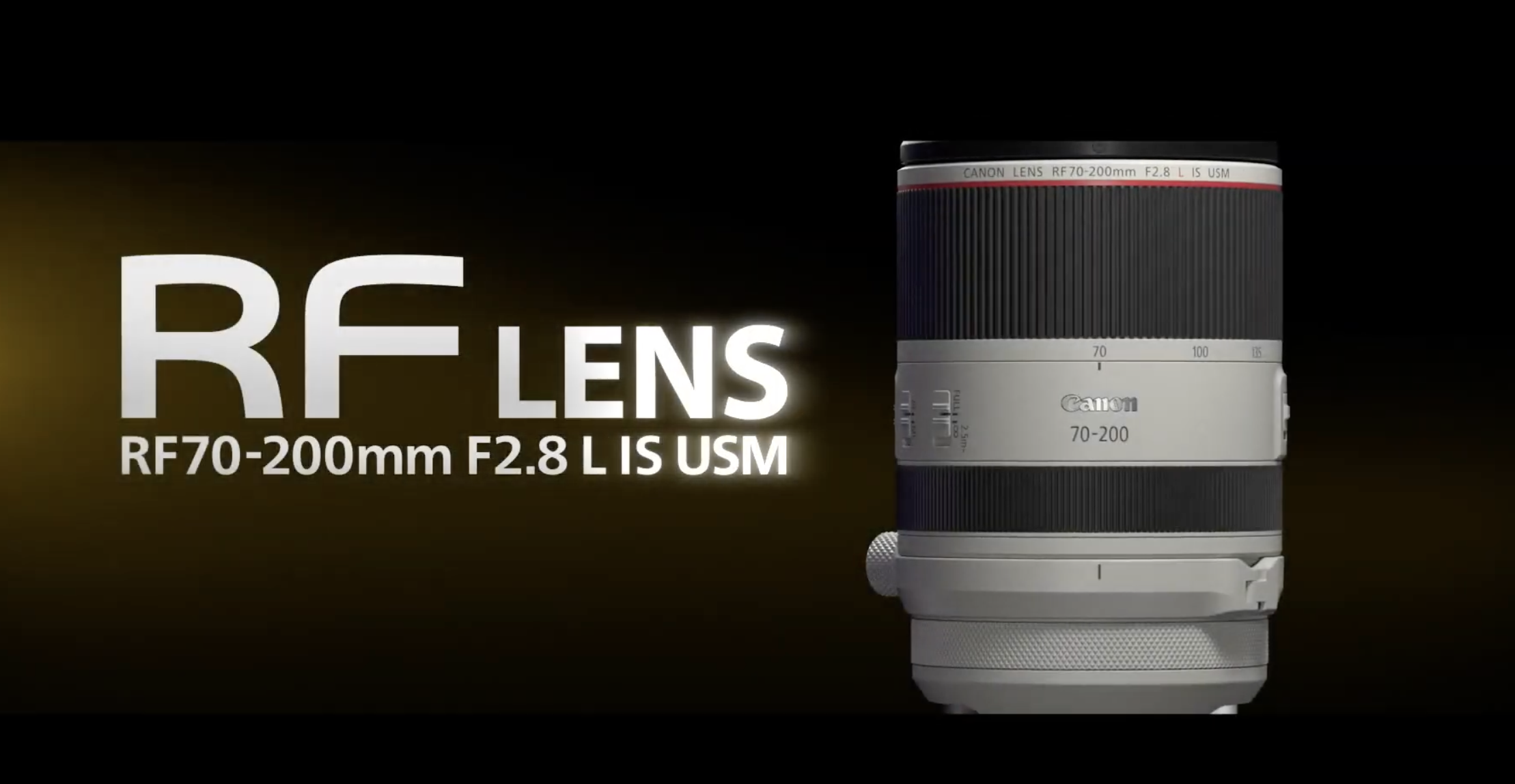
Quick Facts:
- Product: Canon RF 70-200mm f/2.8L IS USM
- Aperture: f/2.8 constant across the range
- Stabilization: Up to 5 stops alone, up to 7.5 with IBIS
- Min focus: 0.70m, 0.23x magnification
- Weight: About 1,070g, retracts to roughly 146mm
- Filter thread: 77mm
- Autofocus: Dual Nano USM, fast and silent
- Price: $2,799 new, around $2,389-$2,539 used
- Best for: Wedding, portrait, event, and travel shooters who need one fast telephoto
8 min read
In This Review
- Canon RF 70-200mm f/2.8 Overview
- Key Specs at a Glance
- Why the RF 70-200mm f/2.8 Belongs in Your Bag
- Image Quality: The RF 70-200mm f/2.8 Wide Open
- Autofocus, Stabilization, and Handling
- What a 70-200mm f/2.8 Is Used For
- Canon RF 70-200mm f/2.8 vs the f/4
- Pros and Cons
- Final Verdict
- Frequently Asked Questions
Canon RF 70-200mm f/2.8 Overview: Built for Working Photographers
One lens, no swaps, no missed moments. The Canon RF 70-200mm f/2.8 handles portraits, weddings, events, sports, and travel on a single mount. Working photographers reach for it because the constant f/2.8 aperture holds steady from 70mm to 200mm. As a result, you get the same low-light speed at the long end as you do at the wide end.
Canon engineered the original RF version to retract when powered down, so it slips into a smaller bag than most pro telephotos. Therefore, travel and street shooters gain a serious tool without hauling a giant barrel. Portrait and wedding photographers, meanwhile, get the reach and compression they rely on every shoot.
One detail matters before you buy. Canon now sells two f/2.8 versions of this telephoto zoom. This review covers the original RF 70-200mm f/2.8L IS USM, the externally zooming model released in 2020. By contrast, the newer Z edition uses an internal zoom and aims at video teams. Most stills shooters still pick the original, since it costs less and collapses shorter.
Price sits at the premium end of the market. New copies carry a $2,799 list price from Canon. However, the used route saves real money. For instance, MPB lists clean copies near $2,389 to $2,539, while Canon refurbished units fall to about $1,999. Spread across years of paid work, the cost per shoot drops fast.
Key Specs at a Glance
Below are the verified specifications for the Canon RF 70-200mm f/2.8L IS USM. Each figure comes from Canon’s official product page.
| Specification | Details |
|---|---|
| Focal length | 70-200mm |
| Maximum aperture | f/2.8 constant |
| Lens construction | 17 elements in 13 groups |
| Diaphragm blades | 9, rounded |
| Image stabilization | Up to 5 stops, up to 7.5 with coordinated IBIS |
| Minimum focus distance | 0.70m |
| Maximum magnification | 0.23x |
| Filter thread | 77mm |
| Weight | About 1,070g |
| Length (retracted) | Roughly 146mm |
| Autofocus | Dual Nano USM |
| Weather sealing | Sealed rings and panel, fluorine front coating |
| Mount | Canon RF |
Buy Used and Save
Shop the RF 70-200mm f/2.8 at MPB
MPB grades every used copy and backs it with a 6-month warranty, so you save hundreds over new with confidence.
Why the RF 70-200mm f/2.8 Belongs in Your Bag
The biggest argument for this lens starts with size. The original RF 70-200mm f/2.8 retracts to roughly 146mm and weighs about 1,070g. Compared to older EF 70-200mm f/2.8 designs near 1,440g, the weight savings show up fast on a long day. Your shoulder feels the difference after eight hours at a wedding.
In addition, versatility seals the case. At 70mm you frame half-body portraits and group shots. Zoom to 135mm and you isolate a single face with smooth background separation. Push to 200mm and distant subjects fill the frame. Because the aperture never changes, your exposure settings stay predictable as you zoom.
The compact build also pairs well with smaller bodies. On an EOS R6 or R8, the kit balances without front-heavy strain. For travel, the retracted length frees space for a second lens. Pair it with the wider standard zoom and you cover most assignments; our Canon RF 24-70mm f/2.8L review walks through the other half of the kit.
Image Quality: The RF 70-200mm f/2.8 Wide Open
Sharpness impresses from the first frame. Wide open at f/2.8, the center stays crisp across the zoom range. Corners tighten by f/4, although most portrait and event work lives at f/2.8 anyway. The 17-element design controls chromatic aberration well, so color fringing rarely shows in high-contrast edges.
Notably, bokeh is the headline feature for many buyers. Nine rounded aperture blades render out-of-focus highlights as smooth circles. At 200mm and f/2.8, backgrounds melt into clean tones while your subject snaps forward. This separation gives portraits a professional look straight out of camera.
Low light performance follows from the bright aperture. The f/2.8 opening gathers twice the light of an f/4 zoom. Consequently, you hold lower ISO values in dim churches, indoor courts, and evening receptions, all classic low-light venues. Cleaner files also mean less noise reduction later in the edit.
Autofocus, Stabilization, and Handling
Dual Nano USM motors drive autofocus quickly and silently. At a dim reception, the lens locks onto a moving face and holds focus through the first dance. On a sideline, it tracks a sprinter without hunting. Video shooters also gain smooth focus pulls with no audible noise.
Image stabilization rates up to 5 stops on its own. Paired with in-body correction on a stabilized body such as the Canon EOS R6 Mark II, coordinated image stabilization reaches up to 7.5 stops. So handheld frames at 1/15 second stay sharp even at 200mm. For dim venues without a tripod, this performance changes your odds.
Handling reflects Canon’s L-series standard. Weather sealing guards the rings and switch panel against dust and light rain. A fluorine coating on the front element repels smudges. Two programmable function buttons and a customizable control ring put exposure tweaks at your fingertips.
What a 70-200mm f/2.8 Is Used For
Photographers often ask what a 70-200mm f/2.8 is used for. The short answer covers almost everything at a distance. Below are the genres where this telephoto zoom shines.
Portraits and weddings suit this lens best. The focal range flatters faces and compresses backgrounds into soft color. Many shooters treat the 70-200mm for portrait photography as their main tool for ceremonies and receptions.
Similarly, sports and action play to its strengths. The fast aperture and quick autofocus freeze motion under stadium lights, while 200mm covers most sideline framing.
Wildlife sits at the edge of its range. 200mm suits large or nearby animals, yet birders often reach for 400mm or more. For real distance, a dedicated super-telephoto like the RF 100-500mm serves better than this zoom.
Travel and events round out the list. Because the barrel retracts, you carry one lens for candids, architectural details, and tight street scenes.
Canon RF 70-200mm f/2.8 vs the f/4: Which Should You Pick?
Buyers often weigh the f/2.8 against the lighter RF 70-200mm f/4. Two differences drive the choice: aperture and size. The f/2.8 gathers twice the light and throws backgrounds further out of focus, while the f/4 weighs roughly 695g and costs hundreds less.
| Spec | RF 70-200mm f/2.8 | RF 70-200mm f/4 |
|---|---|---|
| Maximum aperture | f/2.8 constant | f/4 constant |
| Weight | About 1,070g | About 695g |
| List price (new) | $2,799 | Lower, several hundred less |
| Best for | Low light, maximum bokeh, paid events | Daylight, travel, lighter budget |
Pick the f/2.8 when low light and maximum subject separation define your work. Choose the f/4 instead when budget and weight top your list, and your shooting happens in good light. For most paid portrait and event shooters, the brighter aperture repays its premium quickly.
Canon also closed out its older EF line; our coverage of the EF 70-200mm’s discontinuation explains the shift to RF. If you shoot wide scenes too, our roundup of the best Canon RF lenses maps the full lineup.
Save on Premium Glass
Find a Used f/2.8 Under New Pricing
A used copy from MPB often lands hundreds below the $2,799 list price, with condition grading and a warranty included.
Pros and Cons
Pros
- Constant f/2.8 from 70mm to 200mm for steady exposure
- Retracts to roughly 146mm, lighter than EF at about 1,070g
- Up to 7.5 stops of stabilization with compatible bodies
- Fast, silent Dual Nano USM autofocus for stills and video
- Sharp wide open with smooth 9-blade bokeh
- Weather-sealed L-series build with fluorine front coating
- Customizable control ring and two function buttons
Cons
- List price near $2,799 sits high for budget buyers
- 200mm reach limits serious wildlife and distant sports
- Barrel extends while zooming, unlike the internal-zoom Z version
- Around 1,070g feels heavy on compact bodies after long sessions
Final Verdict
The Canon RF 70-200mm f/2.8 delivers professional results in a body small enough to carry everywhere. Its biggest strength is range plus speed in one package. Wedding, event, and portrait shooters gain a lens they reach for at nearly every job. The retractable design makes it the rare pro telephoto you want with you on every job.
Trade-offs do exist. The price stings at $2,799 new, and 200mm falls short for dedicated bird and distant wildlife work. Photographers who shoot mostly in bright light might prefer the lighter, cheaper f/4. Heavy-hitting wildlife shooters should look toward the RF 100-500mm instead.
On value, the math favors patient buyers. A used copy from MPB or a Canon refurbished unit cuts the entry cost sharply while keeping the same optics. Across hundreds of shoots, the per-job cost stays small.
For working photographers on the RF system, this lens earns its place. If your budget leans tight or your subjects sit far away, weigh the f/4 or the 100-500mm. For everyone shooting people, events, and travel, the f/2.8 stands as the must-have telephoto in the Canon RF lineup.
Ready to Buy?
Check Today’s Price on the RF 70-200mm f/2.8
Browse graded used copies at MPB and lock in a lower price with a 6-month warranty and free shipping.
Frequently Asked Questions
Is the Canon RF 70-200mm f/2.8 worth the money?
For working portrait, wedding, and event photographers, yes. The constant f/2.8 aperture, fast autofocus, and compact build pay off across thousands of frames. Buying used from MPB or refurbished from Canon lowers the entry cost while keeping the same optics.
What is a 70-200mm f/2.8 used for?
This telephoto zoom suits portraits, weddings, events, sports, and travel. The range compresses backgrounds for flattering people shots and pulls in distant action. Its bright aperture also helps in low light venues like churches and indoor arenas.
Is the RF 70-200mm f/2.8 better than the EF version?
The RF model is shorter, lighter, and sharper than the older EF design. It also adds Dual Nano USM autofocus and coordinated stabilization with RF bodies. EF owners with an adapter still get fine results, although the RF version handles better on mirrorless cameras.
What is the difference between the RF 70-200mm f/2.8 and the f/2.8 Z?
The original f/2.8 extends as you zoom and stays shorter when retracted. The newer Z version uses an internal zoom and targets video shooters who want a fixed length. Most stills photographers choose the original, since it costs less and travels smaller.
Is 70-200mm enough for wildlife?
200mm works for large or nearby animals, yet it falls short for small birds and distant subjects. The original RF 70-200mm f/2.8 does not accept RF teleconverters, so reach stays capped at 200mm. Serious wildlife shooters often prefer the RF 100-500mm for more length.
How much does the Canon RF 70-200mm f/2.8 weigh?
The lens weighs about 1,070g, roughly 370g lighter than the older EF 70-200mm f/2.8. It also retracts to near 146mm for storage. This combination makes it one of the most portable pro telephotos on the market.

