


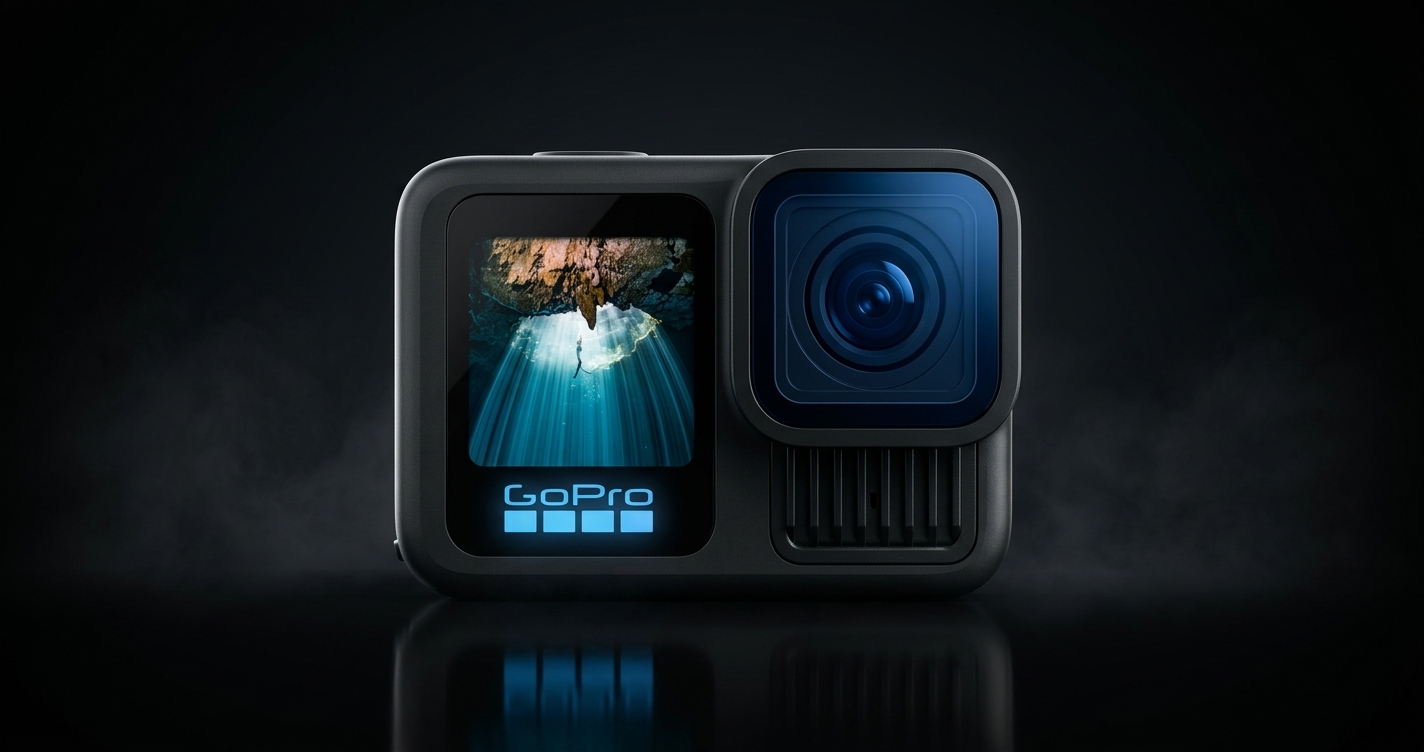
Quick Verdict: The GoPro strategic review, opened on May 11, 2026, puts a sale or merger of the 24-year-old action camera company formally on the table. Q1 revenue dropped 26.2% to $99.1 million. Inbound buyer interest is tied to a new defense and aerospace push, and Mission 1 launches on May 28. Founder Nicholas Woodman and the board are now working with financial and legal advisors. No timetable has been set.
8 min read
In This Article
- Overview
- Quick Facts
- Inside the GoPro Strategic Review Announcement
- How GoPro Got Here: The Q1 2026 Numbers
- The Defense and Aerospace Pivot
- Mission 1 and the Cinema-Camera Bet
- What 20 Years of Shooting GoPros Tells Me
- What a GoPro Sale Means for Photographers
- Final Thoughts
- Frequently Asked Questions
Overview
The GoPro strategic review is now official. On May 11, 2026, the GoPro board of directors authorized a formal process to evaluate a sale, a merger, or other strategic alternatives for the company. The announcement landed alongside a brutal Q1 2026 earnings report and a planned May 28 launch of Mission 1, GoPro’s first serious push into professional cinema cameras.
For photographers, filmmakers, and adventure shooters, this is a meaningful moment. GoPro built the modern action camera category and shipped the dominant body-mounted, helmet-mounted, and drone-friendly cameras across two decades. Now, after years of margin pressure and revenue declines, the company is openly inviting buyers to the table.
The board has not set a deadline. Still, the mix of inbound interest, a fresh defense and aerospace push, and a new cinema product line gives this GoPro strategic review weight. This is more than the usual quarterly noise.
Quick Facts
| Detail | Value |
|---|---|
| Announcement date | May 11, 2026 |
| Company | GoPro, Inc. (NASDAQ: GPRO) |
| Headquarters | San Mateo, California |
| Founded | 2002 by Nicholas Woodman |
| Q1 2026 revenue | $99.1 million, down 26.2% year over year |
| Q1 2026 GAAP net loss | $80.8 million, or $(0.50) per share |
| Strategic alternatives on the table | Sale, merger, or other transactions |
| Advisor for defense and aerospace | Oliver Wyman (engaged April 13, 2026) |
| Mission 1 launch | May 28, 2026 at $599 and $699 price points |
| 2026 full-year guidance | Withdrawn by management |
Inside the GoPro Strategic Review Announcement
The GoPro board disclosed the strategic review in a careful, deliberately brief press release on May 11, 2026. The release authorized the company to enter a formal strategic process and engage a financial advisor. During the process, directors plan to evaluate a range of options. Specifically, the press release names a sale of the company or a merger as alternatives aimed at maximizing value for stockholders.
Founder and CEO Nicholas Woodman said in the release, “Over the past 24 years, GoPro has developed significant technology, IP, and brand assets along with world class product development and scaled manufacturing capabilities. We are excited to work with our advisors to evaluate potential opportunities in various sectors to maximize shareholder value.”
The board offered no timeline. GoPro also will not comment further on the GoPro strategic review until disclosure becomes appropriate or required. As a result, photographers and investors should expect a quiet stretch from official channels while bankers and bidders do their work behind the scenes.
How GoPro Got Here: The Q1 2026 Numbers
The strategic review did not arrive in a vacuum. On the same day as the GoPro strategic review announcement, the company reported Q1 2026 results, and the numbers were rough. Revenue fell to $99.1 million, a 26.2% decline from $134 million in Q1 2025. Unit sales weakened in core consumer channels, while macro pressure across consumer electronics shows no sign of easing.
Margins took the harder hit. GAAP gross margin collapsed to 4.3% in Q1, down from 32.1% a year earlier. Two non-recurring items drove most of the damage: a $24.5 million charge tied to component purchase commitments and a $4.5 million sale of slow-moving inventory. Even after backing those out, the underlying business was clearly under stress.
The bottom line followed suit. GAAP net loss widened to $80.8 million, or $(0.50) per share. Adjusted EBITDA came in at $(49.8) million. Additionally, management withdrew full-year 2026 guidance, citing macroeconomic headwinds in consumer electronics.
Withdrawing guidance is rarely a casual decision. The move signals to Wall Street the operating environment is too uncertain to underwrite. For a company already in talks with potential buyers, a pulled forecast also lowers the bar for negotiation. Bidders do not have to argue with a public number when the company has openly walked away from one.
The Defense and Aerospace Pivot
The GoPro strategic review traces back to an unrelated-looking April announcement. On April 13, 2026, GoPro disclosed it would pursue defense and aerospace market opportunities and engaged Oliver Wyman, a Marsh-owned management consultancy, to lead the work. The scope includes addressable segments, product synergies, partnership options, and go-to-market plans.
Why does this matter? GoPro cameras already show up in surprising places. For instance, NASA mounted GoPro hardware to the solar array wings on the Artemis II Orion spacecraft and ran cameras inside the ship to document the voyage. Durability, image stabilization, and video quality made the gear viable for a mission environment where most cameras fail outright.
The defense pivot reframes the buyer pool. Instead of attracting consumer-electronics suitors alone, GoPro now looks interesting to dual-use technology investors, defense primes, and drone or unmanned systems players. Since the April announcement, the company has received “several unsolicited inbound strategic inquiries.” Management notes those came from “various sectors, various types of interested parties,” not only defense or financial buyers.
Mission 1 and the Cinema-Camera Bet
While the bankers work on the GoPro strategic review, the product team is shipping. On May 28, 2026, GoPro launches Mission 1, the company’s first push into professional cinema cameras. The series targets working filmmakers and high-end consumers, with models priced at $599 and $699. Both prices sit well below traditional cinema-camera tiers from Blackmagic, Sony, or RED.
Mission 1 already has industry validation. The series won three major awards at NAB 2026: RedShark Best in Show, ProductionHUB Award of Excellence, and CineD Best of Show in the camera category. For a company best known for helmet-cam point-of-view footage, the recognition is a real shift in positioning.
Strategically, Mission 1 also lifts the asset value of a potential acquisition. A buyer paying for the GoPro brand now picks up a credible cinema-camera roadmap and awards momentum. The lineup also brings a price-disruptive entry into a market dominated by mirrorless hybrids and dedicated cine bodies. For a financial buyer running synergy math, this broadens the exit story. For a strategic buyer, meanwhile, the timing is convenient: the product is fresh, the team is intact, and major juries have validated the IP.
What 20 Years of Shooting GoPros Tells Me
I have been shooting GoPros since the 2006 digital still days, back before the HD HERO “Naked” reset the category in 2009. My first one was a chunky, plastic, fixed-focus body with a wrist strap and a 10-second VGA video clip. The shutter button stuck in cold weather, and the lens fogged inside the housing if you breathed on it before sealing it shut. Pick up a HERO 13 Black today and it feels like a different species. Yet the brand DNA runs straight through every generation.
Three things stand out across two decades behind these cameras. First, the durability story is real. I flooded one in a creek crossing on a dual-sport ride outside Moab. I froze another to a snowmobile fairing in the Sierras. A HERO 9 also bounced down a gravel switchback at 35 mph. All three kept shooting. Second, the stabilization jump from HyperSmooth onward changed handheld video for everyone, not only action shooters. Friends who shoot weddings now keep one in the bag for low-angle B-roll. Third, the company has never solved the “what comes after the helmet cam” problem cleanly. Karma drones died. The Max and Fusion 360 cameras stayed niche.
Mission 1 looks like the most credible answer to “what is next” since the original HD HERO. Still, even a strong product will not undo two years of share loss to lower-priced Chinese rivals in the entry-level segment. Phone cameras have also taken ground in the casual creator segment. From where I sit, the GoPro strategic review reads less like panic. It looks more like a founder finally deciding to let a bigger platform amplify what GoPro built.
What a GoPro Sale Means for Photographers
For most photographers and creators, a sale would not change anything in the short term. Warranties stay valid. Existing HERO, Max, and Mission 1 cameras keep working. Cloud subscriptions and Quik mobile features continue under whatever entity owns the brand. So no one needs to rush out and replace gear because of the GoPro strategic review.
The longer-term picture depends on the buyer. A defense or aerospace acquirer might keep the consumer line as a brand halo while pushing real R&D dollars toward ruggedized, mission-specific cameras. By contrast, a consumer-electronics buyer like a smartphone OEM or a major Asian camera brand would likely double down on hybrid stills-and-video bodies. A private-equity buyer, meanwhile, would optimize for cash flow, which often means thinner product roadmaps and tighter pricing discipline.
Either way, used GoPro inventory becomes interesting. Pricing on the secondary market often softens during ownership transitions. So if you want a HERO 12 or HERO 13 Black, the next six to twelve months should offer a fine entry point. Check MPB and other reputable used-gear dealers. For more on body-mounted cameras, see our best action cameras roundup.
Final Thoughts
The GoPro strategic review is the loudest signal yet. The action camera category has matured beyond what a standalone company is able to support at scale. GoPro built the segment, named it, and dominated it for nearly two decades. Yet smartphone cameras, low-cost Chinese rivals, and rising component costs have squeezed the consumer P&L from every side. A 26.2% revenue drop in a single quarter makes the math obvious. For more photo industry news, check the news section.
At the same time, the company is shipping its strongest product roadmap in years. Mission 1 won three NAB awards. The defense and aerospace pivot reframes the brand as more than a helmet camera. Consequently, GoPro is selling from a position of optionality, not pure distress. The distinction matters for valuation.
If you shoot with GoPro gear, keep shooting. The cameras will keep working regardless of who owns the company a year from now. If you cover the photo industry, watch the next 90 days closely. The first leaks about buyer identity will likely come from financial media, not from GoPro itself. Either way, the action-camera story you grew up with is heading into a new chapter.
Frequently Asked Questions
Is GoPro being sold?
Not yet. On May 11, 2026, the GoPro board authorized a strategic review covering a possible sale or merger. Still, the company has stated no transaction has been agreed and no timetable has been set. So “for sale” is more accurate than “sold.”
Why is GoPro considering a sale now?
Two reasons. First, Q1 2026 revenue dropped 26.2% year over year to $99.1 million, and the company withdrew full-year guidance. Second, after GoPro announced its defense and aerospace initiative on April 13, the company received several unsolicited inbound strategic inquiries from a mix of buyers. As a result, the board opened a formal process.
Who might buy GoPro?
The GoPro strategic review attracted interest from “various sectors, various types of interested parties,” according to management. Likely candidates include defense and aerospace primes, dual-use technology investors, large consumer-electronics buyers, private equity funds, and drone or unmanned systems players. Industry watchers have also speculated about Meta and Garmin, although neither has publicly commented.
What happens to my current GoPro camera if the company sells?
Nothing immediate. Your camera, accessories, warranty, and GoPro subscription continue under whatever entity owns the brand. Firmware updates and cloud features typically continue through a transition. Long term, the new owner’s strategy will shape future product direction, but existing hardware keeps working as designed.
When is the GoPro Mission 1 launch?
Mission 1 launches on May 28, 2026. The series is GoPro’s first formal entry into professional cinema cameras, with two models priced at $599 and $699. Mission 1 already won three major awards at NAB 2026, including RedShark Best in Show, ProductionHUB Award of Excellence, and CineD Best of Show in the camera category.
How did GPRO stock react to the strategic review?
Shares jumped roughly 10% in after-hours trading on May 11, 2026, after GoPro released the strategic review and Q1 earnings. The bump reflected the optionality of a possible sale or merger, partially offset by the weak quarter and the withdrawn full-year guidance.
Sources: GoPro Investor Relations press releases, GoPro Q1 2026 earnings release (NASDAQ: GPRO), GoPro Board of Directors strategic alternatives press release (May 11, 2026), GoPro defense and aerospace announcement (April 13, 2026).

