


Quick Facts:
- Genre: Motorsport photography
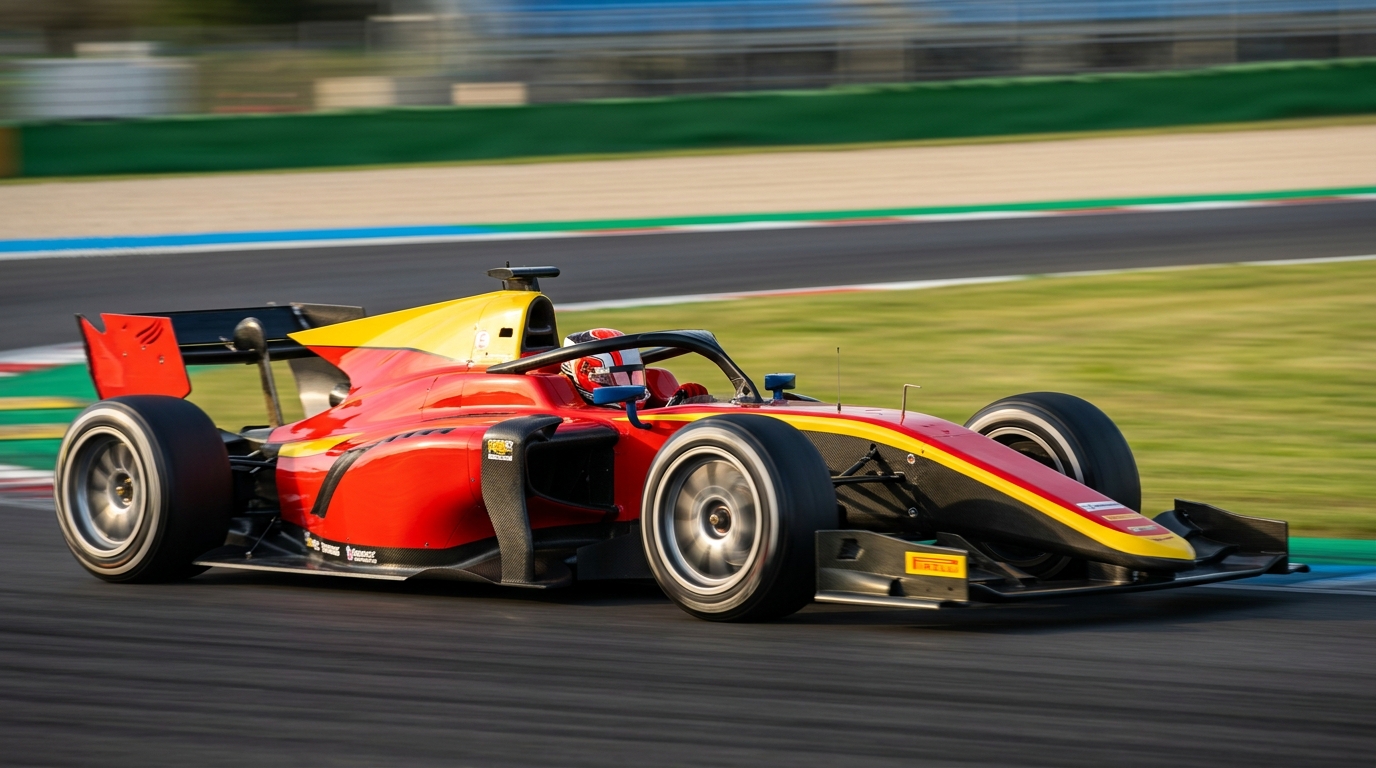
- Signature shot: A panning frame, car sharp, background streaked with speed
- Panning shutter: 1/125s to start, 1/60 to 1/250 for more or less blur
- Lens: A telephoto zoom, 70-200mm at close tracks, 100-400mm or longer for distance
- Focus: Continuous autofocus with tracking, on the driver’s helmet
- Support: A monopod for long lenses
- Access: Stay behind barriers, follow marshal and media rules
- Best for: Track days, club racing, karting, and pro series
10 min read
In This Guide
- What It Takes to Shoot Race Cars
- Motorsport Settings at a Glance
- Gear and Lens
- Camera Settings for Race Cars
- The Panning Technique
- Motion Blur and the Sense of Speed
- Reading the Track: Position and Timing
- Weather and Light at the Track
- Access, Safety, and Etiquette
- Editing Race Photos
- Common Mistakes to Avoid
- Printing Your Race Photos
- Final Verdict
- Frequently Asked Questions
Motorsport Photography: What It Takes to Shoot Race Cars

Motorsport photography looks effortless in a magazine and feels impossible at your first track day. A car passes at over a hundred miles an hour, and your first frames come back blurry, cropped badly, or frozen and lifeless. The signature look is a razor-sharp car against a streaked, rushing background. It comes from panning, a skill you build with practice.
The genre rewards preparation over reflexes. You read the track, pick a spot, dial in the settings, and let the same cars come around lap after lap while you refine the shot. Treat your first day as practice, and expect a handful of keepers. None of it needs the most expensive body, since technique and position matter far more than the badge on your camera.
This guide covers the gear, the settings, and the panning method behind fast-looking cars. You will also learn how to control motion blur, read a track for the best positions, stay safe around fast machinery, and turn a clean frame into wall art. Whether you shoot karting or a pro series, the fundamentals hold.
Motorsport Settings at a Glance
Here is a quick reference to start from. Treat these as a baseline, then adjust for the speed of the cars, the corner, and the look you want.
| Goal | Starting Settings |
|---|---|
| Panning shot (blurred background) | Shutter 1/125s, f/8, ISO low, continuous AF |
| More speed blur | Shutter 1/60 to 1/100s (harder to keep sharp) |
| Safer, sharper pan | Shutter 1/200 to 1/250s |
| Frozen action (spray, jumps) | Shutter 1/1000s or faster, higher ISO |
| Focus mode | Continuous AF with subject tracking, burst |
| Lens | 70-200mm close, 100-400mm or longer for distance |
| File format | RAW |
Print your race shots
Race Photos Made for Metal and Acrylic
Pictorem prints your sharpest panning shots on HD metal, acrylic, or canvas in custom sizes, with free shipping across the continental US and Canada.
Gear and Lens for Motorsport Photography

Reach is the first requirement, since fences and gravel traps keep you well back from the cars. A 70-200mm telephoto lens covers tight club circuits. A 100-400mm or a 150-600mm reaches distant corners on a large track. Fast, reliable autofocus matters more than raw resolution, so a body with strong subject tracking earns its place.
Support and comfort round out the kit. A monopod steadies a heavy telephoto lens through a long session without locking you in place like a tripod. Bring a fast memory card and spare batteries, since a race day runs long and fills cards quickly. Pack ear protection and weather cover too. A beanbag on a barrier steadies the lens when a monopod is not allowed. For help matching focal length to the scene, our guide on understanding camera lenses breaks it down.
Camera Settings for Race Cars

Set the camera to give you control over the shutter, since shutter speed drives the whole look. Shutter priority works well for a start, though full manual with auto ISO gives more command once you settle in. Keep ISO as low as the light allows for clean files, and open to f/5.6 or f/8 for a sharp car with a little depth. Turn off image stabilization or switch to the panning mode, since standard stabilization fights a horizontal pan.
Focus is the other half of the shot. Switch to continuous autofocus with subject tracking, aim at the driver’s helmet or the front of the car, and fire a short burst as it passes. The same skills used to track a bird in flight track a car, and our guide to tracking fast subjects with autofocus transfers directly. For a broader starting point, see our tips on dialing in sports settings.
The Panning Technique

Panning is the heart of motorsport photography, and it rewards a smooth, whole-body motion. Plant your feet, face the point where you will release the shutter, and swivel from the hips to follow the car. Track it in the viewfinder, match its speed, and press the shutter while you keep the motion going through the frame.
Follow-through is what separates a keeper from a smear. Do not stop moving when the shutter fires, since the car keeps traveling during the exposure. Keep panning until the car leaves the frame, the way a golfer follows through a swing. Start at a shutter of 1/125 second, which forgives small errors, then slow down as your technique improves. Practice on passing traffic near home first. The motion is the same. Our sibling guide on freezing motion in sports covers the flip side, and the broader idea of panning applies across every fast subject.
Motion Blur and the Sense of Speed

Motion blur is what tells the viewer a car is moving fast. A frozen car at a fast shutter looks parked, even at speed, because the wheels sit still and the background stays crisp. The panning look fixes both at once: the background streaks into ribbons of color, and the wheels spin into a circular blur.
Shutter speed sets the amount. A shutter around 1/100 to 1/160 second blurs the wheels and the background. With good technique, the body stays sharp, which reads as a fast, clean shot. Drop to 1/60 for a dramatic streak, and accept a lower hit rate. Our primer on how shutter speed works shows how the numbers shape the blur.
See it on your wall
Preview Your Race Shot at Any Size
Upload a frame to Pictorem and preview the print on your own wall before you order, at the exact size you want.
Reading the Track: Position and Timing
Where you stand shapes the shot more than any setting. Corners slow the cars and let you pan at a manageable speed. A tight hairpin or a chicane makes an easier starting point than a flat-out straight. Look for a clean background behind the racing line, such as grass, gravel, or a distant grandstand, rather than a cluttered fence.
Timing comes from the rhythm of the laps. Watch a few cars through your chosen spot before you shoot, learn the line they take, and note where the light rakes across the bodywork. Shoot the apex where the car sits lowest and the driver works hardest. Move between sessions to gather variety, since a mix of corners, angles, and cars builds a stronger set than one spot all day. A radio scanner or the timing app tells you when the fast cars are due. Bring a small step stool for a higher angle over a barrier. A change in height refreshes a tired spot.
Weather and Light at the Track
Light changes a race photo as much as any setting. A low sun early or late rakes across the bodywork and lifts the color of the livery. Midday sun is harsher, so look for cars in shadow or shoot backlit for a rim of glow. Overcast days spread soft, even light, which flatters paint and cuts glare on glass.
Rain turns a race into a spectacle. Spray hangs behind the cars, tires throw rooster tails, and reflections light up a wet track. Protect your gear with a rain cover, wipe the front element often, and raise the ISO to hold your shutter in the gloom. A wet session often yields the most dramatic frames of the weekend.
Watch the direction of the light through the day. Plan corners so the sun falls on the driver and the number, not behind them. A quick walk of the circuit before the action helps you match each position to the light, and it sharpens your eye for motorsport photography over time. Dress in layers for changing track weather.
Access, Safety, and Etiquette

Safety comes before any photo at a race track. Stay behind the barriers and inside the designated spectator or media areas, and never cross a hot track or lean over a fence. Cars leave the racing line without warning, and gravel and debris travel fast, so keep your eyes up and your escape route clear.
Respect the rules of access. Club track days and pro series each set their own media and photography guidelines, so check them ahead and follow the marshals without argument. Wear ear protection, dress for a long day outdoors, and keep clear of working crews in the paddock. A media vest and a printed schedule mark you as prepared. Good etiquette earns access, and access is how you get better positions next time.
Editing Race Photos
Editing brings out the energy already in the frame. Start with a straight horizon and a tight crop placing the car with room to move into. Straighten to the track edge, not a leaning barrier. Lift contrast and clarity a touch to make the bodywork and livery snap, and warm or cool the white balance to match the day.
Clean and sharpen with care. Remove sensor dust spots and any stray debris, then apply sharpening to the car while leaving the streaked background soft. A subtle boost to color makes a race livery sing without looking cartoonish. Cull hard, and keep only the frames where the car is sharp and the pan is smooth. A tight edit of strong images beats a folder of near-misses. Keep a light hand, since race fans spot a fake, over-cooked edit instantly.
Common Motorsport Mistakes to Avoid
A few habits hold back otherwise good frames. The biggest is too fast a shutter, which freezes the car and the wheels and kills the sense of speed. Slow down and pan instead. Watch the histogram between runs, since bright skies fool the meter. The second is stopping the pan when the shutter fires, which smears the car. Follow through every time.
A cluttered background is another trap. Signage, fences, and parked trucks fight the car for attention, so scout a clean line behind the racing surface. Chasing every car hurts too, since a scattered burst of half-framed shots beats nothing. Pick one car, hold your spot, and let the field come to you.
Finally, do not neglect autofocus tracking or your position. A single-point, single-shot setup misses fast cars, and one corner all day gives a thin set. Set continuous tracking, and move around to vary the angles. These small fixes lift the hit rate of your motorsport photography fast.
Printing Your Race Photos
A great race frame belongs on a wall, where its energy fills a room. High-contrast, glossy race images suit a metal or acrylic print especially well, since those surfaces deepen color and give the streaked background a luminous glow. Acrylic adds depth and gloss, while metal gives a sleek, modern edge suited to a bold livery. A sharp car over a river of blur becomes a genuine piece of art.
I learned this from the source. Fabien, the owner of Pictorem, shoots motorsport himself. On a visit to his shop, I saw a wall of his Formula 1 panning frames, each car crisp against a rush of streaked color. Seeing them printed on metal sold me on the medium for race work.
Pictorem prints on metal, acrylic, and canvas in custom sizes, so you scale a favorite pan to fill a wall. Plan the size for the space and the image. A wide panning shot suits a large horizontal format above a desk or a sofa, while a head-on frame works as a bold square. Pictorem even lets you upload a photo and preview the print on your own wall before you order, which removes the guesswork. A framed pan also makes a sharp gift for a racing fan.
Final Verdict
Strong motorsport photography rewards patience and technique over gear. Learn to pan, start at 1/125 second, and let the same cars come around while you refine the follow-through. Add continuous autofocus, a long lens, and a smart position, and sharp cars over streaked backgrounds become repeatable rather than lucky.
Position and safety carry as much weight as any setting. Pick a corner with a clean background, read the racing line, stay behind the barriers, and move around to build variety. The best frames come from knowing the track, not from chasing every car. Repetition on one corner beats scattering your attention all day.
Once you catch a pan you love, keep chasing better ones. Plan your spot, pack a long lens and a monopod, and practice the pan until a streaked background feels automatic. The track rewards the photographer who knows it best.
Ready to print?
Turn Your Best Panning Shot Into Wall Art
Order HD metal, acrylic, or canvas from Pictorem, a shop whose owner shoots race panning himself.
Frequently Asked Questions
What camera settings are best for motorsport photography?
For a panning shot, start at a shutter of 1/125 second, f/8, and low ISO, with continuous autofocus and subject tracking. Slow the shutter toward 1/60 for more blur, or raise it to 1/1000 to freeze spray and jumps. Shoot RAW and fire short bursts.
What shutter speed should I use to pan a race car?
Begin at 1/125 second, which forgives small errors and blurs the background. As your technique improves, drop to 1/100 or 1/60 for a stronger streak and spinning wheels. Faster speeds near 1/250 give a safer, sharper pan with less dramatic blur.
What lens is best for motorsport photography?
A 70-200mm telephoto lens works at tight club circuits, while a 100-400mm or 150-600mm reaches distant corners on a large track. Fast, accurate autofocus matters more than a wide aperture. A monopod helps steady a long lens through a full session.
How do you pan a moving car?
Plant your feet, swivel from the hips, and track the car smoothly in the viewfinder. Match its speed, press the shutter during the motion, and keep following through after the frame fires. Continuous autofocus and a burst raise the odds of a sharp result.
How do you get the sense of speed in race photos?
Use a slower shutter and pan with the car so the background streaks and the wheels blur into a circle. A frozen car at a fast shutter looks parked. A shutter around 1/100 to 1/160 second balances a sharp body with a strong sense of motion.

