


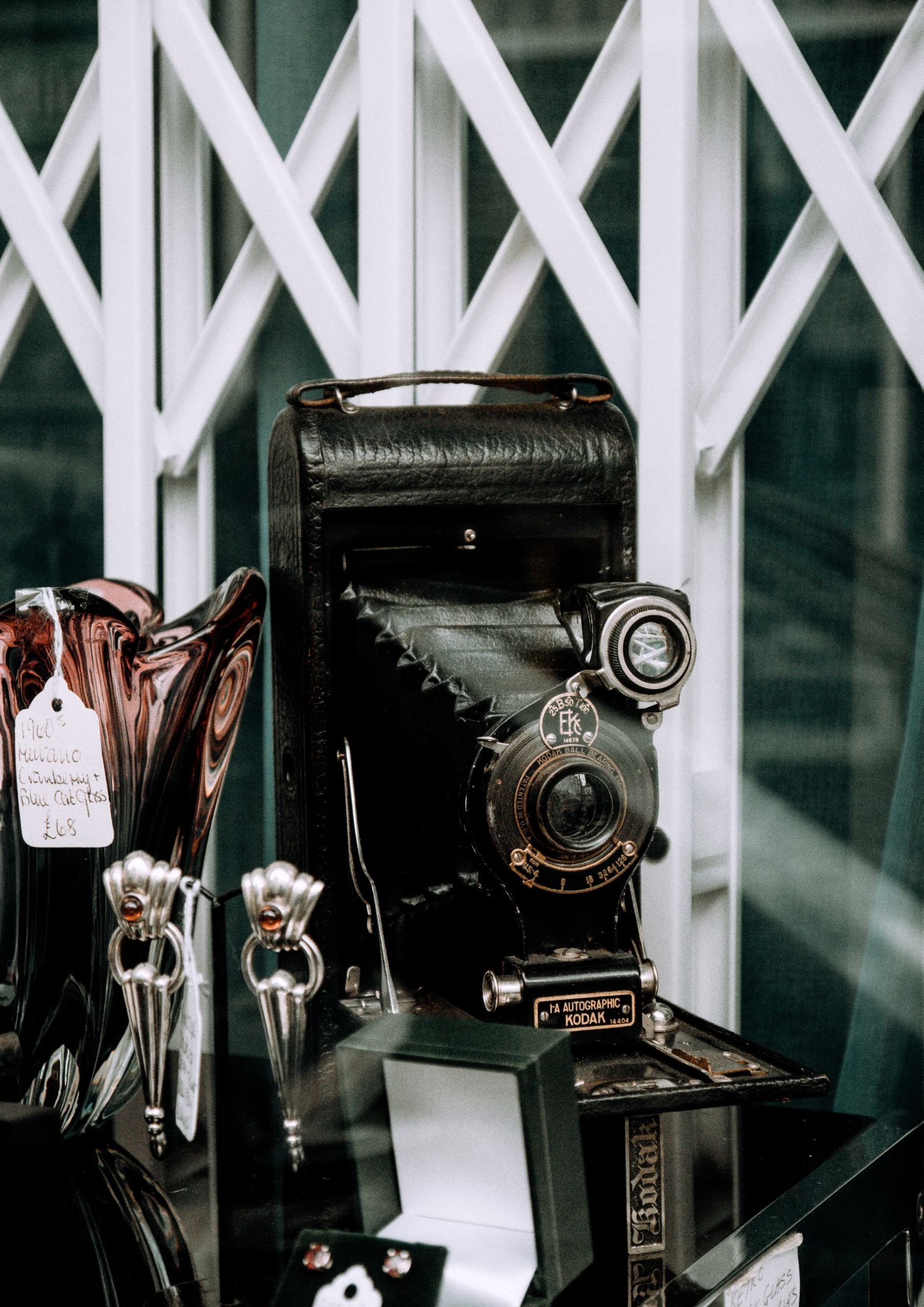
Quick Facts on Surprising Photography Facts:
- Topic: Surprising photography facts across history
- Era covered: 1826 to today
- Oldest fact: The first photo needed hours of exposure
- Weirdest fact: About a dozen cameras still sit on the Moon
- Reading level: Beginner friendly, no gear needed
- Time to read: 6 minutes
- Best for: Curious photographers and trivia lovers
6 min read
In This Article
Surprising Photography Facts Overview
The first surviving photograph needed about eight hours of daylight to expose, and early Kodak cameras were mailed back whole for developing. These surprising photography facts reveal how strange and slow the medium once was. The technology then moved fast, so most shooters never learn where their art began. Yet the backstory makes every modern click feel almost magical.
This article groups the best trivia into four themes, spanning the whole history of photography. Each fact comes with a date and, where possible, a named source, so you learn the real story rather than a myth. For the full sweep, our history of photography timeline lays out the milestones in order.
Beginners, trivia fans, and working photographers will all find something new here. The oldest facts are often the wildest, from mercury darkrooms to a dozen cameras still sitting on the Moon.
Photography Firsts at a Glance
The table below lists six milestones you will meet in this guide. Notably, each one arrived earlier than most people expect. Use it as a quick timeline before the deeper stories below.
| Milestone | Year |
|---|---|
| First surviving photo | 1826 |
| First photo of a person | 1838 |
| First self-portrait photo | 1839 |
| First color photograph | 1861 |
| First Kodak roll-film camera | 1888 |
| First digital camera | 1975 |
Surprising Photography Facts About the First Photos

The first photograph still exists, and it took hours to make. French inventor Nicephore Niepce captured “View from the Window at Le Gras” around 1826 on a pewter plate. The exposure ran for about eight hours in daylight, so sunlight strikes both sides of the courtyard in the frame. Today the surviving plate lives at the Harry Ransom Center in Texas.
The first photo of a person happened by accident in 1838. Louis Daguerre shot a busy Paris street, “Boulevard du Temple,” with an exposure of several minutes. Moving carriages and pedestrians vanished from the plate, yet one man stood still to get his boots shined. He became the first human ever photographed.
A year later, France gave photography away. In 1839, the French government bought the daguerreotype patent and announced the process free to the world. The gift triggered a global craze, and studios opened across Europe and America within months. Also in 1839, Philadelphia chemist Robert Cornelius made the first self-portrait photo, so the selfie predates social media by 170 years.

The first photo book came from a woman scientist. In 1843, botanist Anna Atkins self-published “Photographs of British Algae,” illustrating it with deep-blue cyanotype prints. Many historians call her the first female photographer, and her book reached print before the first commercial photo-illustrated books.
Early portraits looked stiff for a practical reason. Exposures still ran for many seconds, so studios used hidden posing stands and neck braces to hold sitters motionless. A smile was hard to hold for so long, which is one reason Victorians look serious in old portraits. By 1861, physicist James Clerk Maxwell had produced the first color photograph, a tartan ribbon shot through red, green, and blue filters.
Coffee Table Worthy
See 130 Years of Iconic Images
The National Geographic Image Collection gathers 500 stunning photos across 512 pages. It is a beautiful way to trace how far the medium has come.
Surprising Photography Facts About Cameras and Kodak
The word photography means “drawing with light,” from the Greek roots photos and graphe. Astronomer John Herschel helped popularize the term in 1839. Because the name describes the physics so neatly, it has survived nearly two centuries without change.
Kodak founder George Eastman invented the brand name from nothing. He liked the letter K, so he built a short, punchy word around it with no meaning in any language. His 1888 Kodak arrived pre-loaded with enough film for 100 photos. After the final shot, owners mailed the entire camera to Rochester, where staff developed the roll and returned the reloaded body. The slogan captured the idea perfectly: “You press the button, we do the rest.”
The snapshot then went truly mass-market in 1900. Kodak’s Brownie camera sold for one dollar and loaded cheap roll film, so ordinary families started photographing birthdays and holidays for the first time. Suddenly children and amateurs, not only trained studios, were making pictures.
Early photography was also dangerous work. Developing a daguerreotype meant heating toxic mercury, and the later wet-plate process leaned on flammable ether and cyanide compounds. Many portrait photographers spent years breathing fumes we would ban from any studio today.
The first digital camera looked nothing like a phone. In 1975, Kodak engineer Steven Sasson built a prototype weighing about eight pounds. It captured a single black-and-white image at 0.01 megapixels, recorded it onto cassette tape, and needed 23 seconds per shot. For more oddities, see our roundup of the strangest cameras ever made.
Record-Breaking and Famous Photos

Photographs now sell for prices rivaling paintings. In 2022, Man Ray’s 1924 image “Le Violon d’Ingres” sold at Christie’s for about 12.4 million dollars, a record for a photograph at auction. See more in our list of the most expensive photographs ever sold.
The most viewed photograph is probably one you have already seen. Charles O’Rear shot the green hill and blue sky of “Bliss” in California wine country in 1996. Microsoft made it the default Windows XP wallpaper, so it later appeared on hundreds of millions of screens worldwide.
Photographers reached for new vantage points early. In 1858, the French balloonist Nadar made the first aerial photograph, shooting a village from a tethered balloon over Paris. His stunt proved the camera would follow its operator anywhere.
Some famous photos were made far from Earth. Apollo 8 astronaut William Anders captured “Earthrise” in 1968, showing our planet rising over the lunar horizon. To save weight for moon rocks, Apollo crews later left about a dozen Hasselblad camera bodies on the Moon and carried home only the film magazines.
Later missions reached even further. Apollo 17 shot “The Blue Marble” in 1972, one of the most reproduced images in history. In 1990, the Voyager 1 probe turned around and photographed Earth from roughly 6 billion kilometers away, the faint speck Carl Sagan named the Pale Blue Dot.
The Stories Behind The Shots
100 Photographs Behind Modern History
TIME’s “100 Photographs: The Most Influential Images of All Time” pairs each iconic picture with the story of how it was made.
Photography Facts for the Smartphone Age
The pace of picture-taking has changed beyond recognition. Niepce needed eight hours for one frame, while your phone freezes a hummingbird in a fraction of a second. Today the world shoots well over a trillion photos each year, and phones take the overwhelming majority of them.
This flood changes how photos age and spread. A single viral image now reaches more people in a day than any Victorian print reached in a lifetime. Consequently, a strong composition and a clear subject count more than ever, since attention is the scarce resource. The gear keeps improving, yet a cluttered frame still loses the viewer.
Modern milestones arrive fast too. Kevin Systrom posted the first Instagram photo in July 2010, a simple shot of a dog beside a taco stand. Three years later, major dictionaries named “selfie” their word of the year, proof of how quickly phone cameras reshaped daily life.
The lesson from these surprising photography facts is simple and encouraging. Great images never depended on the newest gear, only on light, timing, and a point of view. Tools keep shrinking, while the skill behind a memorable photo has barely changed since 1826.
Frequently Asked Questions
What was the first photograph ever taken?
The oldest surviving photograph is “View from the Window at Le Gras” by Nicephore Niepce, made around 1826 on a pewter plate. It captures rooftops and a courtyard, and it lives at the Harry Ransom Center in Texas.
How long did the first photo take to expose?
Niepce needed roughly eight hours of daylight for the first surviving image. Because the exposure ran so long, sunlight appears to light both sides of the courtyard at once, a clue to the marathon capture.
When was the first color photograph taken?
James Clerk Maxwell produced the first color photograph in 1861. He photographed a tartan ribbon three times through red, green, and blue filters, then combined the results to show full color.
What was the first digital camera?
Kodak engineer Steven Sasson built the first digital camera in 1975. It weighed about eight pounds, captured 0.01 megapixels in black and white, and saved each image to cassette tape.
What is the most viewed photograph of all time?
Many historians point to “Bliss,” the default Windows XP wallpaper shot by Charles O’Rear in 1996. It shipped on hundreds of millions of computers, so a huge share of the planet has seen it.
Who took the first selfie?
Robert Cornelius made the first self-portrait photo in 1839 in Philadelphia. He uncovered the lens, ran into the frame, and sat still long enough to record his own face.

