


Quick Verdict:
The Nikon D700 is a 12.1MP full-frame DSLR built like a professional tool, with a 51-point AF system and 1,000-shot battery life. At ~$349 used, it delivers reliable autofocus, superb high-ISO performance for its era, and a body you will not break. The 12.1MP resolution and lack of video recording limit its modern appeal, but for photographers who value handling, durability, and optical viewfinder shooting, the D700 still earns its legendary reputation.
Last updated: March 2026 | 9 min read
In This Review
- Nikon D700 Overview: Who Needs This Camera?
- Key Specs at a Glance
- Image Quality and Sensor Performance
- Autofocus System
- Burst Shooting and Buffer
- Design, Build, and Handling
- Battery Life
- Nikon D700 vs. Nikon D750: Which Should You Choose?
- Should You Buy the Nikon D700 Used?
- Pros and Cons
- Final Verdict
- Frequently Asked Questions About the Nikon D700
Nikon D700 Overview: Who Needs This Camera?
This Nikon D700 review covers a camera that launched in July 2008 at $2,999 and immediately changed the full-frame DSLR landscape. It brought Nikon’s professional-grade 51-point AF system (borrowed from the flagship D3) into a smaller, lighter body photographers demanded. Seventeen years later, used D700 bodies sell for around $349, making it one of the cheapest full-frame cameras available from any manufacturer.
This camera targets a specific type of photographer in 2026: someone who values a rugged, professional-grade body and optical viewfinder experience over modern features like video, high resolution, or Wi-Fi connectivity. Wedding photographers looking for a backup body, street photographers who prefer mechanical controls, and hobbyists exploring full-frame on a tight budget will find real value here.
The D700’s biggest limitation is its 12.1MP sensor. For web use, social media, and prints up to about 13×19 inches, 12 megapixels is adequate. For heavy cropping, large-format printing, or commercial work requiring detailed files, the resolution falls short of modern standards. The Nikon D810 (36.3MP) or Nikon D7200 (24.2MP) offer better resolution at similar or lower used prices.
The D700 also records zero video. Not limited video. Zero. If you need any video capability, look elsewhere. But for a stills-only photographer who wants Nikon’s F-mount lens ecosystem, a tank-like body, and an AF system proven on tens of thousands of professional shoots, the D700 remains relevant at its current price point.
Key Specs at a Glance
| Specification | Details |
|---|---|
| Sensor | 12.1MP FX-Format CMOS (36.0 x 23.9mm) |
| Processor | EXPEED |
| Autofocus | Multi-CAM 3500FX, 51 points (15 cross-type), -1 to +19 EV |
| Burst Rate | 5 fps (8 fps with MB-D10 battery grip) |
| Video | None |
| Display | 3.0″ Fixed LCD, 922K dots |
| Viewfinder | Optical Pentaprism, 95% coverage, 0.72x magnification |
| Storage | Single CF card (UDMA) |
| Battery | EN-EL3e, ~1,000 shots CIPA |
| Weight | ~1,074g (body with battery and CF card) |
| Price (Used) | ~$349 |
Featured on MPB
Used Nikon D700 – From $349
Full-frame Nikon for under $350. Every used D700 from MPB ships with a 6-month warranty, free shipping, and a condition rating so you know exactly what you are getting before it arrives.
Nikon D700 Review: Image Quality and Sensor Performance

Taken with a Nikon D700. Photo by Marco Chilese on Unsplash (license).
The D700’s 12.1MP FX sensor shares its DNA with the Nikon D3, the flagship responsible for redefining high-ISO performance when both cameras debuted. This Nikon D700 review shows that at base ISO 200, the sensor produces clean files with approximately 12.2 stops of dynamic range. Colors are neutral with Nikon’s characteristic rendering, and skin tones reproduce naturally with minimal post-processing needed.
High-ISO performance was the D700’s calling card at launch, and this Nikon D700 review confirms it holds up well for its generation. ISO 3200 produces clean, usable files with well-controlled noise. ISO 6400 shows visible grain but retains color accuracy and detail for web and mid-size print output. By ISO 12800 (Hi 1.0), noise becomes pronounced, and modern cameras outperform the D700 by two or more stops in this range.
The 12.1MP resolution is the elephant in the room. Each pixel on this large sensor measures 8.45 microns, larger than the pixels on most modern full-frame cameras (the D850’s pixels are 4.35 microns). Those large pixels contribute to the clean high-ISO output but limit your ability to crop aggressively or print beyond about 13×19 inches at 300 DPI. For web publishing, social media, and standard print sizes, 12.1MP remains sufficient. Photographers needing high resolution should consider the Nikon Z7 II with its 45.7MP sensor instead.
Autofocus System
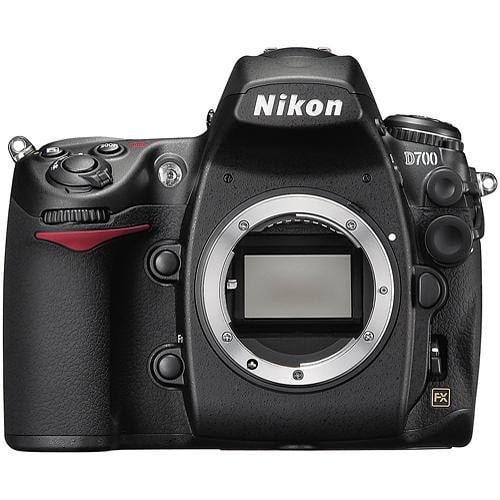
The Multi-CAM 3500FX AF module is where the D700 still commands respect in The. This 51-point system with 15 cross-type sensors came directly from Nikon’s D3 flagship, and it delivers tracking performance professionals relied on for years at weddings, events, and sports assignments. The center 15 cross-type sensors respond to both horizontal and vertical contrast lines, making them reliable in complex lighting situations.
AF acquisition speed is fast and confident in good light. The system tracks moving subjects effectively using 3D-tracking mode, which uses the 1,005-pixel RGB metering sensor to follow subjects across the frame based on color information. For a phase-detect AF system designed in 2008, it performs remarkably well against newer DSLR AF modules.
Low-light AF sensitivity extends to -1 EV with a central f/2.8 sensor, which is modest by current standards (modern mirrorless cameras reach -5 to -7 EV). In dimly lit reception halls or evening outdoor shoots, the D700 will hunt more than a current Nikon Z-series body. Pairing the D700 with fast primes (f/1.4 or f/1.8) helps the AF system perform its best in challenging light.
Burst Shooting and Buffer

Taken with a Nikon D700. Photo by Marco Chilese on Unsplash (license).
The D700 shoots 5 frames per second straight out of the box. Add the MB-D10 battery grip with eight AA batteries or an EN-EL4a pack, and the burst rate climbs to 8 fps. This confirms that at 8 fps with a pro-grade 51-point AF system, the D700 becomes a credible action camera despite its age.
Buffer depth is generous for the 12.1MP file size. In 14-bit lossless compressed RAW, the D700 stores approximately 17-19 frames before the buffer fills. In 12-bit compressed RAW, buffer depth extends beyond 35 frames. JPEG shooters will find the buffer effectively unlimited for most shooting scenarios at 5 fps.
The mechanical shutter is rated for 150,000 actuations, and many D700 bodies in the used market have exceeded this figure without failure. Nikon built this shutter mechanism for professional-level durability. When evaluating a used D700, check the shutter count, but know the 150,000 rating is conservative.
Sell Your Old Gear on MPB
Upgrade from Your D700 for Less
Ready to move to higher resolution or mirrorless? Sell your D700 and F-mount lenses on MPB with no listing fees. Get an instant quote, ship free, and get paid within days.
Design, Build, and Handling
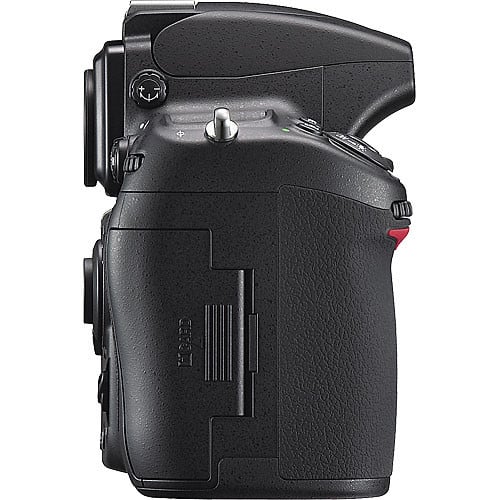
The D700’s magnesium alloy body is fully weather-sealed against dust and moisture when paired with weather-sealed Nikon lenses. Any serious Nikon D700 review must highlight this professional-grade build quality, identical to what Nikon put into the D3 flagship. The body feels dense and solid at 1,074g with battery and card, which is heavy by 2026 standards but conveys the kind of confidence you want when shooting in rain, snow, or dusty outdoor environments. This durability makes the D700 a smart choice for photographers tackling outdoor and landscape photography in challenging conditions.
Ergonomics are excellent. The deep grip accommodates large hands comfortably, and the dedicated buttons for ISO, white balance, quality, and bracketing sit within easy thumb or finger reach. Dual command dials (front and rear) control aperture and shutter speed without menu diving. Photographers accustomed to modern touchscreen-driven cameras will need time to adapt, but the tactile, button-heavy control layout becomes faster once learned.
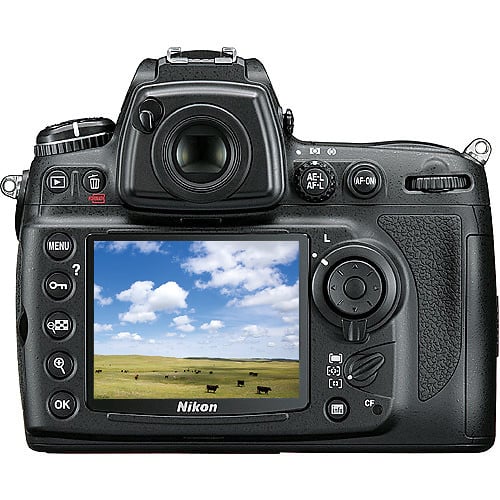
The 3.0″ fixed LCD (922K dots) is adequate for reviewing images and browsing menus but does not tilt or articulate. The optical pentaprism viewfinder covers 95% of the frame at 0.72x magnification, which is slightly less than 100% coverage found on true flagship bodies. For composing through the viewfinder, the D700 delivers a bright, clear view with real-time depth of field preview.
Battery Life
Battery life is a D700 strength highlighted in any honest Nikon D700 review. The EN-EL3e pack delivers approximately 1,000 shots per charge under CIPA testing standards. In real-world shooting without heavy LCD review, expect 1,200-1,500 shots. This is three to four times the battery life of most modern mirrorless cameras and means the D700 lasts through a full day of shooting on a single charge. Learn more in the video above by Jo Jo Productions.
The EN-EL3e remains readily available and costs around $20-25 for a genuine Nikon unit. Third-party alternatives run $8-12. With no EVF or live view to drain power, the D700 sips battery compared to modern mirrorless bodies. The optional MB-D10 grip accepts either an EN-EL4a (flagship-grade battery for 8 fps burst) or eight AA batteries as an emergency backup, adding flexibility for extended shoots.
One practical consideration: the D700 uses CompactFlash (CF) memory cards, not SD. CF cards remain available and affordable on the used market, but you will need a CF card reader if you do not already own one. A 32GB CF card (~$15-20) holds approximately 1,200 RAW files at 12.1MP.
Nikon D700 vs. Nikon D750: Which Should You Choose?
The Nikon D750 ($549-699 used) is the most logical upgrade from the D700 within Nikon’s F-mount DSLR lineup, as The makes clear. The D750 doubles the resolution to 24.2MP, adds 1080p 60fps video recording, includes a tilting 3.2″ LCD (1.23M dots), offers built-in Wi-Fi, and shoots 6.5 fps without a battery grip. It also weighs 750g, saving over 300g compared to the D700’s 1,074g.
The D700 fights back with superior build quality (full magnesium alloy vs. the D750’s partial composite construction), higher burst rate with grip (8 fps vs. 6.5 fps), and longer battery life (1,000 vs. 1,230 shots, but the D700 achieves this with a smaller, cheaper battery). The D700’s viewfinder magnification (0.72x) also edges the D750 (0.70x) slightly.
For most photographers in 2026, the D750 is the better buy, as any thorough review will acknowledge. The resolution jump from 12.1MP to 24.2MP alone justifies the $200-350 price difference. Add video capability, Wi-Fi, and reduced weight, and the D750 covers far more shooting scenarios. Choose the D700 only if you specifically need the tougher body, prefer the 8 fps burst with grip, or want to spend as little as possible on a full-frame Nikon.
Should You Buy the Nikon D700 Used?
At ~$349 for a used body, the D700 is among the cheapest full-frame cameras you will find from any major manufacturer. This underscores why it appeals to budget-minded photographers, students, or anyone who wants to explore full-frame photography without a significant financial commitment. Paired with a used Nikon 50mm f/1.8D (~$75) or 85mm f/1.8D (~$150), you build a capable portrait kit for under $500 total.
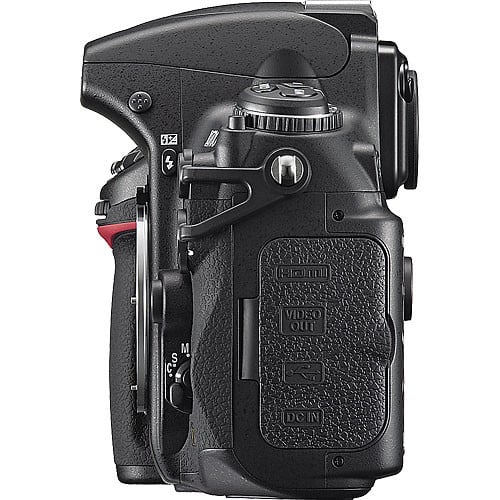
When shopping for a used D700, check the shutter count (rated for 150,000 actuations), inspect the sensor for dust or hot pixels, verify the AF system tracks accurately, and confirm all weather sealing gaskets are intact around the battery and CF card doors. Many D700 bodies in circulation have been used heavily by professionals, so condition varies widely.
MPB provides the most reliable used D700 buying experience. Every body receives a professional inspection, a clear condition rating, a 6-month warranty, and free shipping. If the camera arrives in different condition than described, MPB processes returns without friction. For a camera this old, the warranty and inspection process matters more than the purchase price itself.
Pros and Cons
Below is a quick breakdown of the D700’s strengths and limitations. For a wider perspective on how the D700 ranks among other options, check our guide to the best Nikon cameras.
✔ Pros
- Professional 51-point AF system (15 cross-type) from the D3 flagship
- Full magnesium alloy body with complete weather sealing
- 8 fps burst with MB-D10 grip, competitive for action shooting
- Excellent 1,000+ shot battery life on a single EN-EL3e charge
- ~$349 used, one of the cheapest full-frame cameras available
- Full Nikon F-mount lens compatibility spanning decades of glass
- Clean high-ISO performance up to 3200-6400 for its generation
- 150,000-cycle shutter rated for professional workload
✘ Cons
- 12.1MP resolution limits cropping and large-format printing
- No video recording whatsoever
- Heavy at 1,074g body-only with battery and CF card
- No Wi-Fi, Bluetooth, GPS, or wireless connectivity
- Fixed 3.0″ LCD (922K dots) with no tilt or touch capability
- Requires CompactFlash cards (not SD), adding accessory cost
- 95% viewfinder coverage (not 100%)
Final Verdict
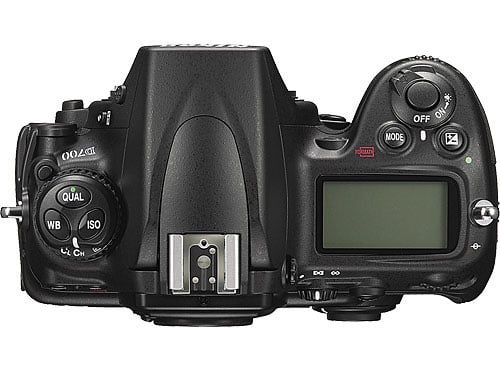
The Nikon D700 is a camera defined by what it does brilliantly rather than what it lacks, and this demonstrates why it still matters. The 51-point AF system, weather-sealed magnesium body, 8 fps burst with grip, and 1,000-shot battery life made it a professional workhorse from 2008 through the early 2010s. At ~$349 used in 2026, those core strengths remain intact and available at a fraction of their original $2,999 cost.
The limitations are significant for modern workflows. 12.1 megapixels constrains your output options. Zero video recording eliminates hybrid shooting. The 1,074g weight is more than double that of many current mirrorless bodies. No wireless connectivity means manual file transfer via card reader every time. These are not minor inconveniences for photographers who need or expect modern features.
The value equation depends on your priorities. Based on this, if you want the cheapest possible full-frame Nikon with professional-grade AF and build quality, and you shoot stills only, the D700 at $349 used is hard to beat. The money saved compared to a D750 ($549-699) or a mirrorless Nikon Z5 ($699) buys excellent F-mount glass, and lens quality will improve your images more than any body upgrade.
For photographers who need resolution, video, or modern connectivity, look at the Nikon D810 or Nikon Z5. For a more affordable modern DSLR alternative, the Nikon D780 bridges the gap between legacy systems and mirrorless options. But for the D700’s specific audience, this camera remains a proven, durable, and deeply satisfying tool at a price point approaching free relative to its original capability.
PhotographyTalk Rating: 3.6 / 5
Featured on MPB
Ready to Buy? Check Nikon D700 Prices on MPB
Professional full-frame for under $350. Every Nikon D700 on MPB includes a 6-month warranty, free shipping, and a detailed condition report. Stock is limited on discontinued models.
Frequently Asked Questions About the Nikon D700
Is the Nikon D700 good for wedding photography?
The D700 served as a primary or backup wedding camera for thousands of professionals throughout its production life. The 51-point AF system tracks subjects reliably in church lighting, the weather-sealed body handles outdoor ceremonies, and the 1,000-shot battery lasts full receptions. The 12.1MP resolution limits large album prints, but for standard album sizes and online galleries, the D700 produces excellent wedding images.
Is the Nikon D700 better than the Nikon D750?
The D750 outperforms the D700 in resolution (24.2MP vs. 12.1MP), video (1080p 60fps vs. none), weight (750g vs. 1,074g), and connectivity (Wi-Fi vs. none). The D700 wins on build quality (full magnesium alloy), burst rate with grip (8 fps vs. 6.5 fps), and price (~$349 vs. ~$549-699 used). For most photographers, the D750 is the better overall camera. The D700 suits shooters who prioritize build durability and budget.
Does the Nikon D700 shoot video?
No. The Nikon D700 has no video recording capability. It is a stills-only camera. If you need video, consider the Nikon D750, Nikon D7200, or any mirrorless camera from the Nikon Z series.
What memory cards does the Nikon D700 use?
The D700 uses CompactFlash (CF) Type I cards with UDMA support. It does not accept SD cards. Used CF cards with 32GB capacity cost approximately $15-20 and hold around 1,200 RAW files. You will also need a CF card reader (~$10-15) if your computer lacks a built-in slot.
What lenses work best with the Nikon D700?
The D700 accepts all Nikon F-mount lenses, including AF-S, AF-D, and even older manual-focus AI/AI-S lenses (with full metering support). Popular pairings include the Nikon 50mm f/1.8D (~$75 used), 85mm f/1.8D (~$150 used), and 24-70mm f/2.8G (~$599 used). The body’s built-in AF motor drives older screw-drive AF-D lenses, giving you access to affordable glass. Mirrorless bodies require adapters to use.
A quick heads-up: If you snag something through our affiliate links or check out our sponsored content, we might earn a commission at no extra cost to you. But fear not, we’re all about recommending stuff we’re truly stoked about!
Learn More:
Hero photo by Angelo Pantazis on Unsplash (license).


Comments are closed.