


Quick Facts:
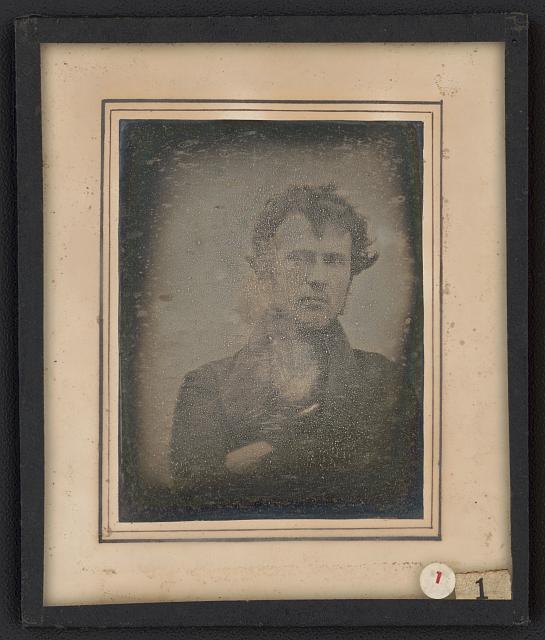
- Image: The first selfie (self-portrait) by Robert Cornelius
- Photographer: Robert Cornelius (1809-1893)
- Date: Late 1839 (likely October or November)
- Location: Backyard of the family lamp store, Philadelphia
- Process: Daguerreotype, quarter-plate
- Exposure: About 10 to 15 minutes
- Camera: Homemade box with a lens from an opera glass
- Where to see it: Library of Congress, Washington, D.C.
7 min read
In This Article
- The Backyard Portrait Behind Modern Selfies
- Who Was Robert Cornelius?
- How Cornelius Made the First Selfie
- How the Daguerreotype Process Worked
- What the Picture Shows
- Why Early Portraits Were So Hard
- Why It Counts as the First Photographic Portrait
- What Cornelius Did After 1839
- Why the First Selfie Still Matters
- Frequently Asked Questions
Robert Cornelius and the First Selfie in History
In late 1839, a young Philadelphia chemist stepped into his family’s backyard and aimed a homemade camera at himself. Robert Cornelius made the first selfie in history, though nobody used the word for another 170 years. He worked outdoors for light, uncovered the lens, and held still for several minutes. The result survives today as the earliest photographic portrait made in America.
You have taken hundreds of self-portraits with a phone. Cornelius had no phone, no shutter, and no guide. Instead, he improvised a lens from an opera glass and a wooden box. Because the process was so new, he invented the method as he went. His picture showed the young medium would record a human face.
This piece continues our series on photographs which changed history. The image earns its place for a simple reason. It turned an abstract invention into something personal and human. From this moment, ordinary people began to see themselves through a lens.
Who Was Robert Cornelius?
Cornelius was born in Philadelphia in 1809, the son of a Dutch immigrant. His father built a busy lamp and metal-plating business in the city. Young Robert learned silver-plating, polishing, and practical chemistry in the family shop. Those hands-on skills later suited the mirror-bright plates of early photography.
He was a maker first and an artist second. The camera drew him in as a technical puzzle, not a fine-art calling. Once he solved it, his curiosity moved toward other problems. Even so, his brief detour into photography earned him a permanent place in its history.
Peers respected him as a serious man of science and industry. He later joined civic and scientific circles in Philadelphia. His lamp patents helped make the family firm a regional leader. Photography stayed one bright chapter in a long, practical career.
How Cornelius Made the First Selfie
Cornelius did not own a proper camera in 1839. He built one from a wooden box and a lens borrowed from an opera glass. Then he carried it into the yard behind the family lamp store on Chestnut Street. Sunlight did the work, since early plates needed bright, direct light.
The exposure ran long by any standard. Cornelius uncovered the lens, hurried into the frame, and sat as still as possible. He held the pose for ten to fifteen minutes. Afterward, he capped the lens and developed the silvered plate. These same lessons in patience and light still guide portrait work today.
Cornelius brought an edge to the task. He worked with metals and chemistry at the family firm, so silver plates and vapors felt familiar. His technical hands helped him polish, sensitize, and develop with care. This background separated a curious tinkerer from a lucky amateur.
The backyard doubled as his studio for the day. Open sunlight beat any lamp he owned in 1839. He likely read the sky and timed the sitting for strong midday light. Small choices like these decided whether a plate held a face or a blur.
How the Daguerreotype Process Worked
The daguerreotype process asked for real chemistry and patience. First, the maker polished a silver-coated copper plate to a mirror shine. Next, iodine vapor sensitized the surface until it turned golden. The plate then went into the camera inside a lightproof holder.
After the exposure, the work moved indoors and into the dark. Warm mercury vapor drew the hidden image out of the plate. A salt or hypo bath then fixed the picture so light no longer changed it. Because the method made no negative, each plate was a single original. Cornelius ran every one of these steps by hand in his backyard.
What the Picture Shows
The portrait shows a man slightly off-center, arms crossed, hair tousled. His gaze sits slightly off the lens, intent and a little startled. The framing feels casual, almost modern, for such an old plate. You might mistake the mood for a snapshot taken yesterday.
Cornelius left a note on the back of the plate. It reads, “The first light picture ever taken. 1839.” The line sounds proud, and it earned the pride. Even so, a sharp human face was a real feat in 1839. Modern shooters chase the same goal when they work on authentic expressions in portrait photography.
The face still holds your attention across nearly two centuries. A real person looks back, curious and a little unsure. No painting matched a likeness this direct in 1839. The plate turned a dry scientific test into a warm human moment. You feel the surprise of a man watching a machine record him.
The plate itself nearly slipped from memory. For generations, few people outside archivists knew the picture. Interest surged once the word “selfie” entered daily life. Today the Library of Congress treats the portrait as a landmark of early photography.
Why Early Portraits Were So Hard
Long exposure time made portraits a challenge in 1839. A sitter had to hold perfectly still for minutes, not seconds. Any twitch blurred the face and spoiled the plate. For this reason, most first-year daguerreotypes showed buildings and streets, not people.
Studios soon added iron head braces to steady their subjects. The hidden clamps locked the skull in place behind the sitter. Holding a smile so long was hard, so most faces look solemn and stiff. Cornelius met the same limit, yet his backyard portrait still reads as alert and alive.
Why It Counts as the First Photographic Portrait
The Library of Congress calls this the earliest surviving American portrait photograph. Cornelius made it within months of Daguerre’s public announcement in August 1839. Early cameras handled still scenes well, yet struggled with living subjects. A person had to freeze too long for a sharp result. Therefore a crisp face marked a genuine breakthrough.
Daguerre’s method reached the public fast. On August 19, 1839, the French government shared the full recipe as a gift to the world. Newspapers and journals spread the steps within weeks. Cornelius read the reports, gathered materials, and tested them within months. His speed shows how hungry inventors were for this new art.
The “first selfie” label is popular, though it needs a small caveat. Earlier plates had caught people by accident, as distant blurs. Cornelius instead aimed the camera at himself on purpose. He composed, posed, and recorded his own likeness with intent. In this sense, he made the first deliberate photographic self-portrait, a root of modern portrait photography.
What Cornelius Did After 1839
Cornelius did not become a career photographer. For a short stretch, though, he ran one of the first portrait studios in the United States. Sitters wanted speed, since long poses tested everyone’s patience.
Speed was the barrier, so Cornelius attacked it directly. With the chemist Paul Beck Goddard, he added bromine to sensitize plates faster. Reflectors and blue glass then pushed more usable light onto the sitter. Together these tricks cut the exposure time from many minutes to roughly a minute. He opened his portrait studio in the spring of 1840.
By 1843, the studio phase was ending. Cornelius returned to the family business, which made lamps and gas fixtures. He patented a popular solar lamp the same year and prospered for decades. His photographic career lasted only a few years, yet it left a lasting mark. Photography moved on, while his single plate kept its place in history.
Why the First Selfie Still Matters
The first selfie changed what people expected from a photograph. Before Cornelius, the camera recorded the world at a distance. After him, it recorded the self, close and direct. Every profile picture traces a line back to his backyard plate. You share this lineage each time you raise a phone.
The name came much later than the picture. English speakers coined “selfie” in the 2000s, and Oxford named it word of the year in 2013. Cornelius beat the term by more than 170 years. His plate proves the urge to photograph yourself is old, not new.
The image also shows the value of a bold experiment. Cornelius had no manual and no mentor for this task. He tried, adjusted, and kept something no American had kept before. To see how far the medium traveled, look at the most valuable photographs ever sold. From a homemade box to million-dollar prints, the arc starts here. The same restless spirit later drove Muybridge to freeze a galloping horse in 1878.
For your own work, the lesson stays simple. Strong light and a steady subject still make a portrait read. Cornelius proved the point with a borrowed opera-glass lens. You hold far better tools in one hand today.
Frequently Asked Questions
Who took the first selfie?
Robert Cornelius, a Philadelphia chemist, took the first selfie in late 1839. He photographed himself in the yard behind his family’s lamp business. The original plate survives at the Library of Congress.
When was the first selfie taken?
Cornelius made the image in late 1839, likely October or November. He worked only months after Daguerre announced the daguerreotype process in August 1839.
Is Robert Cornelius’s photo the first selfie?
It is the first known deliberate photographic self-portrait. Earlier plates caught people by accident, not by design. So historians treat this daguerreotype as the first true self-portrait.
How long was the exposure?
The exposure ran about ten to fifteen minutes. Cornelius uncovered the lens, sat still in the frame, then capped it. Bright outdoor light made the long pose workable.
What camera did Robert Cornelius use?
He improvised one from a wooden box and a lens taken from an opera glass. No consumer cameras existed in 1839. His homemade rig still produced a clear face.
Why does the picture look so modern?
The casual pose and direct gaze feel familiar to phone users. Cornelius framed himself loosely, with crossed arms and tousled hair. Strict studio rules had not yet formed around portraits. So the plate carries a natural energy we still chase today.
Where is the first selfie today?
The Library of Congress holds the original daguerreotype. A note on the back reads, “The first light picture ever taken. 1839.”

