


Quick Facts:
- Topic: Visa, permit, and drone rules for traveling photographers
- Who is affected: Hobbyists who sell or post monetized work, and full-time pros
- Lead example: Indonesia’s 2026 Bali immigration crackdown
- Typical penalties: Fines, deportation, gear seizure, re-entry bans
- Key distinction: Tourist visa vs. work permit (KITAS, E33G)
- Worst case in Indonesia: Up to 5 years prison, IDR 500 million fine
- Best for: Any photographer planning paid or published travel work
8 min read
In This Article
- Working on a Tourist Visa: The 2026 Crackdown
- Where Photographers Get Fined or Deported
- What Counts as Work With a Camera
- Inside Bali’s Crackdown on Working on a Tourist Visa
- Drone Mistakes Getting Your Gear Seized
- Permit Mistakes at Parks, Churches, and Landmarks
- Tourist Visa vs. Work Visa: Which You Need
- How to Shoot Abroad Without Getting Burned
- Frequently Asked Questions
Working on a Tourist Visa: The 2026 Crackdown
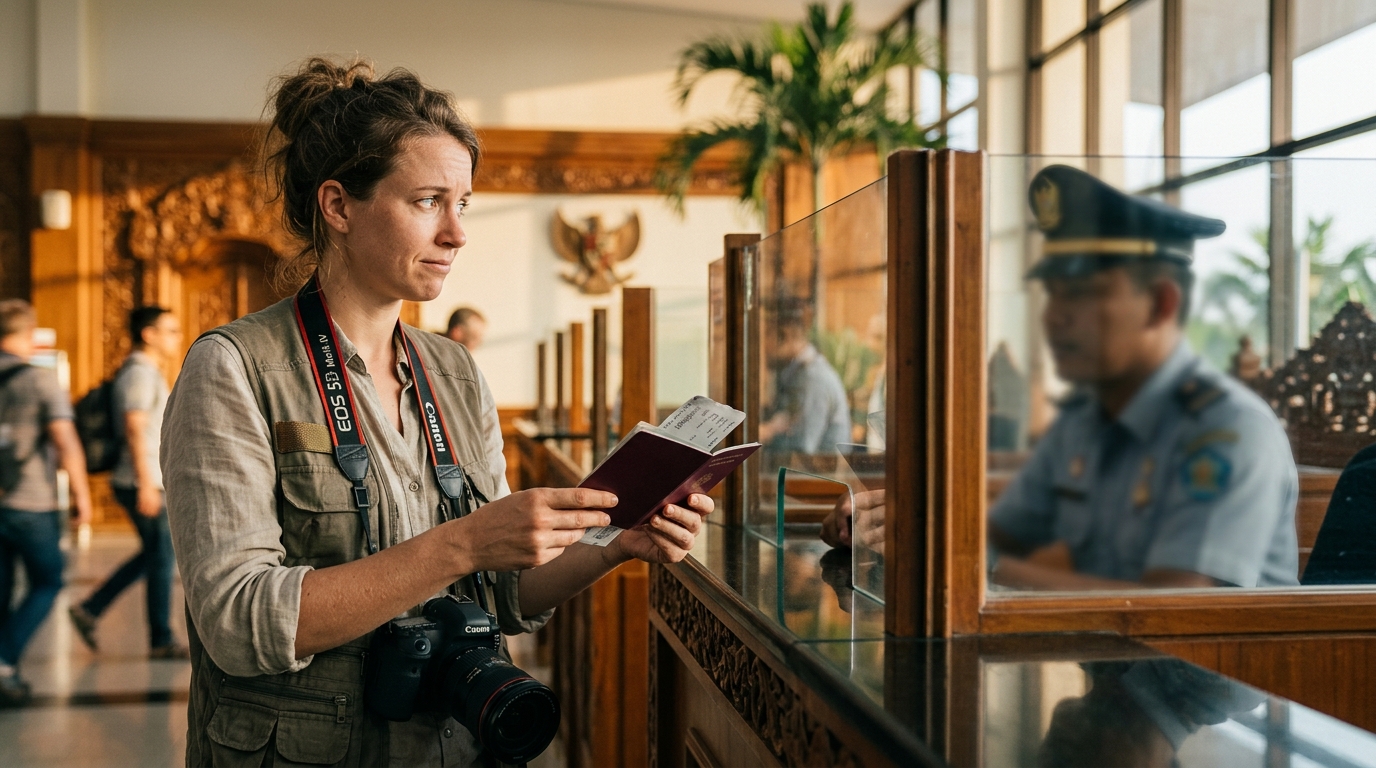
Working on a tourist visa is the mistake sending photographers home from their dream trips in 2026. Indonesia made the danger impossible to ignore this spring. Between January and early May, immigration officers logged 6,779 enforcement actions and deported 2,026 foreigners. Bali sat at the center of the sweep. For traveling photographers, the lesson is blunt, because the visa in your passport decides whether your camera makes you a tourist or a target.
This guide speaks to two groups. First, the hobbyist who sells the occasional print or posts monetized travel content. Second, the working pro who flies in for client shoots, weddings, or stock. Both face the same trap, since immigration law looks at what you do, not how serious you are about it. Therefore the rules below matter whether photography pays your mortgage or funds your next flight.
The penalties are not theoretical. Across Indonesia, Iceland, India, and US national parks, photographers have lost gear, paid fines, and earned re-entry bans for ignoring local rules. Below, you will find the specific mistakes, the real numbers behind the 2026 enforcement wave, and a clear test for when a trip crosses from travel into paid work.
Where Photographers Get Fined or Deported

Enforcement varies widely by country, yet the pattern is consistent. Specifically, officers target income-generating activity, restricted airspace, and protected sites. For example, the table below summarizes the rules tripping up photographers most often in 2026.
| Location | Common Mistake | Penalty |
|---|---|---|
| Indonesia (Bali) | Earning or shooting paid work on a visit visa | Deportation, re-entry ban, up to 5 yrs prison + IDR 500M (~$30,000) |
| United States (parks) | Large crews or drones without approval | Fines; small handheld crews now exempt under the 2025 EXPLORE Act |
| Iceland | Flying a drone in protected areas | Permit refusal, fines, drone confiscation |
| India | Bringing a foreign-registered drone | Import banned since 2022; units seized at customs |
| Vatican (Sistine Chapel) | Photographing inside the chapel | Ejection; photography is prohibited entirely |
What Counts as Work With a Camera
Immigration officers apply a simple test. If your camera generates income or promotes a business, the activity counts as work. In contrast, personal travel photos for your own album stay firmly on the tourist side. Money does not need to change hands on the spot, because barter counts too. A free villa stay in exchange for promotional reels reads as paid work to an officer reviewing your case.
Where hobbyists slip up
Hobbyists often assume small scale means no rules. However, selling prints to a local gallery, shooting a paid portrait session for another traveler, or posting sponsored content all qualify as work. Even monetized video filmed abroad has drawn scrutiny. If a brand pays you, the destination’s labor laws apply, no matter how casual the shoot feels. These sit alongside the more common travel photography mistakes draining a trip of its fun.
Where pros get exposed
Professionals carry the opposite problem. They know they are working, yet they enter on tourist visas to save time and money. Destination weddings, commercial campaigns, and client portrait trips need a work permit or business class in most countries. A pro shooting a paid wedding in Bali needs a KITAS or a proper business permit, not a visa on arrival. Consequently, the risk grows with every public post tagging the client.
Inside Bali’s Crackdown on Working on a Tourist Visa
Bali turned its enforcement up sharply in 2026. On April 15, immigration launched the Dharma Dewata task force, a unit of roughly 100 officers focused on foreigners breaking visa rules. Within weeks, the results landed. On May 5, immigration announced 62 foreigners detained in Bali alone, several for working without a permit.
National figures show the scale. From January 1 to May 5, Indonesia recorded 6,779 administrative actions, 2,026 deportations, 1,404 detentions, and 1,323 blacklistings. Director General Hendarsam Marantoko framed it plainly, telling foreigners to comply with the rules or leave. Bali immigration chief Felucia Sengky Ratna tied the push to protecting the economic ecosystem of local residents, including local photographers losing work to unlicensed visitors.
Notably, the legal exposure is severe. Under Indonesia’s immigration law, working without the right permit carries up to five years in prison and a fine reaching IDR 500 million, near USD 30,000. In practice, most cases end in deportation and a re-entry ban rather than prison. Still, a deportation stamp follows you, and it complicates visa applications for other countries afterward.
Indonesia does offer legal paths. A photographer on assignment needs a work permit tied to a KITAS. A remote creator serving only foreign clients qualifies for the E33G remote worker visa, which requires proof of income and bars earning from Indonesian sources. For a paid shoot on Indonesian soil, neither a visa on arrival nor a tourist visit visa covers the work.
Drone Mistakes Getting Your Gear Seized

Visa rules are only half the risk. Equipment creates the other half. Drones cause more border trouble than almost any other piece of kit. Rules shift by country, and ignorance earns no mercy. For example, India banned the import of foreign-made drones in February 2022. As a result, foreign visitors are effectively grounded there, and customs officers seize units on arrival.
Iceland tightened its rules in 2026. The Nature Conservation Agency stopped issuing drone permits for personal photography inside protected areas as of May. Commercial drone work still needs a permit, and fines plus confiscation await anyone caught flying without one. Before you pack a drone, check the destination’s civil aviation authority and its customs declaration rules.
Closer to home, the United States shows how fast drone rules change around big events. During the 2026 World Cup, the FBI seized drones at venues and warned of penalties reaching USD 100,000. Separately, an FCC ruling reshaped which units stay legal to sell and fly. Read our breakdown of the FCC DJI drone ban and the World Cup no-drone-zone fines before you travel with a drone for any high-profile shoot.
Permit Mistakes at Parks, Churches, and Landmarks
Permits trip up photographers even when no visa is in question. Rules differ by site, and they change. In the United States, the EXPLORE Act of 2025 removed permit and fee requirements for small shoots on federal land. As a result, a crew of eight or fewer using handheld gear shoots in national parks without a photography permit. Larger productions, staging, and drones still need approval.
Other landmarks stay strict. Photography is prohibited inside the Sistine Chapel, and guards enforce the rule firmly. Many casinos ban cameras on the gaming floor to protect patrons and security operations. A photography permit is often required for tripods at busy city landmarks, even for hobbyists shooting purely for themselves. Ask the site or tourism board before you set up, since a quiet personal frame and a commercial shoot face different rules.
Tourist Visa vs. Work Visa: Which You Need
The choice comes down to intent and income. A tourist visa covers sightseeing, personal photos, and unpaid leisure. A work visa or business permit covers paid assignments, client shoots, and monetized content. Above all, most countries treat the difference seriously, and the penalties above show exactly why.
Here is the practical split. If you travel to relax and photograph for yourself, a tourist visa fits cleanly. If a client, brand, or paying customer is involved, you need a work permit or the local equivalent. Remote photographers serving only home-country clients sit in a gray zone, so digital nomad permits like Indonesia’s E33G now exist to make remote work legal.
When in doubt, contact the destination’s embassy before booking. Visa categories carry different names worldwide, yet the underlying question stays the same. Will your camera earn money or promote a business while you are in the country? If the answer is yes, a tourist visa is the wrong document for the job.
How to Shoot Abroad Without Getting Burned
Plan the paperwork as carefully as the shot list. Confirm your visa class for the work you intend to do. For paid assignments, secure a work permit or business visa well before departure, because approvals take weeks in many countries.
Check the gear rules next. Research drone laws, permit requirements, and customs declarations for every stop on the itinerary. In particular, pack proof of your visa status, and keep client contracts off your devices at the border if a country bars tourist-visa work. Likewise, protect your kit with these tips for traveling with camera gear. A clean entry beats a fast one every time.
Respect the local industry too. The Bali crackdown grew partly from local photographers losing jobs to unlicensed visitors. Hiring a local fixer or second shooter often satisfies the rules and sharpens the final images. Strong travel photography tips start with legal entry, then good light.
The fix stays simple even when the rules are not. Match your visa to your activity, check the permit and drone laws for each location, and ask officials whenever you feel unsure. Photographers who prepare keep shooting for years. Those who gamble on a tourist visa risk the deportation stamp instead.
Frequently Asked Questions
Is it legal to work as a photographer on a tourist visa?
No. Paid work on a tourist visa is prohibited in most countries, including Indonesia, because tourist and visit visas exclude paid activity. Client shoots, sponsored content, and image sales all count as work. For paid assignments, you need a work permit or the local business class.
Do you need a work visa to photograph abroad?
It depends on intent. Personal travel photos require only a tourist visa. However, paid shoots, commercial campaigns, and monetized content trigger work permit requirements. Always confirm the rule with the destination’s embassy before you book the trip.
What happens if immigration catches you working on a tourist visa?
Penalties range from fines to deportation, detention, and re-entry bans. In Indonesia, the immigration law allows up to five years in prison and a fine near USD 30,000. Indonesia deported 2,026 foreigners between January and early May 2026 alone.
Does posting sponsored travel content count as work?
Yes. Sponsored posts and brand partnerships count as work, even when payment arrives as a free stay or product. Immigration officers judge the activity, not the payment method. A monetized shoot abroad needs the correct work permit.
Do you need a photography permit in US national parks?
Usually not anymore. The 2025 EXPLORE Act removed permit and fee requirements for crews of eight or fewer using handheld gear. Larger productions, staging setups, and drones still need a photography permit and prior approval from the park.
Is it legal to fly a drone as a foreign tourist?
It varies sharply by country. India bans foreign-registered drones outright, and customs officers seize them on arrival. Iceland restricts drone flights in protected areas. Check the civil aviation authority for every destination before you pack a drone.

