


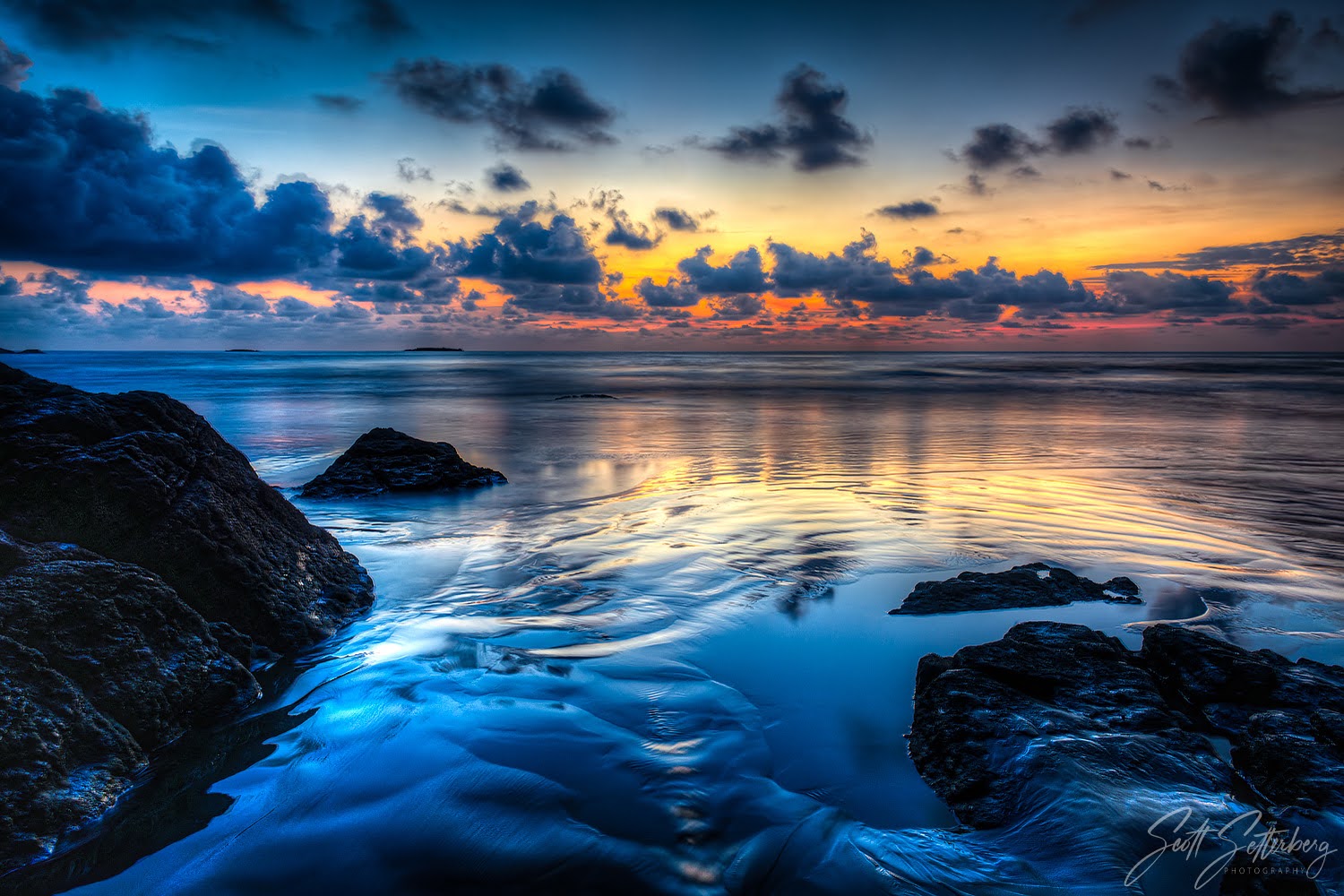
Most photographers go to Costa Rica for wildlife. Typically, they leave wishing they had brought more time for the landscapes. The country holds roughly 5% of all species on Earth in a landmass smaller than West Virginia. While wildlife sells the ticket, waterfalls, cloud forests, volcanic coastlines, and tropical rivers fill the memory cards. Costa Rica landscape photography rewards anyone with a tripod and a willingness to start before dawn.
However, few people understand this terrain better than Scott Setterberg, the award-winning landscape photographer behind ColorTexturePhotoTours. He’s lived in Costa Rica for the last ten years and brings 35 years of landscape and commercial photography experience to every location he leads. Notably, his images have appeared in Outdoor Photographer and Landscape Photography Magazine, and he holds membership in NANPA, the North American Nature Photography Association.
On the Wild Costa Rica Photography Workshop, he is joined by Jason Torres, a professional naturalist licensed and credentialed by the Costa Rica Institute of Tourism with 20 years of field experience. As a result, they give photographers access to locations and timing no self-guided trip replicates.
Quick Facts:
- Topic: Costa Rica landscape photography for serious shooters
- Key subjects: Waterfalls, cloud forests, Pacific coastlines, tropical wildlife
- Peak season: Dry season (Dec to April) for access; green season (May to Nov) for mood
- Core gear: Tripod, polarizing filter, neutral density filter, weather protection
- Skill level: All levels welcome
- Guided option: Wild Costa Rica Photography Workshop, Jan 10–18, 2027
- Best for: Landscape, waterfall, and nature photographers building a portfolio
8 min read
In This Article
- Why Costa Rica Stands Apart as a Landscape Photography Destination
- Key Subjects at a Glance
- Costa Rica Landscape Photography: Waterfalls Are the Crown Jewel
- Cloud Forest Photography and the Resplendent Quetzal
- Coastlines, Wildlife, and the South Pacific
- Solo Travel vs. a Guided Photography Workshop
- The Realities of Shooting Here
- Final Verdict
- Frequently Asked Questions
Why Costa Rica Landscape Photography Stands Apart as a Destination
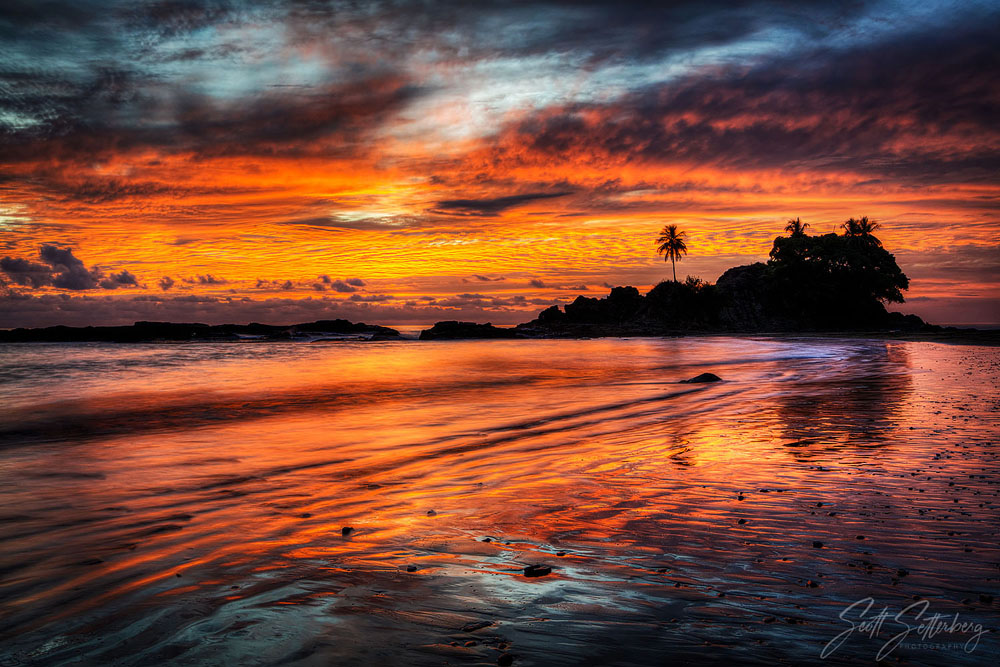
Costa Rica landscape photography works because the country stacks wildly different ecosystems into a two-hour drive. For example, you shoot a 180-foot jungle waterfall in the morning, photograph crocodiles at noon, and frame a Pacific sunset over sea stacks by evening. Notably, no other Central American destination compresses this variety into a circuit photographers cover without flying between regions.
The population of landscape-focused photo tours here is remarkably thin. Instead, most operators build itineraries around wildlife lodges and bird hides. However, Scott Setterberg takes a different approach. He treats Costa Rica as any good landscape photographer treats the American Southwest: as a terrain to read, time, and compose. In fact, one past workshop participant described his trips as the only ones he knew of who approached the country as a landscape photography destination rather than a wildlife safari. For a detailed look at where to point your lens, this location guide to Costa Rica’s most iconic shots covers the highland circuit in depth.
Because Scott lives in Costa Rica six months a year, he knows when mist hangs over Tarcoles and when Nauyaca Falls runs at full volume. Also, he knows which angle of Playa Dominicalito holds color at sunset. Ultimately, this field knowledge separates a strong Costa Rica photography trip from a guessing game.
Key Subjects at a Glance
| Subject | Location | Key technique |
|---|---|---|
| Jungle waterfall | Eco Chontales, Nauyaca, Cascada Elysiana | Tripod, ND filter, 1–2 sec shutter |
| American crocodiles | Tarcoles River Bridge | Telephoto, fast shutter, morning light |
| Pacific sunset / coastline | Playa Dominicalito, Playa Ventanas | Wide lens, polarizer, bracket exposures |
| Poison dart frogs, tropical flora | Rancho Rana Roja | Macro lens, diffused flash, focus stack |
| Cloud forest scenery | Talamanca Reserve, San Gerardo de Dota | Expose right in mist, lock WB at 5500K |
| Resplendent quetzal | Los Quetzales National Park | 600mm+ equivalent, subject tracking AF |
Shoot Costa Rica With a Local Pro
Wild Costa Rica Photography Workshop
All-inclusive, small-group, Jan 10–18, 2027. Scott Setterberg leads; certified naturalist Jason Torres guides. Specifically, the itinerary covers waterfalls, coast, cloud forest, and quetzal in one trip.
Costa Rica Landscape Photography: Waterfalls Are the Crown Jewel
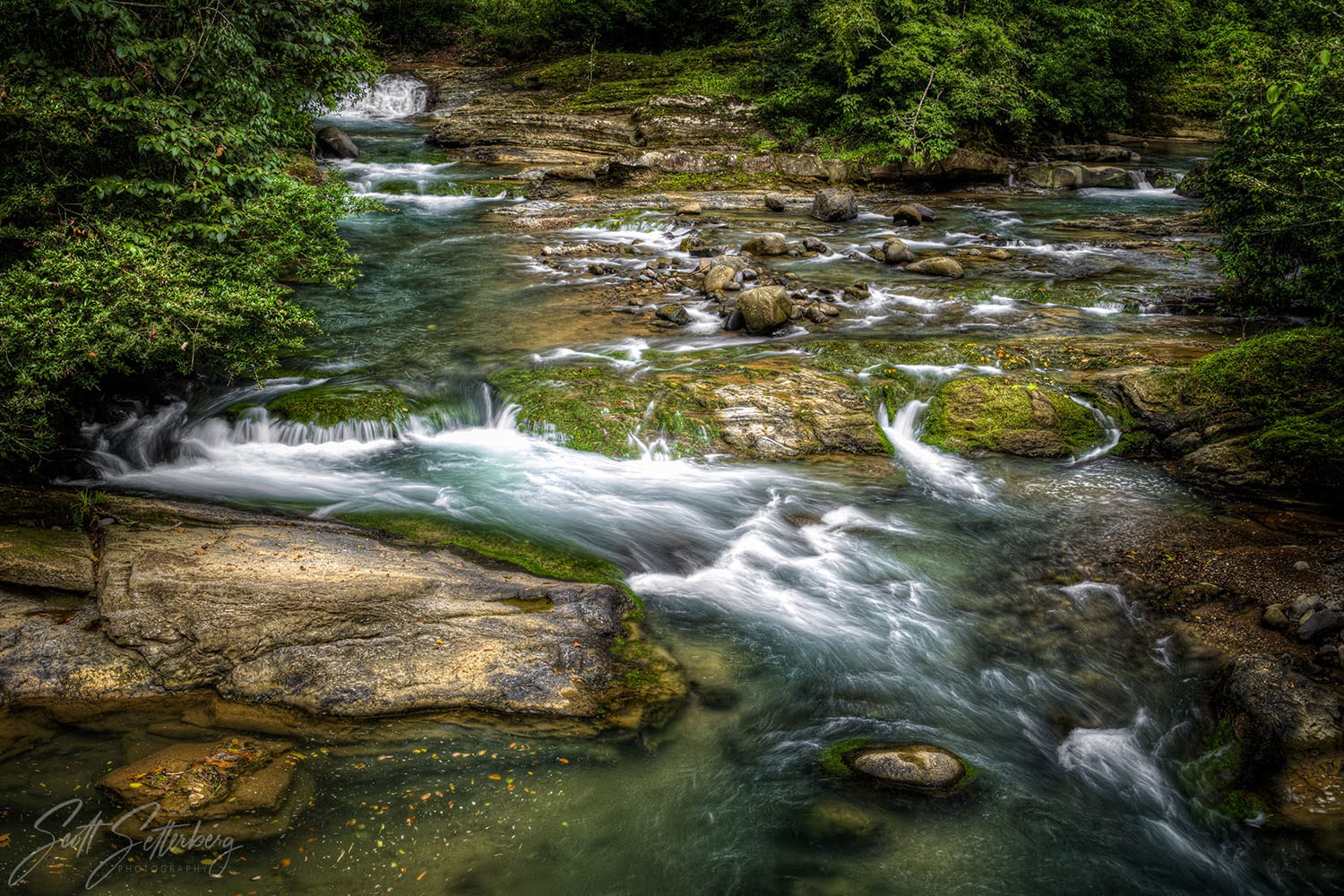
Devoted to both Costa Rica waterfalls photography and landscape work, this region as a serious discipline. Notably, Eco Chontales drops 180 feet into a canyon framed by a jagged rock wall and mountain scenery. Nauyaca Falls, widely considered among the most spectacular in the country, sends two tiers of water crashing into vivid tropical pools. However, these locations take guides, muddy trails, and early starts. Still, the effort pays off because you’re rarely sharing the frame.
For all waterfall locations, the gear approach stays consistent. First, set up a tripod and dial in ISO 100. Then choose an aperture between f/8 and f/11 for full front-to-back sharpness. Specifically, use a neutral density filter to stretch your shutter to one or two seconds, silking the water without losing rock texture. Also, for glare on wet leaves, a circular polarizer makes the difference. It deepens the surrounding green so the white cascade reads cleanly against the jungle.
In addition, Rancho Rana Roja adds a private dimension. Two waterfalls sit hidden inside the property’s rainforest, surrounded by poison dart frogs and tropical flowers. Because you’re off the tourist track, you build compositions without working around crowds. Similarly, Cascada Elysiana near Dominical is quiet, offering a jungle waterfall inside lush secondary rainforest. According to The Tica, Costa Rica holds over 200 named waterfalls, and the South Pacific region concentrates some of the most dramatic ones in the country.
Cloud Forest Photography and the Resplendent Quetzal
Cloud forest photography here operates on different rules from lowland shooting. At Talamanca Reserve and San Gerardo de Dota, temperatures drop, mist rolls through the canopy, and light stays soft longer. Consequently, fog becomes your negative space rather than a problem to expose around. A tripod, a slow shutter, and patience produce images with depth and atmosphere most photographers never achieve at sea level.
Specifically, the resplendent quetzal draws bird photographers from around the world to Los Quetzales National Park. It lives in this specific altitudinal zone, feeding on wild avocado trees in the cloud forest. While January brings active behavior, and the misty mountain scenery adds context beyond a specimen shot. Also, a 600mm-equivalent focal length gives you working distance. Subject-tracking autofocus handles movement through dense branches.
Also, the Talamanca highlands hold dozens of hummingbird species, mountain streams, moss-draped trees, and waterfalls with their own distinct character. For a deeper technical breakdown, this guide to biodiversity photography across Costa Rica’s ecosystems covers switching between water, birds, and macro subjects as conditions change. The principles stay consistent: start early, read the light, and let the atmosphere shape the frame.
Coastlines, Wildlife, and the South Pacific

Specifically, South Pacific terrain around Dominical and Uvita gives photography in Costa Rica a third dimension the highlands don’t offer. Playa Dominicalito faces west, so sunsets fire directly across the water. The beach curves in a way providing foreground interest without hiking far from your vehicle. Playa Ventanas adds sea cave arches and tidepools a short drive south, extending the shooting well past sunset.
By contrast, the Tarcoles River delivers a jarring counterpoint. American crocodiles mass on the riverbanks below the famous bridge, sometimes twenty or more basking at once. A telephoto in the 200–400mm range and morning light from the east are your two tools. The drama comes from behavior: a crocodile surfacing, two animals overlapping on a mudflat, prehistoric scale set against a pastoral landscape.
Moreover, Rancho Rana Roja adds color and intimacy through macro subjects. Strawberry frogs, blue jeans frogs, and green-and-black poison dart frog variants sit on leaf litter and bromeliads throughout the property. Diffused flash, a shallow ground angle, and patience produce images with rich color and environmental context. Jungle rivers running through the grounds photograph well with long exposure, so you alternate between macro subjects and waterfall landscapes in the same afternoon.
Solo Travel vs. a Guided Photography Workshop
A self-guided trip through Costa Rica is rewarding and costs less. You gain flexibility and move at your own pace. Still, the trade-offs are real. Location access runs inconsistent without local contacts. Also, timing is guesswork without field knowledge. Sites like Nauyaca Falls require logistics to reach, which consumes shooting time.
A guided small-group workshop removes these barriers. Research into why small-group photography workshops accelerate skill growth makes the case clearly: real-time feedback, location-specific instruction, and peer accountability produce faster improvement than solo trips. On the Wild Costa Rica Photography Workshop, Scott’s ten years of local knowledge and Jason Torres’s naturalist credentials add a layer no independent arrangement replicates. The six-person cap means every image review session covers your work specifically.
Additionally, all-inclusive pricing matters for a different reason. Because lodging, transport, meals, and park fees are included, you direct energy toward photography rather than logistics. Even experienced independent shooters gain from at least one guided session with someone who knows where the frogs sit and at what hour the falls move into shadow.
Early Bird Pricing Available
Save $500: Register Before August 1, 2026
Six-person maximum. Sold out in 2024, 2025, and 2026. Jan 10–18, 2027 workshop includes 4-star boutique hotels, gourmet meals, and private transport throughout.
The Realities of Shooting Here
Pros
- Landscape and wildlife subjects share the same trails, so you switch genres without switching locations
- Waterfall density is extraordinary; the South Pacific region alone holds half a dozen portfolio-grade falls
- Cloud forest and lowland rainforest sit within a few hours, offering two visual worlds in one trip
- The resplendent quetzal at Los Quetzales NP is among the most sought-after bird subjects in the Western Hemisphere
- January dry season reduces rain while keeping the forest green and the rivers full
- All-inclusive guided workshops remove logistics so photographers concentrate on shooting
Cons
- High humidity threatens gear with condensation; silica packs and rain covers are mandatory
- Top waterfall locations require muddy hikes with elevation gain; physical fitness matters
- Tropical light hardens fast, and golden-hour windows run narrow
- Self-guided access to off-trail locations like Rancho Rana Roja is inconsistent without local contacts
- Heat and humidity in the South Pacific lowlands run high and slow down field work
Final Verdict
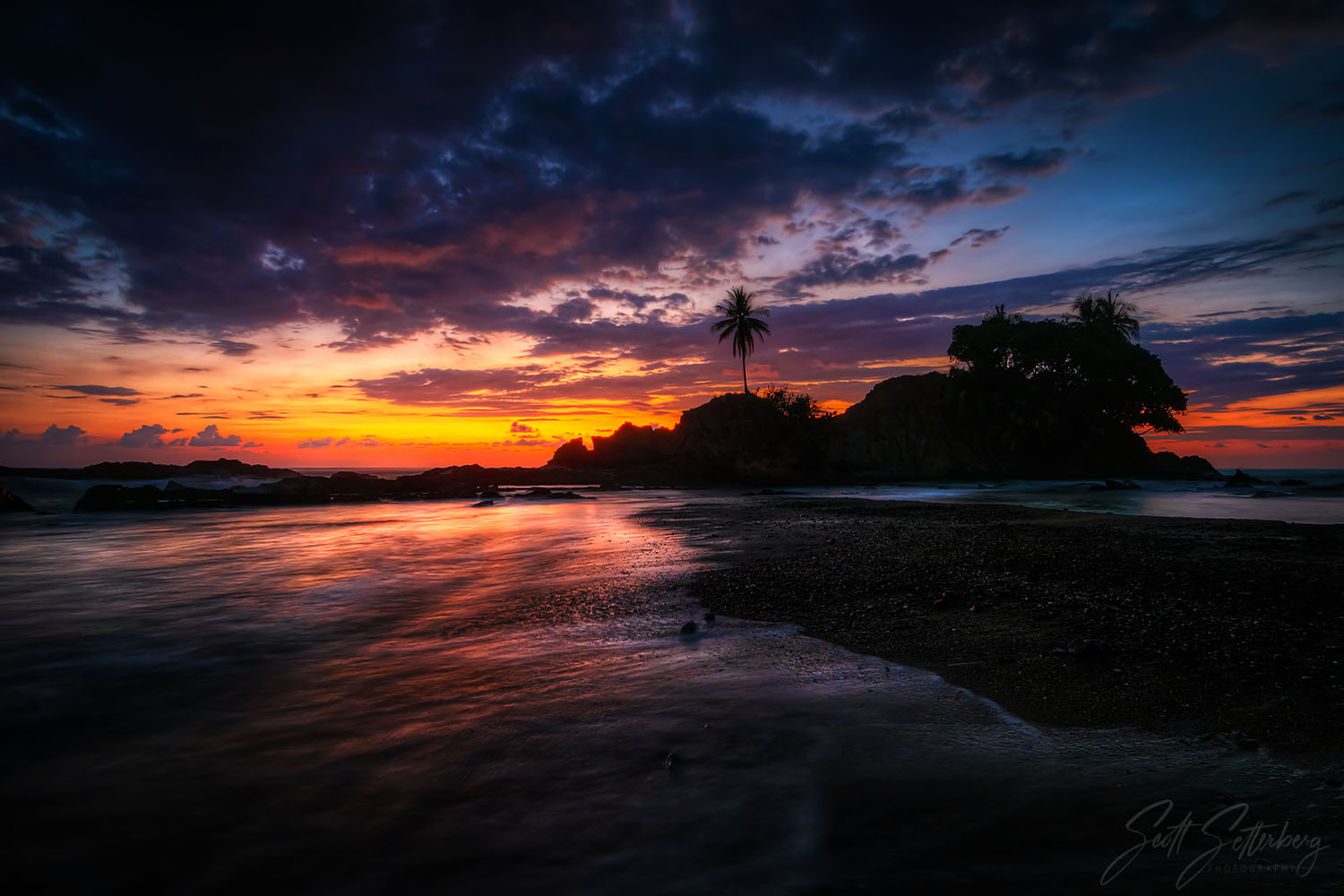
Costa Rica landscape photography stands apart from other tropical destinations because the subjects layer rather than compete. For example, a single afternoon at Eco Chontales puts a 180-foot waterfall, poison dart frogs, orchids, and jungle river light inside one frame. Few destinations anywhere deliver this density of material in a half-day shoot.
However, the challenges are real and worth acknowledging. Humidity destroys unprepared gear. Moreover, prime waterfall locations require physical effort. Similarly, self-guided timing is hard to optimize without years of local knowledge. Photographers expecting hassle-free tropical shooting without preparation will find the country frustrating.
Finally, the payoff scales with your preparation. A tripod, a polarizer, a neutral density filter, and weather protection handle most of what Costa Rica asks of you. Specifically, local guidance handles the rest: location timing, access, and field judgment pointing you at a quetzal tree before the bird arrives.
For a self-guided trip, build your itinerary around the South Pacific waterfall circuit, then move into the cloud forest zone for the final days. A guided experience covering all of it with daily image reviews, the Wild Costa Rica Photography Workshop runs January 10–18, 2027. It has sold out three years running, and the six-person cap fills early.
Ready to Go?
Join the Wild Costa Rica Photography Workshop
All logistics handled. Premium boutique hotels, gourmet meals, private transport, and expert instruction across Costa Rica’s wildest landscapes.
Frequently Asked Questions
Is Costa Rica Good for Landscape Photography and Waterfalls?
Yes, and it is underrated in this role. Costa Rica photography, and particularly Costa Rica waterfalls photography, spans locations, coastlines, and cloud forests, making it one of the most versatile nature-shooting destinations on Earth. Most photographers focus on wildlife, but Costa Rica landscape photography covers waterfalls, volcanic coastlines, cloud forests, and tropical rivers. All of these exist within a compact, driveable circuit.
What makes Costa Rica unique as a landscape photography destination?
The combination of subjects is the differentiator. A single trip covers jungle waterfalls, sea stack coastlines, misty cloud forests, and an extraordinary bird like the resplendent quetzal. Few countries stack this variety into one accessible itinerary.
What is the best time to visit Costa Rica for photography?
January through April brings dry-season access and clearer skies. However, green season (mid-year through November) delivers fuller waterfalls, lusher forest, and moody atmospheric light. For the Wild Costa Rica Photography Workshop, January captures dry-season access while the forest stays green.
Do you need a guide for Costa Rica landscape photography?
Not strictly, though a guide changes your results significantly. Off-the-beaten-track locations like Rancho Rana Roja require access through private landowners. A naturalist guide also reads wildlife timing and micro-habitats invisible to first-time visitors.
What wildlife do you photograph in Costa Rica?
American crocodiles at Tarcoles, poison dart frogs and tropical birds at jungle properties, howler and capuchin monkeys in the lowland rainforest, hummingbirds throughout the cloud forest, and the resplendent quetzal at Los Quetzales National Park are among the most photographed subjects on this circuit.
Our articles might have affiliate links and the occasional sponsored content, but don’t sweat it – if you buy something, we get a little kickback at no extra cost to you, and we only hype products we truly believe in!

