


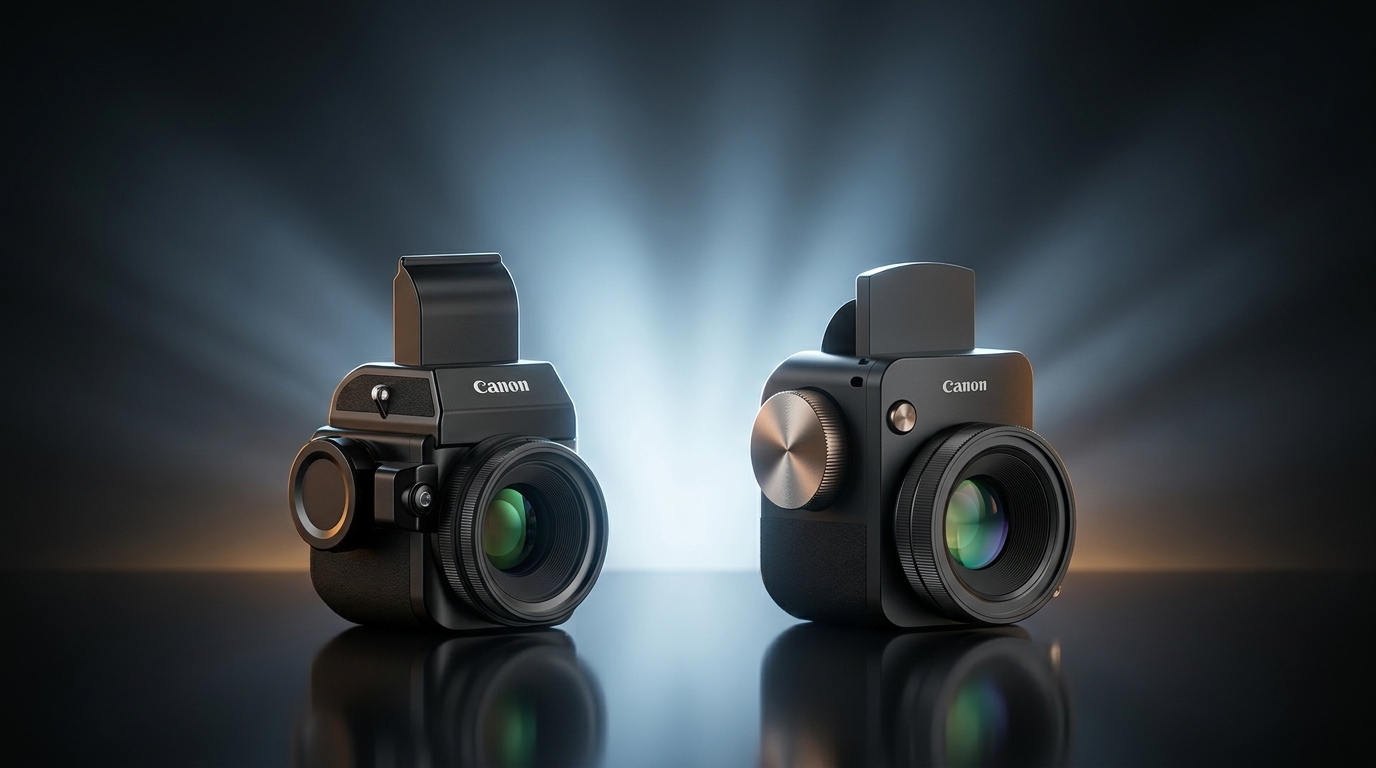
Quick Facts:
- Topic: Canon Analog Concept Camera and slow photography
- Debuted: CP+ 2026, February 26, in Yokohama, Japan
- Sensor: Type 1 (1-inch), 6 megapixels
- Viewfinder: Waist-level optical finder with a twin-mirror system
- Focus: Manual only, fixed lens, no autofocus
- Status: Concept prototype, not a confirmed product
- Best for: Photographers curious about deliberate, film-style shooting
8 min read
In This Article
Canon Analog Concept Camera Overview: The Star of CP+ 2026
The Canon Analog Concept Camera became the most-talked-about camera at CP+ 2026, and it barely counts as modern tech. Instead of chasing megapixels, Canon built a box-style body with a waist-level viewfinder and a deliberate, film-style shooting ritual. You look down into the finder, focus by hand, and press a lever to capture a soft, analog-flavored image. For a show usually filled with spec sheets, this slow, tactile prototype stole the spotlight.
This feature speaks to photographers drawn to the analog revival and anyone tired of hyper-automated cameras. First, you get a clear breakdown of what the camera is and how its unusual optics work. Then you get the bigger story: why slow photography is surging, and how to shoot slowly today. Because the concept is a prototype rather than a store product, the practical takeaways matter most.
Here is the context behind the buzz. Retro-styled cameras are selling fast, driven by younger shooters, film nostalgia, and a hunger for physical controls going “click.” Canon read the mood and answered with something radical: a camera built to slow you down on purpose. Whether or not it ships, the message is loud and clear.
What the Canon Analog Concept Camera Is
Canon revealed the prototype at CP+ 2026 in Yokohama on February 26, presenting it as a reference exhibit rather than a finished product. The design borrows openly from classic medium-format box cameras, especially the Hasselblad-style waist-level finder. Notably, Canon showed two variants, one vintage and one minimalist, then asked visitors to vote on which direction they preferred.
The spec sheet is deliberately humble. The prototype pairs a small Type 1 sensor with manual focus and a fixed lens, a setup built for experience over resolution. Here are the confirmed details.
| Specification | Detail |
|---|---|
| Sensor | Type 1 (1-inch), 6 megapixels |
| Focus | Manual only, no autofocus |
| Lens | Fixed 50mm f/1.8, non-interchangeable |
| Viewfinder | Waist-level optical, twin-mirror, frosted-glass style screen |
| Rear screen | Folding LCD for image review (reported) |
| Connectivity | USB-C (reported) |
| Status | Concept prototype, no price or release date |
Those numbers look modest against a modern mirrorless body. However, resolution is not the point here. The 6-megapixel sensor and manual focus exist to push you toward intention, not pixel-peeping. In this sense, the limitations are the feature.
Want the Slow Experience Now?
Shop a Tactile Fujifilm X100 Camera
The Fujifilm X100 series delivers the same deliberate, film-style shooting the concept chases. Check current pricing on Amazon.
How the Twin-Mirror System Works
The optics are the clever heart of this camera. Light enters through the fixed lens, then two mirrors redirect it. Specifically, the first mirror sends the light upward, while the second lays it onto a special screen inside the waist-level finder. This screen mimics the frosted ground glass of an old medium-format camera, so you see real blur and bokeh with your own eyes before the shot.
Capture works differently from a normal camera. When you press the side lever, the mirrors shift position and route the light to the sensor. Rather than recording the scene directly, the sensor captures the image as it appears on the intermediate ground-glass screen. As a result, the file carries a soft, diffused, film-like quality baked in at the moment of capture. A mechanical “clack” completes the ritual, adding the sensory feedback digital cameras usually lack.
This approach flips the usual priorities. Most cameras fight to render a scene as sharply as possible, yet Canon’s prototype embraces optical softness on purpose. Therefore, the look is not an editing filter applied later; it comes from physics and glass. For photographers chasing an authentic analog feel, the distinction matters a great deal.
Why Slow Photography Is Back
Slow photography is a reaction against speed. For years, cameras raced toward faster autofocus, deeper buffers, and dozens of frames per second. Meanwhile, many photographers felt the work slipping into a numbers game. Consequently, a growing movement now champions shooting fewer frames with more thought, valuing the experience of making a picture over the volume of files.
Many shooters report the same pattern. When each frame costs effort, they compose more carefully, wait for better light, and connect with the subject. Film shooters have always known this, since a 36-exposure roll enforces discipline. Now digital shooters are chasing the same mindset, often by choosing gear built to strip out automation rather than pile it on.
Canon’s concept lands squarely in this movement. Manual focus forces you to slow down. The waist-level finder separates you from the camera and puts children and nervous portrait subjects at ease. Above all, the 6-megapixel ceiling frees you from obsessing over detail. In short, the camera turns constraint into a creative tool, which is exactly what slow photography celebrates.
The Anti-Phone Appeal
The trend also pushes against the smartphone. Notably, many shooters now want a device doing one thing well, free of notifications and endless scrolling. For them, picking up a dedicated camera becomes a small act of focus in a distracted day. Younger buyers especially chase this feeling, trading convenience for a slower, more intentional ritual. Because the reward is presence rather than speed, slow photography keeps winning new converts across every age group. CIPA data backs the shift, with fixed-lens compact shipments up 13.6% in 2026 after a 29.6% jump the year before.
Go Fully Analog
Shop a 35mm Film Camera
Nothing slows you down like a roll of film and manual controls. Browse point-and-shoot film cameras on Amazon.
Will Canon Ship It?
Temper your excitement here. Canon has a long habit of showing eye-catching concepts at trade shows without ever selling them. PhotoRumors flagged exactly this pattern, suggesting the Analog Concept Camera is more a brand-positioning move than a product roadmap. In other words, Canon wants you to know it understands the analog moment, even without a launch date.
Still, the enthusiastic response might nudge something to market. Canon offered two designs and asked visitors to vote, which hints at genuine interest in gauging demand. Even if this exact camera never ships, a competitor or Canon itself might build something similar, since the appetite is obvious.
Canon’s other moves add weight to the idea. The company is rumored to be preparing a retro production camera styled after the classic AE-1, aimed at street shooters who want dials and character. Between the concept and the rumored retro body, Canon is clearly betting on a future built as much on looking backward as forward.
How to Shoot Slow Right Now
You do not need to wait for Canon to shoot deliberately. First, try a one-lens challenge: pick a single prime, leave every other lens at home, and let the limitation sharpen your eye. Next, cap yourself at 36 frames per outing, mimicking a roll of film. These small rules rebuild the discipline slow photography rewards.
Gear helps set the tone as well. A tactile camera like the Fujifilm X100V pairs physical dials with a fixed lens, nudging you into a slower rhythm. For the film look without loading film, our film-look recipes bake analog color into your JPEGs straight out of camera. Both routes deliver the feeling long before any concept camera reaches a shelf.
Finally, change your habits, not only your gear. Turn off the rear screen and stop chimping after every frame. Slow your shutter finger, breathe, and wait for the moment instead of spraying. Ultimately, slow photography lives in your process far more than in any single camera.
Final Verdict
The Canon Analog Concept Camera matters more as a statement than as a spec sheet. Its twin-mirror finder, hands-on focusing, and soft optical look capture a feeling many photographers miss: the physical, unhurried act of making a picture. For this reason, it resonated at CP+ 2026 far beyond its humble 6-megapixel sensor.
The trade-off is obvious for anyone hoping to buy one. This is a prototype with no price, no release date, and real image-quality compromises. If you need a camera today, you should look elsewhere, since the concept might never ship in this form.
The lasting value is the reminder it delivers. Experience matters as much as resolution, and constraint often sparks better work. Whether Canon builds it or not, the same slow, deliberate joy is within reach right now with a tactile camera, a single lens, and a little discipline. Ultimately, the real headline behind the concept lives in your process.
Frequently Asked Questions
What is the Canon Analog Concept Camera?
The Canon Analog Concept Camera is a prototype Canon showed at CP+ 2026. It is a box-style camera with a waist-level optical viewfinder, manual focus, a fixed lens, and a 6-megapixel Type 1 sensor, built to deliver a slow, film-style shooting experience.
How does the Canon waist-level concept camera work?
Light passes through a fixed lens and bounces off two mirrors onto a frosted-glass style screen in the waist-level viewfinder. When you press a side lever, the mirrors shift and the sensor records the image as it appears on the screen, producing a soft, analog look.
Is the Canon Analog Concept Camera a real product?
Not yet. Canon presented it as a concept prototype at CP+ 2026, with no price or release date. Canon frequently shows concepts and never brings them to stores, so treat it as a statement of direction rather than a confirmed camera.
What sensor does the Canon concept camera use?
The prototype uses a Type 1 (1-inch) sensor with 6 megapixels. The low resolution is intentional, pushing photographers toward deliberate composition rather than pixel-level detail.
What is slow photography?
Slow photography is an approach favoring fewer frames shot with more intention. It prioritizes the experience of making an image, careful composition, and connection with the subject over speed, automation, and high frame counts.
Will Canon release a retro camera in 2026?
Canon has not confirmed the concept, but it is rumored to be preparing a separate retro production camera styled after the AE-1. This body, unlike the concept, is expected to be a fully featured mirrorless camera for everyday shooting.

