


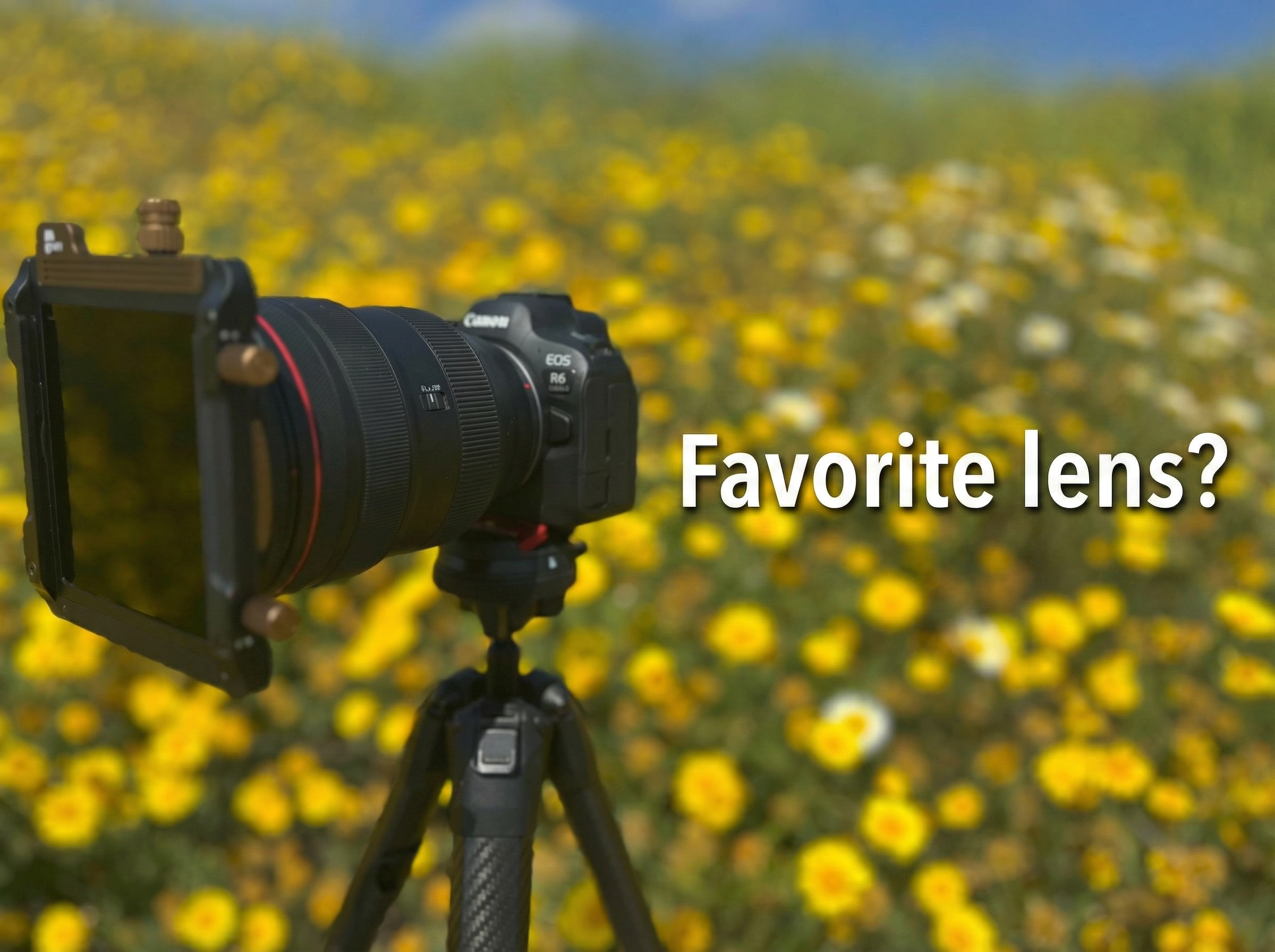
Quick Verdict: After five years of daily studio use, the Canon RF 28-70mm f/2L USM remains one of the sharpest zoom lenses I’ve ever owned. It handles 99% of my in-studio video work and produces prime-level image quality at every focal length. The constant f/2 aperture gathers almost one full stop more light than the RF 24-70mm f/2.8L IS, and the bokeh at 70mm rivals dedicated portrait primes. At $2,699 new or around $1,800 used on MPB, this canon rf 28-70 f2 review covers everything five years of ownership teaches you, including the real trade-offs in weight, filter size, and missing image stabilization.
Last updated: April 2026 | 12 min read
Written by Alex Schult
Founder of PhotographyTalk.com. 26+ years of photography experience shooting landscapes, nature and events. U.S. veteran and serial entrepreneur. Featured by Forbes and Inc. Magazine.
Editorial disclosure: Product recommendations are based on personal experience. MPB affiliate links support PhotographyTalk at no extra cost to you.
In This Review
- Five Years with the Canon RF 28-70mm f/2L USM
- Key Specs at a Glance
- Canon RF 28-70 f2 Sharpness and Image Quality After Five Years
- Canon RF 28-70 f2 Video Performance in the Studio
- Autofocus Speed and Reliability
- Weight, Build, and the 95mm Filter Problem
- Canon RF 28-70mm f/2 vs. RF 24-70mm f/2.8L IS
- Pros and Cons
- Final Verdict
- Frequently Asked Questions
Five Years with the Canon RF 28-70mm f/2L USM

Five years ago I mounted the Canon RF 28-70mm f/2L USM on my camera and it has stayed there for nearly every studio shoot since. This canon rf 28-70 f/2 review covers what five years of daily production work, thousands of hours of video, and the kind of long-term ownership perspective first-impression reviews never capture. I bought this lens for studio video, and it became my most-used piece of gear within the first month. Before writing this canon rf 28-70 f2 review, I also researched what other photographers have experienced with the lens to validate my own findings and see where my experience aligns or differs.
The Canon RF 28-70mm f/2L USM occupies a unique position in Canon’s lineup. When Canon launched this lens in 2018, no other manufacturer offered a full-frame zoom with a constant f/2 aperture. Sony has since released the FE 28-70mm f/2 GM (November 2024), and Tamron has patented an f/2 design of its own. Sigma still tops out at f/2.8 in this range. As a result, this lens attracts photographers and videographers who need extreme low-light performance or shallow depth-of-field control without swapping between primes. Understanding lens compression and focal length behavior helps explain why this zoom range is so versatile. The trade-off is substantial: 1,430 grams (3.15 pounds) of glass and metal, a 95mm front element, and zero optical image stabilization.
At $2,699 new, it sits at the top of Canon’s RF zoom pricing. However, used prices on MPB hover around $1,800 for excellent condition copies, making ownership more accessible for photographers who want the rf 28-70 f/2l usm without the full retail commitment. After five years, I still consider it the best 28-70mm lens canon offers for controlled studio environments.
Key Specs at a Glance
| Specification | Details |
|---|---|
| Focal Length | 28-70mm |
| Maximum Aperture | f/2 (constant) |
| Minimum Aperture | f/22 |
| Lens Mount | Canon RF |
| Weight | 1,430g (3.15 lbs) |
| Filter Size | 95mm |
| Minimum Focus Distance | 39cm (15.4 inches) |
| Image Stabilization | None (relies on IBIS) |
| Aperture Blades | 9 (rounded diaphragm) |
| Autofocus Motor | Ring-type USM |
| Weather Sealing | Dust and moisture resistant |
| New Price | $2,699 |
| Used Price (MPB) | $1,800-$2,100 |
Featured on MPB
Canon RF 28-70mm f/2L USM
Used copies from $1,800 with a 6-month warranty. Save $800+ compared to new retail pricing.

Canon RF 28-70 f2 Sharpness and Image Quality After Five Years
Sharpness is where this lens earns its reputation, and five years of use have not diminished my respect for its optical performance. Wide open at f/2, the center of the frame delivers resolution comparable to Canon’s best L-series primes. I shoot product videos at 70mm f/2 regularly, and the subject isolation combined with corner-to-corner sharpness produces results clients consistently praise. Other long-term owners consistently report the same experience, and this canon rf 28-70mm f2 lens renders like a Zeiss prime at 70mm.
Corner Performance and the 28mm Weakness
Honesty matters here. At 28mm and infinity focus, corners do not reach the same standard as the center. They improve considerably by f/5.6 and become acceptably sharp by f/8 to f/11, but they never match the exceptional center performance at wide apertures. Consequently, landscape shooters who need tack-sharp corners at 28mm will find this a genuine limitation. In my studio work, where subjects sit center-frame at 3-8 feet, corner softness at 28mm has never affected a single deliverable.
At 70mm, the story changes entirely. Sharpness from center to edge is exceptional at f/2, and stopping down to f/2.8 produces results indistinguishable from the best 85mm primes on the market. Chromatic aberration is nearly invisible, and the nine-blade diaphragm produces bokeh so smooth it eliminates the need for a dedicated portrait prime in my kit. If you are still deciding between zoom and prime options, our guide to three lenses portrait photographers need covers the trade-offs in detail. After five years, this lens has replaced my 50mm f/1.2L and 85mm f/1.4 for every studio application.
Canon RF 28-70 f2 Video Performance in the Studio
This lens lives on my camera for video production. Approximately 99% of my in-studio video content is shot on the RF 28-70mm f/2, and after five years I still prefer it over every alternative I’ve tested. The constant f/2 aperture maintains consistent exposure throughout the zoom range, eliminating the exposure shifts you get with variable-aperture lenses during video recording. For controlled studio lighting setups, this consistency is worth more than any other single feature.
Focus Breathing and the Tripod Advantage
Focus breathing is the lens’s most discussed video limitation. During focus pulls, the field of view shifts noticeably, especially at close distances between 1-4 feet. Other photographers describe this effect as significant, and I agree it is visible. However, in my studio workflow, focus distances stay consistent within a scene. I set focus, lock it, and shoot. Consequently, focus breathing has never caused a reshoot in five years of production. Any thorough canon rf 28-70 f2 review needs to address breathing honestly, and my experience is clear: it matters far less in practice than spec sheets suggest.
Similarly, the lack of image stabilization is a non-issue in my use case. Every studio session runs on a tripod or rail system. Although handheld run-and-gun video would suffer at 3.15 pounds with no IS, tripod-based production eliminates stabilization concerns entirely. Photographers and videographers who shoot handheld regularly should therefore consider the RF 24-70mm f/2.8L IS instead, which includes 5 stops of optical stabilization and weighs 530 grams less.
Trade In or Upgrade on MPB
Canon RF 28-70mm f/2L USM
Sell your current gear toward the RF 28-70 f/2. MPB offers instant quotes and free shipping on trades.
Autofocus Speed and Reliability
The ring-type USM motor locks focus in under a second, and operational noise stays low enough for video recording without external audio pickup. Moreover, autofocus accuracy has remained consistent over five years with no noticeable degradation. Full-time manual focus override is also available for fine-tuning, and I use it regularly when shooting tight product detail shots where precision matters more than speed.
Some photographers report autofocus performance slightly below other RF lenses like the RF 24-105mm f/4L and RF 35mm f/1.4L. I have not experienced this on my copy. However, I should note the variance exists. If you buy used, test AF performance immediately. Additionally, this rf 28-70 f/2l usm is not truly parfocal; some users report focal length shifts during focus adjustment, though others describe it as nearly parfocal in practice. Consequently, video rack-focus work requires careful planning and pre-shot testing before recording.
Weight, Build, and the 95mm Filter Problem

At 1,430 grams, the RF 28-70mm f/2 is among the heaviest standard zooms in Canon’s current lineup. Combined with an EOS R5, the rig weighs over 3.15 pounds before adding a cage, monitor, or microphone. Other owners describe the combination as feeling like a cinema rig more than a photo setup, and after five years of daily use, I understand the sentiment. On a tripod, weight is a non-factor. However, wedding and event photographers shooting handheld for 8-10 hours will feel the strain, and the heft becomes a genuine physical constraint. Notably, this canon rf 28-70mm f2 lens weighs 530 grams more than the RF 24-70mm f/2.8L IS.
The 95mm Filter Limitation
The 95mm front element is the lens’s most underrated downside. While weight gets all the attention, the filter size creates a practical problem: significantly fewer ND, CPL, and UV filter options exist in 95mm compared to the standard 77mm and 82mm sizes. Quality 95mm variable ND filters cost $150-300, roughly double the price of equivalent 77mm options. Because I work primarily in the studio, I rarely use filters. However, outdoor photographers who rely on polarizers and NDs should factor in $200-400 of additional filter investment on top of the lens price.
Build quality, in contrast, is exceptional. Dust and moisture sealing covers the lens mount, switch panel, and all adjustment rings. Fluorine coatings on front and rear elements also repel dust and fingerprints effectively. After five years, the zoom ring and focus ring maintain the same smooth, damped feel they had on day one. Although the barrel extends when zooming toward 70mm, theoretically exposing internals to dust, I have never experienced internal contamination despite daily use in a studio environment.
Canon RF 28-70mm f/2 vs. RF 24-70mm f/2.8L IS: Which Should You Buy?
The RF 24-70mm f/2.8L IS is the natural alternative, and for most photographers it is the smarter purchase. It weighs 900 grams (37% lighter), includes 5 stops of optical stabilization, covers a wider 24mm field of view, and costs $400-450 less at retail. From what I’ve observed and researched, the 24-70 f/2.8 is the more popular, more practical choice for general photography.
The RF 28-70mm f/2 wins in two specific scenarios. First, when you need the shallowest possible depth of field from a zoom. At 70mm f/2, subject isolation approaches what you get from a dedicated 85mm f/1.8 prime. Second, when you shoot in low light and refuse to push ISO beyond a threshold. One full stop of additional light at every focal length means shooting at ISO 3200 where the f/2.8 demands ISO 6400. Specifically, in studio video, event coverage in dark venues, and portrait work where background separation matters, the f/2 advantage is tangible and measurable. Because of this light-gathering edge, the f/2 version is the superior choice for any photographer working in controlled or low-light conditions.
In contrast, for travel, street, landscape, and handheld video, the 24-70mm f/2.8L IS delivers better overall value. If weight tolerance, IS, and wider coverage matter to your workflow, the RF 24-70mm f/2.8 is the right lens. Our roundup of Canon RF lenses for landscape photography covers lighter alternatives worth considering.
Pros and Cons
Pros
- Prime-level sharpness at f/2 across the zoom range, especially at 70mm
- Constant f/2 aperture provides one full stop more light than f/2.8 alternatives
- Exceptional bokeh from 9-blade diaphragm; replaces 50mm and 85mm portrait primes
- Ring-type USM autofocus locks quickly with minimal noise for video recording
- Consistent exposure during video zooming at constant f/2
- Outstanding build quality; zoom and focus rings maintain smoothness after years of daily use
- Dust and moisture sealed with fluorine coatings on front and rear elements
Cons
- 1,430 grams (3.15 lbs) makes it the heaviest standard zoom in Canon’s RF lineup
- 95mm filter size limits options and doubles filter costs compared to 77mm alternatives
- No optical image stabilization; requires tripod or gimbal for video
- Significant focus breathing during focus pulls at 1-4 foot distances
- Corner sharpness at 28mm and infinity trails the exceptional center performance
- $2,699 new price sits $400-450 above the RF 24-70mm f/2.8L IS
Final Verdict
After five years and thousands of studio sessions, the Canon RF 28-70mm f/2L USM remains my most-used lens. No other zoom on the market matches its combination of constant f/2 aperture, prime-level sharpness, and professional build quality. It replaced three primes in my kit and has delivered reliably through every production workflow I’ve thrown at it. After five years, the conclusion is straightforward: in controlled environments, this lens is outstanding.
However, the trade-offs are real. At 3.15 pounds with no image stabilization, this lens punishes handheld shooters. The 95mm filter size also adds cost and limits options. Similarly, focus breathing makes it a poor choice for video work requiring frequent rack-focus pulls. These are not minor complaints; consequently, many photographers will conclude the RF 24-70mm f/2.8L IS is a better daily lens.
The value proposition depends on your workflow. If you shoot studio video, portraits in controlled lighting, or events in dark venues, the f/2 aperture advantage is worth every gram and every dollar. Used copies on MPB around $1,800 bring the cost close to a new RF 24-70mm f/2.8, making the math even more favorable for studio-focused photographers. If you need a do-everything walkaround zoom, look elsewhere.
Five years in, this canon rf 28-70 f2 review ends where it began: I have zero plans to replace this lens. It does one thing better than anything else in Canon’s lineup: deliver extraordinary image quality at f/2 across a versatile zoom range. For photographers whose workflow fits its strengths, the Canon RF 28-70mm f/2L USM remains the best 28-70mm lens canon makes.
Ready to Buy?
Canon RF 28-70mm f/2L USM on MPB
Used from $1,800 with free shipping and a 6-month warranty. Trade in your current gear to offset the cost.
Frequently Asked Questions
Canon RF 28-70 f2 Review: Is It Worth It in 2026?
For studio, portrait, and low-light photographers, yes. The constant f/2 aperture and prime-level sharpness remain unmatched by any other zoom lens. However, for general-purpose photography, the lighter, stabilized RF 24-70mm f/2.8L IS delivers better overall value at $400 less. Notably, used prices on MPB around $1,800 make this lens far more compelling for budget-conscious buyers.
How does the RF 28-70mm f/2 compare to the RF 24-70mm f/2.8L IS?
The 24-70mm f/2.8 is lighter (900g vs. 1,430g), includes image stabilization, covers a wider 24mm field of view, and costs less. The 28-70mm f/2 wins on low-light performance (one full stop advantage), depth-of-field control (f/2 vs. f/2.8), and bokeh quality. Your shooting environment determines which lens fits better. This canon 28-70 lens review covers detailed performance comparisons in the sections above.
Does the Canon RF 28-70mm f/2 have image stabilization?
No. The lens relies entirely on in-body image stabilization (IBIS) from compatible Canon R-series cameras like the EOS R5, R6, and R3. While the absence of optical IS is irrelevant for tripod-based work, handheld shooters will notice the difference because IBIS alone provides fewer effective stops of stabilization than the combined IS systems in lenses like the RF 24-70mm f/2.8L.
Is the Canon RF 28-70mm f/2 good for video?
On a tripod or gimbal, excellent. The constant f/2 aperture maintains exposure consistency during zooming, and the USM motor operates quietly enough for recording. Focus breathing at close distances (1-4 feet) is substantial and problematic for rack-focus work. Handheld video at 3.15 pounds without IS is impractical for extended shoots.
What filters work with the Canon RF 28-70mm f/2?
The lens requires 95mm filters, which are less common and more expensive than standard 77mm or 82mm sizes. Quality 95mm variable ND filters cost $150-300. Breakthrough Photography and B+W both produce reputable 95mm options. For photographers who frequently use filters, budget an additional $200-400 beyond the lens purchase.
How sharp is the Canon RF 28-70mm f/2 at f/2?
Center sharpness at f/2 matches Canon’s best L-series primes across the entire zoom range. At 70mm f/2, resolution rivals dedicated 85mm portrait primes. Corner sharpness at 28mm wide open is the weakest point, improving significantly by f/5.6. For subjects framed center or center-third, f/2 performance is exceptional.
Pairing this lens with the right body matters as much as the glass itself. For a breakdown of which Canon cameras bring out its best, see our roundup of the best Canon cameras in 2026.

