


Quick Facts:
- Camera: GoPro Mission 1 Pro ILS.
- Sensor: 50MP 1-inch sensor.
- Lens mount: Active Micro Four Thirds mount.
- Video: 8K30 and 4K120 open gate.
- Price: Around $699 body-only.
- Availability: Announced, not yet sold to the public.
- Rival move: Insta360’s rumored “Z ONE” Micro Four Thirds camera.
- Best for: Filmmakers who want interchangeable lenses in a rugged, compact body.
8 min read.
In This Article
Overview
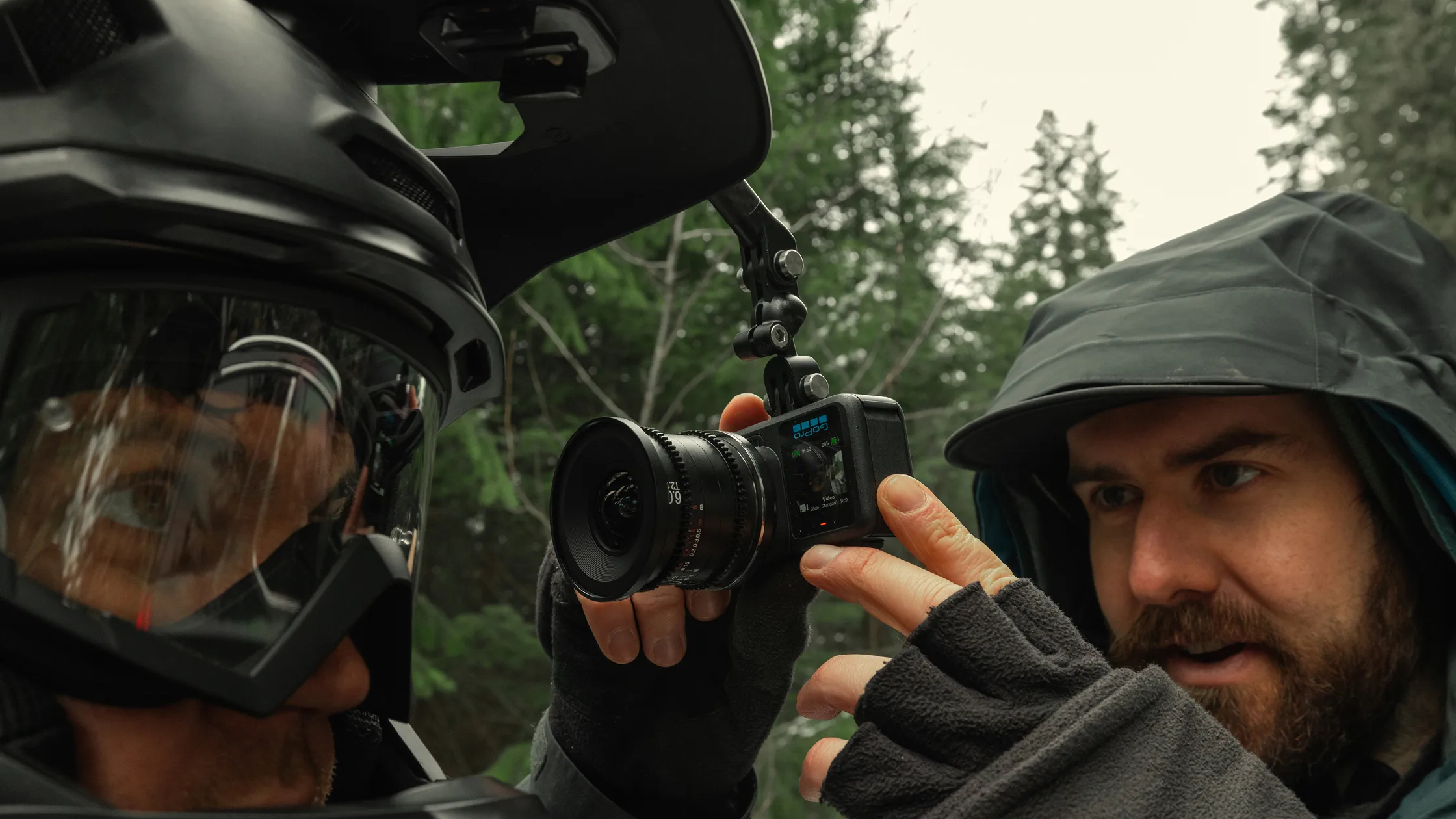
The GoPro Mission 1 Pro ILS marks GoPro’s first interchangeable lens camera, built around swappable lenses for adventure use. This choice of mount says a lot about where the company wants to go next. GoPro skipped a new proprietary system. Instead, it adopted the Micro Four Thirds mount, a standard Olympus and Panasonic have supported for close to two decades. This move opens the camera to hundreds of existing MFT lenses, from budget primes to professional cinema glass. The official MISSION 1 Series announcement also revealed two other models. The ILS variant, though, changes what a GoPro camera might become.
GoPro is not moving alone here. This article also covers its two biggest rivals. Insta360 has a rumored Micro Four Thirds camera of its own, still unconfirmed and unpriced. DJI, meanwhile, has made no move into the format so far. GoPro’s own move into Micro Four Thirds is real and priced. It also lands during real financial pressure, which turns this bet into more than a side project. The practical GoPro vs Insta360 comparison starts here, since neither Micro Four Thirds action camera has reached store shelves yet. For background on the wider launch, see GoPro’s MISSION 1 Series announcement coverage from earlier this year.

What Is the GoPro Mission 1 Pro ILS?
GoPro unveiled the Mission 1 Pro ILS at NAB in April 2026. Two fixed-lens siblings launched alongside it: the Mission 1 and Mission 1 Pro. All three share a 50MP 1-inch sensor. Video capability splits the lineup, though. The Mission 1 Pro and its ILS sibling share an open-gate pipeline. It also records 8K at 30 frames per second and 4K at 120 frames per second. Still, the base Mission 1 tops out at 4K120 open gate. The ILS model stands apart because of its lens mount. Its standard Mission 1 Pro sibling locks you into one wide-angle lens. The ILS body instead accepts Micro Four Thirds glass through an active mount. You swap lenses the way a mirrorless shooter would, rather than reaching for a screw-on adapter.
Pricing landed around $699, close to the fixed-lens Mission 1 Pro. However, the ILS body has not appeared for public sale yet. Amazon and other major retailers list only accessory bundles referencing compatibility, such as memory cards. GoPro says wide availability starts in the third quarter of 2026. Readers who want early detail before then should see our hands-on look at the ILS model.
GoPro and Insta360 Cameras You Can Buy Today

Insta360 Ace Pro 2-8K Waterproof Action Camera Co-Engineered with L…

Insta360’s Rumored Micro Four Thirds Camera
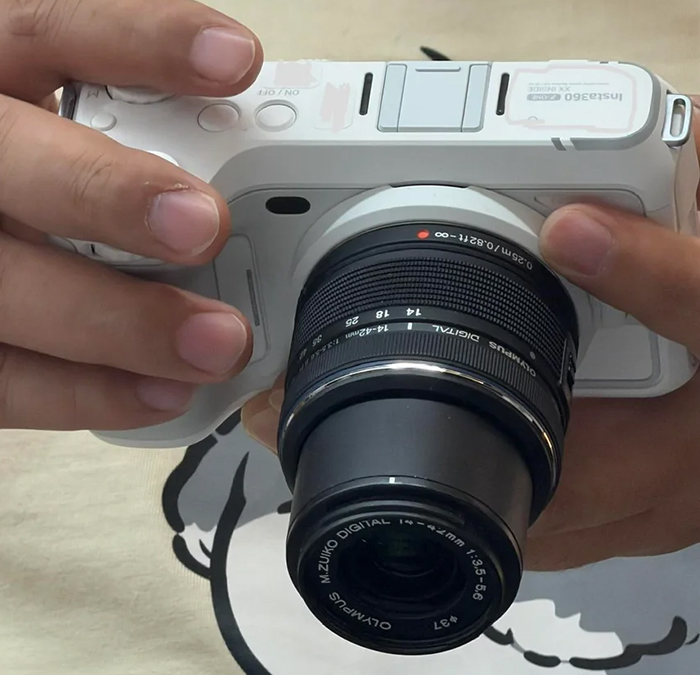
GoPro is not the only brand eyeing this format. Insta360 has not confirmed a Micro Four Thirds camera. Leaked photos and specification sheets have circulated across the photography press for months, though. The leak reportedly began on Reddit’s r/M43 community, picked up and amplified by the rumor site 4/3 Rumors. The rumored model goes by the unofficial name “Z ONE”. It reportedly pairs a 20-megapixel MFT sensor with an active lens mount. This mount is reportedly built to work with existing Olympus and Panasonic glass, similar in concept to GoPro’s approach. Reported details point to FlowState stabilization and a fully articulating touchscreen. Built for hybrid photo and video work rather than pure cinema use, the rumored body skips an electronic viewfinder entirely.
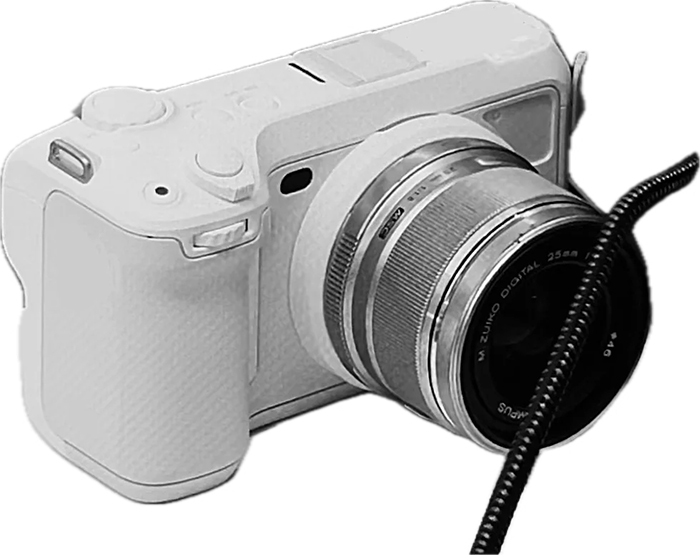
Timing estimates place a launch in the fall of 2026. Body-only pricing is rumored between $599 and $799. None of this is official. Insta360 has neither confirmed the name nor announced a release date. Still, the pattern matters: GoPro moved first with a priced, dated product, while Insta360’s plans remain speculation. The Z ONE, or whatever Insta360 eventually calls it, might reach the market near its rumored price. If so, it would undercut GoPro’s new camera. It would also offer a similar hybrid pitch, aimed less at cinema production and more at everyday creators. This is the real GoPro vs Insta360 story taking shape in 2026.
Where DJI Stands on Micro Four Thirds
Unlike GoPro and Insta360, DJI has not announced a Micro Four Thirds product. Its current flagship, the Osmo Action 6, keeps a fixed lens like every Osmo Action camera before it. DJI instead spent 2026 fighting Insta360 in court. The company sued Insta360, arguing the Luna copies design elements of the Osmo Pocket. Insta360 then countersued with five separate patent claims of its own. Neither case addresses Micro Four Thirds directly. Still, the Insta360 vs DJI dispute shows how aggressively these two brands compete outside camera specs. Instead, they battle in courtrooms as much as on spec sheets.
DJI’s absence from the Micro Four Thirds conversation leaves an opening. DJI still commands strong brand trust among drone and gimbal buyers, more than GoPro or Insta360 do. As a result, a Micro Four Thirds product from DJI would arrive with an audience already in place. For now, DJI competes on stabilization and pocket-sized gimbal cameras instead of interchangeable lenses. Our Mission 1 Pro vs. DJI Osmo Action 6 spec test covers how GoPro’s new sensor compares with DJI’s lineup. The financial backdrop behind GoPro’s bet is worth a closer look next.
GoPro’s Financial Reality Behind the MFT Bet
GoPro’s move into Micro Four Thirds is not happening from strength. The company lost its own patent case against Insta360, when the International Trade Commission dismissed all five utility-patent claims. Separately, GoPro posted a $93.48 million net loss for fiscal year 2025. Falling unit sales and a spike in memory-chip prices drove the loss, rather than the litigation itself. Its board launched a formal strategic review to weigh options, including a possible sale. We covered GoPro’s financial troubles in 2026 in detail. Hero-line sales have slipped as Insta360 and DJI picked up market share among vloggers and content creators.
Founder Nick Woodman has personally stepped in with a loan to keep operations funded. The company’s strategic review continues in the background. Seen against this backdrop, the camera reads less like an experiment. It reads more like a bet on a new, cinema-adjacent category. In this category, GoPro does not yet compete head-to-head with Insta360 and DJI. Whether this bet pays off depends on working filmmakers. These filmmakers, beyond extreme-sports creators, need to decide GoPro belongs in their kit.
GoPro Mission 1 Pro ILS: What You Can Actually Buy Today
The ILS camera and Insta360’s rumored rival both sit outside retail. Because of this, the fairest comparison uses products buyers are able to purchase today. Those products are the fixed-lens Mission 1 Pro, the Insta360 Ace Pro 2, and the Insta360 Luna Ultra. The fixed-lens Mission 1 Pro shares its sensor and video pipeline with the ILS model. Its image quality gives a close preview of what the interchangeable-lens version delivers, even before lenses factor in. Compared with the Ace Pro 2’s smaller 1/1.3-inch sensor, the Mission 1 Pro’s 1-inch sensor stands out. Its 50MP stills push GoPro’s new hardware closer to mirrorless territory than a typical action camera.
Insta360’s two current flagships approach the market differently. The Ace Pro 2 stays in traditional action-camera form: fixed lens, waterproof housing, built for helmets and handlebars. Its sibling, the Luna Ultra, instead targets vloggers with dual Leica lenses and a 12x zoom range. Its gimbal-first design suits handheld filming rather than mounted adventure footage. Neither camera currently offers interchangeable lenses. This is exactly the gap the ILS variant, and Insta360’s rumored answer to it, aims to fill.
| Action-Focused | Vlogger's Pick | Cinema Body | |
|---|---|---|---|
| Product | TOP PICKInsta360 Ace Pro 2 |  Insta360 Luna Ultra Insta360 Luna Ultra |  GoPro Mission 1 Pro GoPro Mission 1 Pro |
| Sensor Size | 1/1.3-inch | 1-inch | 1-inch |
| Still Photo Res. | 8K Video Only | 8K Video Only | 50MP |
| Zoom | Fixed | 12x | Fixed |
| Price | $389.99 as of Jul 20, 5:56 pm | $769.99 as of Jul 20, 5:56 pm | $699.00 as of Jul 20, 5:56 pm |
| Check Price → | Check Price → | Check Price → |
Note: This table compares currently available action cameras. The ILS-equipped GoPro camera and Insta360’s rumored MFT rival are discussed throughout the article. Neither has a retail ASIN as of publication.
Final Thoughts
A New Identity, Old Reputation
GoPro built its name on rugged cameras made to survive falls, water, and mud. This new camera steps well outside this identity. Adopting Micro Four Thirds gives GoPro access to a mature lens ecosystem overnight. No brand launching a new mount from scratch is able to match this advantage. Filmmakers who already own MFT glass from Olympus or Panasonic gain a genuinely rugged body to pair with it. This is a niche GoPro has never served before.
The trade-off is brand trust. Insta360 and DJI have spent recent years building reputations for reliable stabilization and smart software. They also ship frequent product refreshes. GoPro spent the same years defending patents and negotiating with its own board about the company’s future. A rumored Insta360 Micro Four Thirds camera does not exist yet. Nobody outside Insta360 has real specs to judge. Still, a rumor from a brand with strong momentum tends to land differently with shoppers. A real product from a company under financial strain carries a different weight.
Who Should Pay Attention Now
This camera matters most if you already own Micro Four Thirds lenses. It also matters if you need open-gate 8K in a body small enough for a helmet or gimbal rig. If you shoot point-and-shoot action footage, the standard Mission 1 Pro or the Ace Pro 2 covers the same need. Both cost less and skip the learning curve of swapping glass. Buyers drawn to vlogging and handheld video are better served today by the Insta360 Luna Ultra. Neither Micro Four Thirds camera in this story has reached general retail yet.
GoPro’s chapter as an action-camera brand is not closing, though it is changing shape. The company’s footing depends less on the camera itself. It depends more on whether GoPro rebuilds trust with working creators, beyond the extreme-sports crowd it built its name on. Insta360’s rumored answer and DJI’s continued silence will settle much of this question. Real products, rather than leaks and press releases, will need to sit side by side first.
Frequently Asked Questions
What is the GoPro Mission 1 Pro ILS?
The GoPro Mission 1 Pro ILS is GoPro’s first interchangeable lens camera. It also pairs a 50MP 1-inch sensor with an active Micro Four Thirds mount. It records 8K video at 30 frames per second and 4K at 120 frames per second in an open-gate format. The camera also accepts existing Olympus and Panasonic MFT lenses through the same mount standard.
How much does the GoPro Mission 1 Pro ILS cost?
GoPro priced it at approximately $699 body-only, close to the fixed-lens Mission 1 Pro. Lens costs add to the total, since Micro Four Thirds glass ranges from budget primes to professional cinema optics.
When will the GoPro Mission 1 Pro ILS go on sale?
GoPro says wide availability begins in the third quarter of 2026. As of now, the ILS body has not appeared for direct purchase on major retail sites. Accessory bundles referencing it are already listed, though. Buyers who do not want to wait have two options: Mission 1 Pro or Insta360 Ace Pro 2.
What lenses work with the GoPro Mission 1 Pro ILS?
This camera uses an active Micro Four Thirds mount. It accepts lenses built for the format by Olympus, Panasonic, and third-party manufacturers. Adapted glass from other systems also works, where compatible adapters exist.
Is Insta360 really building a Micro Four Thirds camera?
Insta360 has not confirmed a Micro Four Thirds camera. Leaked images and specification sheets have circulated across the photography press since early 2026. The images are still often referred to by the unofficial name “Z ONE”. Insta360 has not announced pricing, a release date, or an official product name.
Why has DJI stayed out of the Micro Four Thirds action camera market?
DJI has given no public explanation. Its current Osmo Action and Osmo Pocket lines keep fixed lenses. The Insta360 vs DJI patent fight over the Luna camera likely absorbed engineering and legal resources instead.

