


Quick Facts:
- Shop: Vivid Metal Prints, Lexington, North Carolina
- Focus: Metal prints only, nothing else
- Process: Dye-sublimation onto coated aluminum, finished by hand
- Finishes: Five, from white ultra gloss to clear matte
- Sizes: 4×6 up to a 4ft by 8ft single panel; larger pieces tile
- Longevity: Indoor pieces rated for 80-plus years
- Reader perk: 20% off with code alexsentme
- Best for: Photographers who want their work on gallery-grade metal
9 min read
In This Article
- Why I Flew Out to Vivid Metal Prints
- Vivid Metal Prints at a Glance
- The People Behind Every Print
- How Metal Prints Are Made
- The Five Finishes and How to Choose
- Inside Vivid Metal Prints: Following One Print
- How Long Metal Prints Last
- Getting the Color Right
- Metal Prints vs Canvas and Acrylic
- Are Metal Prints Worth It?
- Frequently Asked Questions
Why I Flew Out to Vivid Metal Prints
I have spent years reviewing prints. Canvas, acrylic, metal, paper, the good and the genuinely awful. After a while you develop an eye for who cares and who cuts corners. One name kept rising to the top of my metal reviews, over and over, so I booked a flight from California to Lexington, North Carolina to step inside Vivid Metal Prints myself.
The company does one thing, and one thing only. Not canvas, not framing as a side hustle, not a dozen products stretched thin. Metal prints, full stop. When a shop narrows its focus this way, the work usually shows it, and I wanted to find out whether the prints I loved were luck or method.
So this is the behind-the-scenes look I promised you. Come inside Vivid Metal Prints with me, meet the people, and watch one photograph travel from a bare sheet of aluminum to a sealed crate. If you have ever wondered why metal photo prints matter before you spend a dollar, the shop floor makes the case far better than any product page.
Vivid Metal Prints at a Glance
Here is the short version before we walk the floor. Every detail below came from President Mirza during the day I spent filming the process.
| Detail | What Vivid Offers |
|---|---|
| Substrate | Coated aluminum, dye-sublimation transfer |
| Finishes | White ultra gloss, white semi-gloss, white matte, clear gloss, clear matte |
| File format | TIFF preferred, Adobe RGB (1998), 300 dpi |
| Sizes | 4×6 up to 4ft by 8ft single panel; larger pieces tile |
| Mounting | Airplane-grade wire, easy mount kits, French cleat |
| Turnaround | 3 to 5 business days; rush adds 50% to 100% |
| Reader perk | 20% off with code alexsentme |
Reader Perk: 20% Off
Put Your Own Photo on Metal
Upload your image, pick a finish, and use code alexsentme at checkout for 20% off your order.
The People Behind Every Print
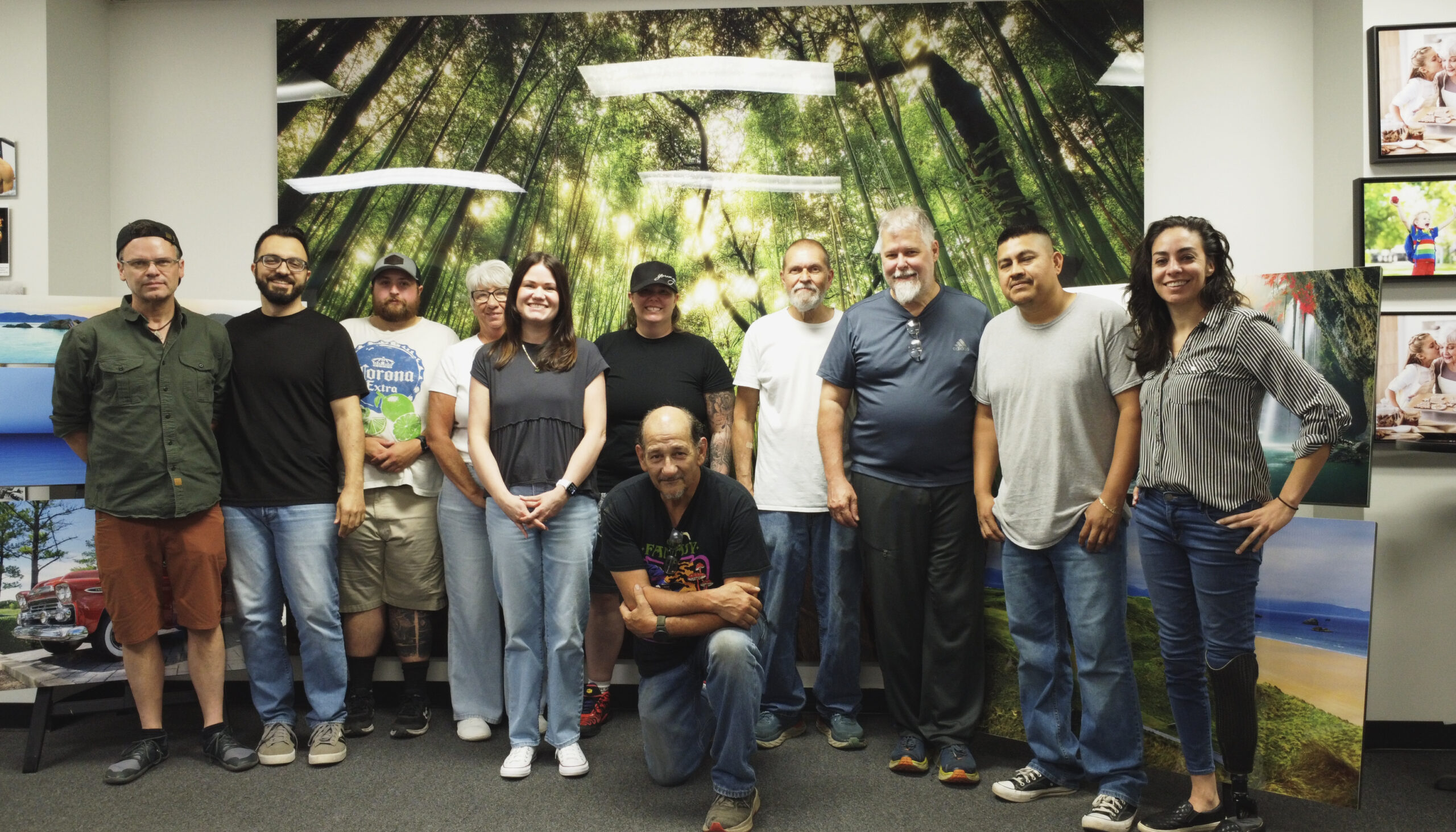
Walk the floor and one thing hits you fast: this is a room full of people, not a row of unattended machines. Mirza, the president, took me station by station, and a single idea ran through everything he showed me. People decide the quality here.
During my day there, I got to talk with most of the team on the floor, and those conversations taught me as much as the machines did. So you learn a lot about a finished print by speaking with the hands behind it. Every person I spoke with loves what they do. I walked away with deep respect for their skill and their command of the trade.
One detail stuck with me more than any spec. The quality control team earns bonuses for rejecting prints, not for passing them. A rolling 30 days of flawless output triggers the reward, so the crew has a real reason to catch a problem before a box ever ships. After a year of seeing their prints land near-perfect on my desk, the math finally clicked.
The roots run deep too. Vivid began life as Image Wizards back in 2003. The original owner, Roger Laudy, was an early pioneer in dye-sublimation who started at 17 and built one of the first dye-sub mug machines. Mirza carries it forward today, and you feel the history in how seriously the team takes a single sheet of metal.

How Metal Prints Are Made
If you have wondered how metal prints are made, the short answer is heat and chemistry, done with care. The ink begins as a liquid, then the printer lays it down as a solid onto a high-release carrier paper.
Next, the team presses the carrier paper against the coated aluminum and adds heat. The heat turns the solid dye into a vapor, and the vapor sinks into the coating on the metal rather than sitting on the surface. Because the image lives inside the coating, it shrugs off scuffs and fingerprints, and it picks up the deep, lit-from-within color metal is known for.
Good output starts with a good file. Vivid likes a TIFF in the Adobe RGB (1998) color space at 300 dpi, and up to 400 dpi when a piece carries fine text. When a file needs more resolution, the team upsizes it with Topaz Photo AI. Your starting file sets the ceiling, so send the best one you have.
The Five Finishes and How to Choose

Vivid offers five finishes, and the one you pick changes the whole feel of the piece. Three sit on a white base coat: white ultra gloss, white semi-gloss, and white matte. Two skip the white base, while letting the brushed aluminum show through: clear gloss and clear matte.
White-base finishes give you accurate, punchy color, which suits portraits, landscapes, and most photography. Clear finishes let the metal read through the lighter areas, so they shine on car shots, cityscapes, and abstract work. On the floor, the team color-codes them to keep orders straight. Turquoise means white gloss, orange means white semi-gloss, and blue marks the matte and satin family.
Still, glare usually decides it for you. A glossy piece sings in controlled light but throws back a bright window. A matte or satin piece calms reflections in a busy room. Still torn? Our guide on choosing a matte or glossy finish walks through each option by image type and lighting.
Inside Vivid Metal Prints: Following One Print From Cut to Crate

The reason I flew out was this part: the hands-on finishing. Once the image transfers to the metal, the print moves through people, not a conveyor belt. I followed one piece through three sets of hands.
It starts with Dennis, who runs the dye-sublimation and brings the image to life on the metal. From there it goes to Alfonso, who trims the print to size, then sands and bevels every edge by hand before mounting it on its frame. Watch his hands and you see why the edges feel finished instead of sharp.


Next comes Alex, who handles assembly and shipping, and yes, he shares my first name. He sets the hanging hardware, then wraps the piece in protective foam so it survives the trip from Lexington to wherever it ends up on your wall. The last thing I filmed was him easing it into the crate, sealed and ready.

Behind those three stands the rest of the crew. Adrian works production, crates, and framing. Brooke runs production and shipping, while Bernie keeps the studio humming. Others move between projects in the background, quietly keeping the whole operation calm and orchestrated. Every metal print in the building earns this same attention, and watching it happen made their consistency make sense at last.


How Long Metal Prints Last
Durability is where metal walks away from paper and canvas. Aluminum does not rust, so a print survives humidity and sea-salt air near the coast, conditions paper rarely tolerates. Mirza pulled out real pieces to back it up.
Indoor prints carry a rating of 80-plus years, even hanging beside a window. Outdoor pieces hold up a long time under cover, although direct sun shortens the clock. A print in constant sun starts slow fading after roughly two years, and exterior finishes hold five to seven years before color drifts slightly pink. He even showed me a piece installed back in 2012, still going strong.
Care is refreshingly simple. You wipe the surface with isopropyl alcohol, Windex, or any non-abrasive cleaner, and the coating shrugs off fingerprints and permanent marker alike. One customer soaked a piece in bleach for 24 hours, and the image lived to tell about it. Because of the coating, metal earns its place in kitchens, bathrooms, and high-traffic walls where other media give up.
Getting the Color Right
Color accuracy is the big worry when you order a large piece sight unseen. So Vivid takes the gamble out with three tiers.
The $10 sample kit shows a stock image across all five finishes at a small size. For your own work, the $120 personal sample kit prints your image on every finish at roughly 8×10, shipping included. The $30 proof kit goes deepest. You get two metal pieces, one with the full image and one with a full-resolution detail crop, plus a free corrected second set if the first needs a tweak.
Mirza told me the company loses money on every proof. They keep offering it anyway, because a confident customer orders bigger and comes back more often. For a wall-sized commission, spending $30 to confirm the color first is the smartest insurance you will buy.
Ready to Print?
Use Code alexsentme for 20% Off
Start with a $30 proof kit or go straight to a full print. The same hands you met here finish every order.
Metal Prints vs Canvas and Acrylic
Metal is not the only way to hang a photo, so the right pick depends on the image and the room. Canvas brings a soft, textured, painterly look at a friendly price, although it mutes fine detail and color depth.
Acrylic delivers glossy depth close to metal, but it scratches more easily and grows heavy at large sizes. Metal lands in the sweet spot with vivid color, sharp detail, light weight, and a wipe-clean surface rated for decades. For a fuller breakdown, see our look at how metal compares to canvas and acrylic, and if you want options beyond Vivid, our roundup of the best metal print companies covers the labs we have tested.
My short take after the visit: reach for canvas when you want warmth and a casual feel, acrylic for a sleek frameless gloss, and metal when color, durability, and longevity matter most.
Are Metal Prints Worth It?
If you want a photo to look its best and survive decades on the wall, metal earns the price. The color depth, the detail, and the wipe-clean durability beat canvas and most paper options. For photographers selling work, the premium feel of metal also supports a higher price tag.
Metal is not right for every wall. A soft family portrait in a traditional room often suits canvas better, and a tight budget stretches further on paper. Match the medium to the image and the space instead of defaulting to one format.
Here is the personal part, and the reason I keep doing these visits. I started reviewing prints over six years ago with one goal: to help you make smarter, better-educated decisions on the prints you order. I wanted to cut through the marketing noise and show you first-hand what your money truly buys. Over those years I have seen every level of quality, from bad and frankly horrible to amazing and extraordinary.
When you find a company pouring this much pride and care into every single print, seeing the workmanship up close is a treat. Inside Vivid Metal Prints, the visit was eye-opening, and I love reporting it back to you, the photographer, the collector, the person who simply wants full value for their money. Vivid earns your attention. You will find the full shop tour and interview here if you want to see it all for yourself.
Frequently Asked Questions
What is a metal print?
A metal print is a photo infused into a coated aluminum panel through dye-sublimation. Heat turns solid dye into a vapor, and the vapor bonds into the coating. The result is a durable, vivid image with detail and depth beyond what paper offers.
How are metal prints made?
The printer lays liquid ink down as a solid on carrier paper. A heated press then vaporizes the dye and drives it into the aluminum coating. After the transfer, the team trims, sands, bevels, mounts, and packs each piece by hand.
Do metal prints fade?
Indoor metal prints are rated for 80-plus years, even near a window. Outdoor pieces last longer under cover, while constant direct sun starts slow fading after about two years. For an interior wall, fading is a non-issue across a normal lifetime.
How do you clean metal prints?
You wipe the surface with isopropyl alcohol, Windex, or any non-abrasive cleaner. The coating resists fingerprints and even permanent marker. This wipe-clean surface makes metal a strong pick for kitchens, bathrooms, and busy rooms.
Are metal prints better than canvas?
Metal delivers sharper detail, deeper color, and far better durability than canvas. Canvas wins on a soft, painterly look and a lower price. Pick metal for vivid, long-lasting display and canvas for a warm, traditional feel.
How much do metal prints cost at Vivid?
Pricing scales with size and finish, from small panels up to a 4ft by 8ft single sheet. A $30 proof kit lets you confirm color before a big order. Readers also save 20% with code alexsentme at checkout.

