


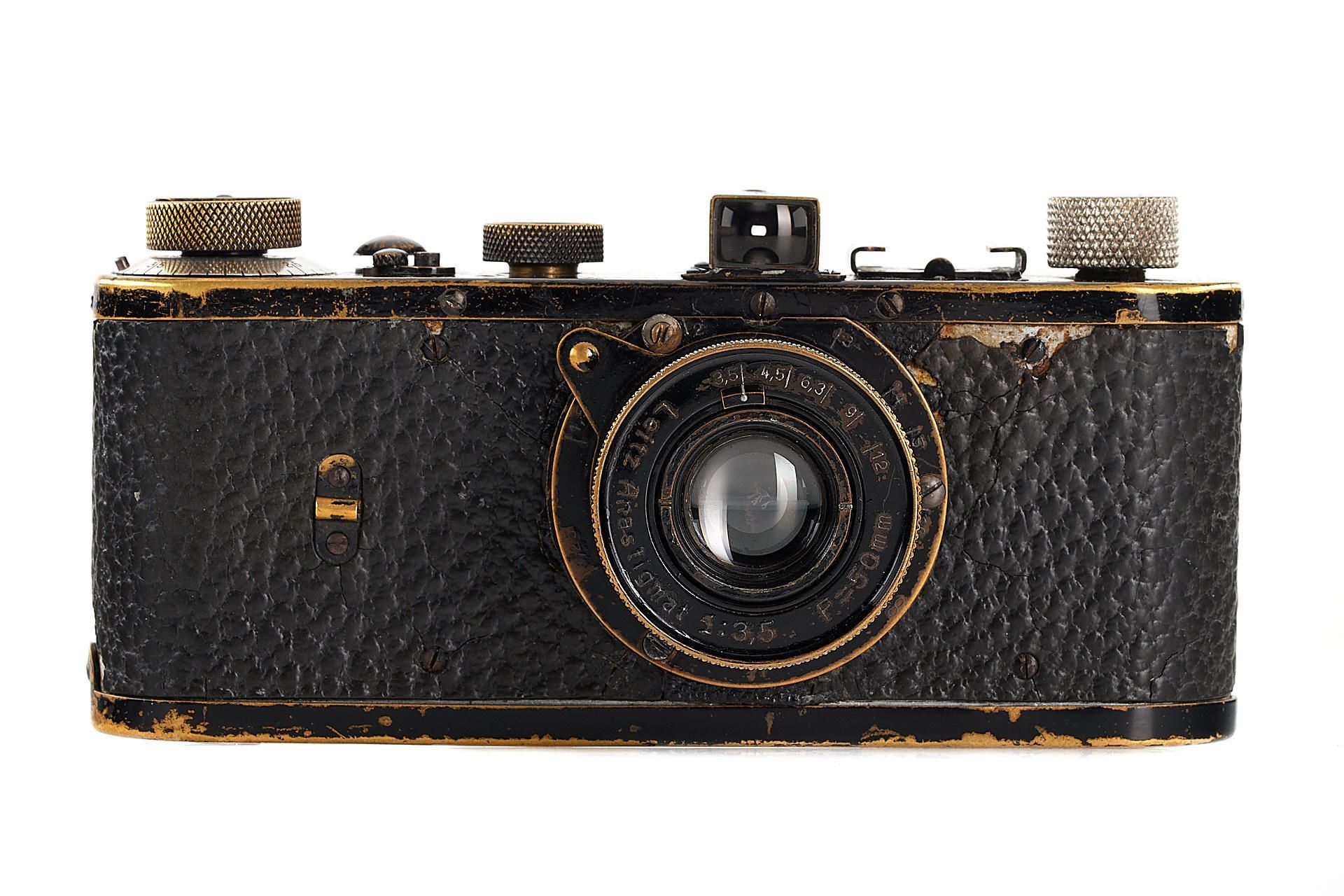
Quick Verdict: The most expensive camera ever sold is a 1923 Leica 0-Series No. 105, the personal prototype of designer Oskar Barnack. In June 2022 it reached €14.4 million, roughly $15 million, at the Leitz Photographica Auction in Wetzlar, Germany. Its value rests on three pillars: Barnack built and used it, fewer than two dozen were ever made, and it still works a century later. For serious collectors, no other 35mm camera carries this combination of provenance and scarcity.
Last updated: June 2026 | 7 min read
In This Article
The Most Expensive Camera Ever Sold: A Prototype Worth Millions

The most expensive camera ever sold is not a gold-plated showpiece or a diamond-studded novelty. Instead, it is a small, worn, black-and-nickel prototype from 1923 called the Leica 0-Series No. 105. On June 11, 2022, this single camera reached €14.4 million at auction in Wetzlar, Germany. Because the price shattered every previous record by a wide margin, it instantly became the benchmark against which all collectible cameras are measured.
For context, the camera sold for more than five times its pre-sale estimate of €2 to €3 million. The final figure also topped the previous record holder, a sister 0-Series, by roughly six times. So why would anyone pay the price of a mansion for a 99-year-old camera with no light meter, no autofocus, and a top shutter speed slower than a modern phone?
The answer comes down to who made it and what it started. Specifically, this Leica 0-Series belonged to Oskar Barnack, the engineer who invented the 35mm still camera and chose the 24x36mm frame still called full-frame today. If you shoot 35mm film or a full-frame digital body, your format traces directly back to this prototype. For collectors and historians alike, owning No. 105 means owning the seed of modern photography.
Key Facts at a Glance
| Detail | Specification |
|---|---|
| Camera | Leica 0-Series No. 105 |
| Year built | 1923 |
| Designer / owner | Oskar Barnack |
| Format | 35mm film, 24x36mm frame |
| Units produced | About 23 prototypes (1923-1924) |
| Hammer price | €12 million |
| Final price (with premium) | €14.4 million (about $15 million) |
| Auction | 40th Leitz Photographica Auction, Wetzlar |
| Date sold | June 11, 2022 |
| Condition | Original and in working order |
Leitz Photographica Auction
See the Record-Setting Camera Up Close
The 40th Leitz Photographica Auction sold this prototype for €14.4 million. Open the original lot listing for detailed photos and the full condition report on the camera.
Why This Is the Most Expensive Camera Ever Sold

Three factors push the Leica 0-Series No. 105 above every other collectible camera: provenance, scarcity, and condition. First, consider provenance. This was not a random unit off a production line; instead, it was Oskar Barnack’s own camera, and his name appears engraved on the viewfinder. Barnack photographed his family and daily life with it, then used those lessons to refine the production Leica I. As a result, No. 105 is the closest thing the camera world has to a founder’s first sketch.
Scarcity matters too. Ernst Leitz built only about 23 of these 0-Series prototypes across 1923 and 1924, and most disappeared, were scrapped, or wore out over the decades. Only a handful survive in any condition today, and Barnack’s personal example stands alone. Condition seals it, since No. 105 remains original and functional after roughly a century. Collectors pay enormous premiums for untouched, working examples, because any restoration would erase historical value.
Taken together, these traits explain why this Leica became the world’s most expensive camera rather than merely an expensive one. If you want the broader picture of how rare bodies reach these prices, our roundup of the strangest cameras ever made shows how unusual engineering and provenance drive collector demand.
Oskar Barnack and the Birth of 35mm

To understand the camera, you have to understand its maker. Barnack joined Ernst Leitz in Wetzlar in 1911 as a precision engineer. Because he suffered from asthma, he found the large glass-plate cameras of the era heavy and impractical for outdoor work. He set out to build something far smaller, using the 35mm cine film already running through movie projectors.
Around 1913 and 1914, Barnack built his first working prototype, later nicknamed the Ur-Leica. He turned the film sideways and doubled the standard cine frame to 24x36mm, which produced a larger negative and a more useful aspect ratio. This single decision created the format we still call full-frame. For the full arc of how this fits into photography’s development, our history of photography timeline traces the path from glass plates to digital sensors.
The First World War delayed everything, so the 0-Series prototypes did not arrive until 1923. After Barnack and Leitz tested these roughly two dozen units in the field, the company committed to production. The Leica I launched in 1925 and became a commercial success, putting fast, candid photography into the hands of photojournalists and street shooters. Without Barnack’s prototype, the entire 35mm system might never have reached the market.
From the Auction Archive
Inspect Oskar Barnack’s Personal Leica
Browse the official lot page for No. 105, including high-resolution images of the engraved viewfinder and every angle of the 1923 prototype.
Inside the €14.4 Million Auction
The sale took place at the 40th Leitz Photographica Auction, held at Leitz-Park in Wetzlar on June 11, 2022. Leica timed the event to mark the auction house’s 20th anniversary, and No. 105 served as the headline lot. Bidders from more than 100 countries follow these twice-yearly sales, so interest ran high before the gavel even lifted.
Leica set a pre-sale estimate of €2 to €3 million, which already reflected the camera’s significance. However, bidding blew past this range quickly. The hammer finally fell at €12 million, and once the 20% buyer’s premium was added, the total reached €14.4 million. In US dollars at the time, the figure landed near $15 million.
For comparison, the previous record holder was another 0-Series, No. 122, which sold for €2.4 million at the same auction house in 2018. Barnack’s personal connection to No. 105 explains the enormous gap between the two. The gap grows even wider when you line No. 105 up against every other record-setting Leica.
No. 105 vs. Other Record-Setting Leicas

The 0-Series family dominates the list of the most expensive cameras in the world, but No. 105 stands apart even within it. No. 122, the prior champion, is a beautiful and original survivor, yet it lacks a direct owner story. Because No. 105 carries Barnack’s name and personal history, it earns a premium no other example will match. As a result, it ranks as the most expensive Leica camera in history.
Beyond the 0-Series, the most expensive Leica camera tier includes special editions and famous-owner pieces. A 1957 Leica MP Black Paint, for instance, sold for around €1.2 million, while a gold-plated 1932 Leica Luxus II reached roughly £512,000. Each of these is rare and desirable, however none approaches the founding-artifact status of Barnack’s prototype.
If you are mapping out the broader collector landscape, our list of the best cameras of all time puts the Leica system in context alongside the other bodies behind modern photography. The 0-Series sits at the start of this lineage.
Final Verdict
The Leica 0-Series No. 105 earns its title as the most expensive camera ever sold through a rare alignment of history, scarcity, and condition. For museums, institutions, and the wealthiest collectors, it represents the single most important object in 35mm photography. Above all, it proved 35mm film would work.
For everyone else, the realistic takeaway is different. You will never bid on No. 105, and even with the means, it belongs behind glass rather than around your neck. The trade-offs tied to a multimillion-dollar artifact, from insurance to the inability to shoot it, make it a stewardship project rather than a tool.
Still, the camera offers something valuable to every photographer: a reminder of where the gear came from. Barnack solved a practical problem, and his solution reshaped an entire medium. Because of this, the 0-Series matters far beyond its price tag.
If the story has you wanting to shoot the format Barnack created, start with an accessible classic instead. A used Leica M body, or one of the affordable 35mm rangefinders in our best 35mm film cameras guide, lets you hold a piece of this lineage without a museum budget.
The Record Holder
Revisit the €14.4 Million Sale
See full provenance, specifications, and photography for the record-setting prototype on the official Leitz Auction lot page.
Frequently Asked Questions
Which camera holds the all-time auction record?
The record holder is the Leica 0-Series No. 105, a 1923 prototype owned by designer Oskar Barnack. It sold for €14.4 million, about $15 million, at the Leitz Photographica Auction in Wetzlar, Germany, in June 2022.
How much did the Leica 0-Series No. 105 sell for?
The camera hammered at €12 million, and with the 20% buyer’s premium added, the final price reached €14.4 million. At 2022 exchange rates, the total came to roughly $15 million.
Why is the Leica 0-Series so valuable?
Its value comes from provenance, scarcity, and condition. Barnack personally built and used this unit, only about 23 prototypes exist, and No. 105 still works after a century. Together, these traits make it the world’s most expensive camera.
Who was Oskar Barnack?
Oskar Barnack was a German precision engineer at Ernst Leitz who designed the first practical 35mm still camera. He chose the 24x36mm frame now known as full-frame, so his work underpins both 35mm film and modern full-frame digital cameras.
How many Leica 0-Series cameras still exist?
Ernst Leitz built about 23 of the 0-Series prototypes in 1923 and 1924. Many were lost or worn out over time, so only a small number survive today, which adds to the rarity behind the record price.
Is a Leica 0-Series replica available to buy?
Yes. Leica has produced modern replica and tribute editions inspired by the 0-Series, and these trade for far less than an original. An authentic 1923 prototype, however, remains essentially unobtainable outside major auctions.

