



Quick Facts:
- Announcement: Insta360 Cameraman, a long-term AI photography robot vision
- Announced: July 9, 2026, on Insta360’s 11th anniversary
- Company: Insta360 (Arashi Vision Inc.)
- Founder and CEO: Liu Jingkang, known as JK
- Target robot launch: Second half of 2027
- Team: Nearly 100 people, including hires from DJI, Ecovacs, and Horizon Robotics
- Key intermediate product: Insta360 Luna Ultra, $769.99, launched June 2026
- Best for: Photographers and creators tracking AI’s growing role in camera gear
9 min read
In This Article
- Overview
- What Insta360 Announced
- Insta360’s Cameraman Vision, Explained
- Luna Ultra: The First Step Toward Cameraman
- Why Photographers Are Sounding the Alarm
- The Privacy Problem With an Invisible Camera
- Where This Fits in the Camera Industry Right Now
- What This Means for Working Photographers
- Final Thoughts
- Frequently Asked Questions
Overview
Insta360 wants a robot to take your job. On July 9, 2026, the company marked its 11th anniversary. It revealed Insta360 Cameraman, a long-term vision for an autonomous photography robot. The concept: a machine designed to compose, track, and shoot the way a professional photographer does. Founder and CEO Liu Jingkang, known to fans as JK, wants a camera built to disappear from the process entirely. His goal is simple: leave the photographer free to live in the moment instead of filming it.
The announcement is not a product launch. Insta360 has not shown a working Cameraman robot, and it has not set a price. Instead, the company published a roadmap tying a decade of camera, audio, and AI chip development to one long-term goal. Liu says the plan has moved forward for 18 months. A team of nearly 100 people works toward a first physical robot. The group includes hires from DJI, Ecovacs, and Horizon Robotics, with a target of the second half of 2027.
For working photographers, timing matters as much as technology. Insta360 released the Luna Ultra, a dual-lens gimbal camera, in June 2026, one month before the Cameraman reveal. Insta360 now describes the Luna Ultra as an intermediate step toward the robot vision. The camera many creators already own doubles as an early preview of where the company wants to head next.
Below, find a breakdown of what Insta360 announced and how the Insta360 Cameraman concept works. The sections also cover why the news drew swift concern from photographers and privacy advocates, since the reaction has been immediate.
What Insta360 Announced
Insta360 used its 11th anniversary to confirm an official entry into robotics. The company also formed a dedicated robotics team. Executives framed the move as the next phase of a strategy started in 2015: capture more of a scene first, then automate how footage gets composed and edited. In an internal letter, Liu described the past decade as an effort to make cameras more capable across the board. He called the robotics push the next step, building cameras designed to move on their own.
Insta360 also published a diagram mapping its product lines to the parts of a robot. The company’s AI chip, in development since 2020, serves as the brain. Camera lines act as the eyes, while Wave and Mic Pro audio products serve as the ears. The Link conference camera provides neck articulation, and the Antigravity A1 drone stands in for the torso. Insta360 frames the robot Cameraman announcement as a natural extension of hardware it already builds. It’s not a sudden pivot into an unrelated business.
Insta360’s Cameraman Vision, Explained
Insta360 Cameraman is the working name for the company’s target robot. Specifically, the system is designed to frame shots, follow a subject, and capture footage with little to no direct input. Liu describes the goal in blunt terms. He wants a robot photographer capable of composing and capturing moments the way a skilled human operator would. The idea lets users stay present instead of managing gear.
Liu points to specific technologies Insta360 already ships as proof the idea has legs. AI-based image stitching, FlowState stabilization, subject tracking, automatic reframing, and on-device editing exist as separate product features today. Together, Liu argues, they show a camera increasingly able to perceive a scene and understand what matters in it. The camera already assists the person holding it, well before Insta360 has built a robot capable of doing so on its own.
Insta360 Luna Ultra: The First Step Toward Cameraman
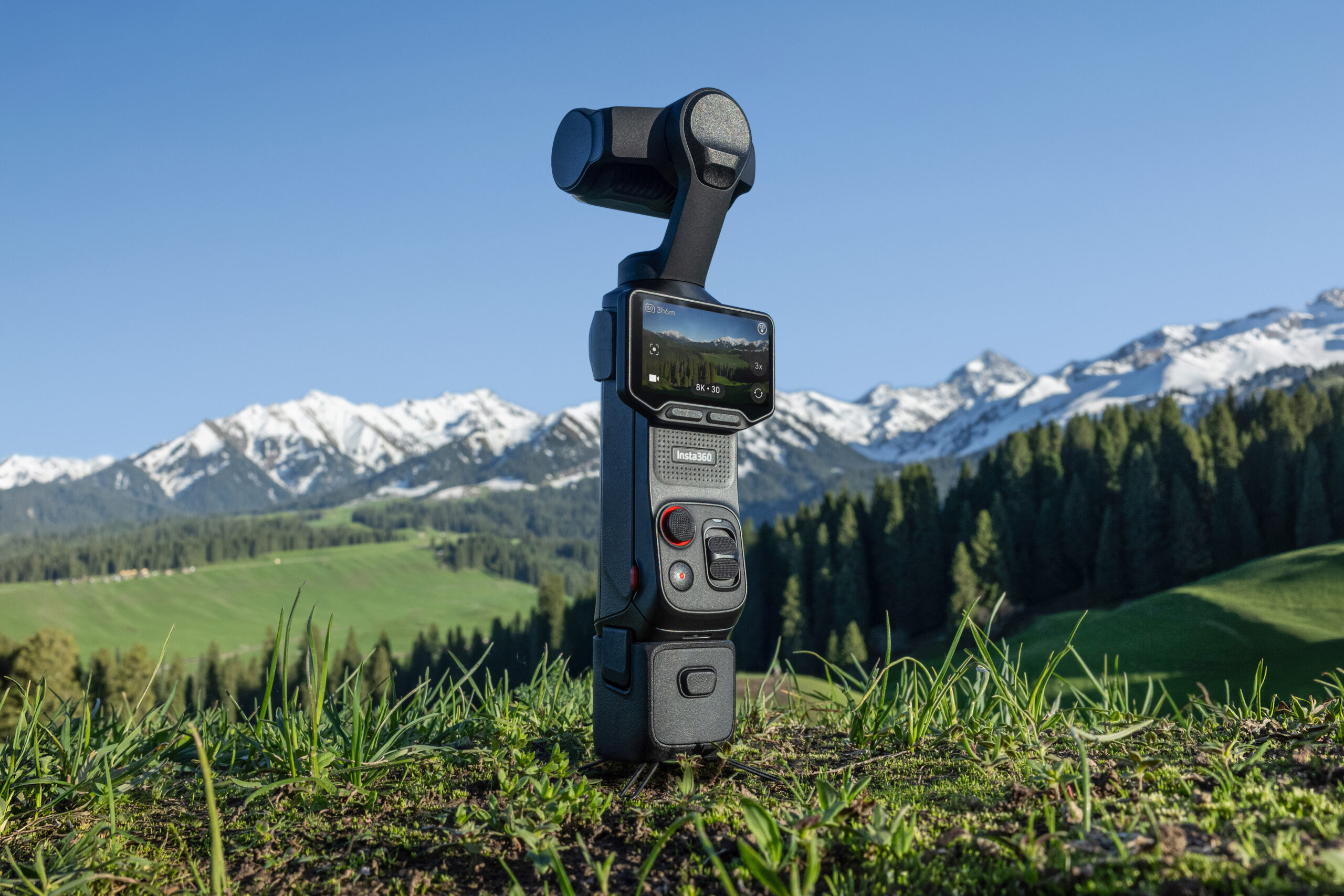
The clearest preview of Insta360’s robot ambitions sits on shelves already. Insta360 officially launched the Luna Ultra in June 2026 at $769.99. The company now calls it an important intermediate step toward the Insta360 Cameraman vision. Our team put the camera through a full hands-on review to see whether the framing holds up. We found the dual Leica-engineered lenses, 8K sensor, and three-axis gimbal stabilization deliver genuinely capable footage for a device this size, and Insta360 sells related gear like the X5 360 camera and Flow 2 Pro gimbal under the same Cameraman-building-block framing.
The Luna Ultra matters to the Insta360 Cameraman vision because of its behavior, not its specs. The camera tracks a subject, holds a composition, and adjusts framing with minimal input from the person holding it. Insta360 lists these functions as building blocks for a fully autonomous robot Cameraman system. The company has not confirmed which specific technologies will carry over to a physical robot. Still, Insta360’s own framing leaves little doubt the gimbal camera was designed with the larger vision in mind.
Insta360 Gear Building Toward Cameraman


Why Photographers Are Sounding the Alarm
Not everyone reading Insta360’s roadmap sees progress. Some photographers who cover camera technology have responded with open concern instead. Their argument centers on creativity, since photography is a human pursuit. Handing composition and timing to a robot risks removing the photographer from the process entirely. The reaction echoes a debate over whether AI will replace photographers PhotographyTalk has covered before.
The concern isn’t only about jobs. Photography rewards a trained eye for light, timing, and composition, skills a robot might approximate without truly replicating. An autonomous camera captures a technically clean frame. It still misses the split-second decision a photographer makes, based on context a machine doesn’t have. Insta360’s own framing acknowledges this gap today. Liu describes current products as early versions of the Cameraman vision, not a finished replacement for a human operator. Will AI replace photographers? Not yet, and not entirely, based on Insta360’s own roadmap.
The Privacy Problem With an Invisible Camera
Liu’s vision for Insta360 Cameraman goes further than automation. He describes the long-term goal for cameras as becoming imperceptible, even disappearing, until recording no longer takes any active effort. For photographers and their subjects alike, this framing raises a harder question than automation ever does. Who consents to being filmed by a camera nobody notices?
The concern has precedent. Meta’s Ray-Ban smart glasses include a small LED, lit while recording, meant to signal to bystanders when a camera is active. Modders found a way to disable this light for a fee, according to PCMag’s reporting on the workaround. Meta responded by announcing hardware and software safeguards against tampering, per reporting from The Verge. A roaming robot photographer built around the idea of disappearing from view raises the same consent question at a larger scale. Notably, bystanders in public spaces already struggle to identify when a discreet camera is recording them.
Where This Fits in the Camera Industry Right Now
Privacy concerns aside, Insta360’s robotics announcement also lands during a rough stretch for the company’s stock. Shares have fallen more than 60% from their September 2025 peak, according to Pandaily’s coverage of the anniversary announcement. The robotics reveal reads, in part, as an effort to show investors a growth path beyond traditional cameras. Insta360 still holds a commanding position in its core market, with a 67.2% share of the global consumer 360 camera segment as of 2023, per Frost & Sullivan data cited on Insta360’s own About page. Its action camera business also competes directly with GoPro and DJI.
DJI remains Insta360’s sharpest rival in the compact gimbal category the Luna Ultra competes in. PhotographyTalk previously compared the Luna line against DJI’s Pocket 4. This rivalry helps explain why Insta360 wants a bigger long-term differentiator than another gimbal refresh. Insta360 is also expected to keep investing in its 360-degree lineup, with rumors already circulating about the next Insta360 X6. For more Insta360 news as the Cameraman story develops, PhotographyTalk will track statements directly from Insta360’s own newsroom.

Insta360 Luna Ultra - 8K Vlogging Camera with Dual Leica Lenses, 12× Zoom, 1" Sensor, Detachable 2" Touchscreen, Triple AI Chip, Pocket Gimbal Camera for Vlog Photography-Cosmic Black
The gimbal camera Insta360 designed as the foundational step toward autonomous Cameraman robot vision.
- Dual Leica-engineered lenses
- 8K video sensor
- Three-axis gimbal stabilization
- AI subject tracking and automatic reframing
- 12x optical zoom
- Best suited for vlogging and content creation rather than traditional studio photography
- Steep learning curve for maximizing AI features
What This Means for Working Photographers
Nothing about Insta360 Cameraman changes how photographers work today. Insta360 has not shipped a robot and has not confirmed pricing. The company has also not committed to a firm release date beyond its second-half-2027 target. Photographers shopping for gear right now still choose between existing tools, and the Luna Ultra remains one of them: a camera you point and control, not a robot operating on its own.
What the announcement does change is the direction gear will move in over the next few years. Subject tracking, automatic reframing, and AI-assisted editing already ship in consumer cameras. Insta360’s roadmap suggests these features will keep expanding rather than staying where they are. Photographers who build a business on composition and timing have a reasonable window to adapt. They still get to learn where automation genuinely helps and decide which parts of the work to keep doing by hand.
Final Thoughts
Insta360’s Cameraman announcement is a statement of intent, not a product on the market. The company has spent 11 years building cameras designed to see more of a scene and understand what’s in it. Liu’s robotics reveal ties this history to a specific, ambitious goal: a robot photographer needing no operator at all.
For photographers, the honest read sits between two extremes. The Insta360 Cameraman project is years away and unproven. Specifically, real technical hurdles remain unaddressed publicly, including cost and reliability, on top of the creative judgment a trained photographer brings to a shoot, judgment no spec sheet captures. Meanwhile, dismissing the announcement outright ignores how far camera automation has come in products people use today.
The privacy question deserves equal weight. A camera designed to disappear from view raises consent problems outlasting any debate about job displacement. Insta360 has not yet detailed how a roaming robot would address them. Liu says the company will respond to follow-up questions on the topic. How Insta360 answers matters as much as the robot itself.
PhotographyTalk will keep tracking Insta360’s robotics program as more details surface. This includes any hands-on look at hardware, pricing, or a firmer release date ahead of the 2027 target. Will AI replace photographers, or simply hand them new tools? Insta360 leaves the question open, and how it answers will shape one of the bigger Insta360 news stories of 2026.
Frequently Asked Questions
What is Insta360 Cameraman?
Cameraman is Insta360’s long-term vision for an autonomous photography robot designed to compose, track, and shoot footage with minimal human input. The company announced the concept on July 9, 2026, and has not yet shipped a working device.
When will Insta360’s Cameraman robot launch?
Founder Liu Jingkang says the company targets a first physical robot for the second half of 2027. Pricing and mass-production details remain unconfirmed.
Is the Insta360 Luna Ultra related to Cameraman?
Yes. Insta360 launched the Luna Ultra in June 2026 and now calls it an important intermediate step toward the Insta360 Cameraman vision, because of its subject tracking and automatic framing features.
Will AI replace photographers?
Not in the near term. The Insta360 Cameraman project remains unproven, and automated framing still lacks the contextual judgment a trained photographer brings to a shoot. Automation looks more likely to change parts of the job than eliminate it outright.
Why are photographers worried about Insta360’s robot Cameraman vision?
Beyond job concerns, photographers have raised questions about privacy. Liu describes a long-term goal of cameras becoming imperceptible during recording. Critics point to the Meta Ray-Ban glasses recording-light controversy as a preview of the consent issues an always-on camera raises.
What company makes Insta360?
Insta360 is the consumer brand of Arashi Vision Inc., founded by Liu Jingkang in 2015. The company holds a leading share of the global consumer 360 camera market and also builds action cameras, gimbals, and conferencing hardware.
Sources: Insta360 (insta360.com, insta360.com/about, store.insta360.com), TechNode, Pandaily, Gasgoo, PCMag.

