


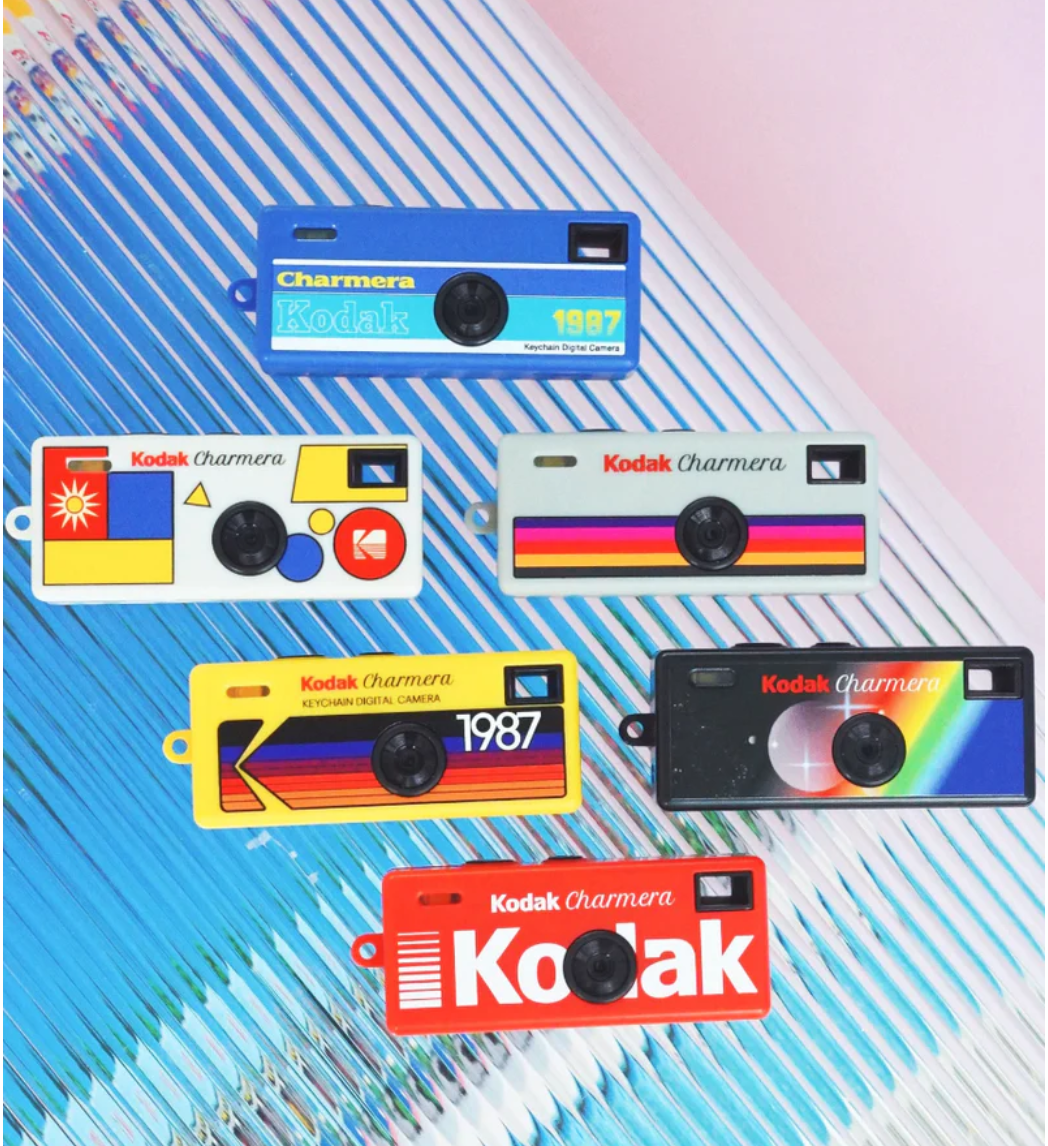
Quick Facts:
- Product: Kodak Charmera Millennium Edition (by Reto)
- Sensor: Type 1/4 CMOS
- Lens: 35mm equivalent, f/2.4
- Resolution: 1.6MP JPEG (1,440 x 1,080)
- Video: AVI format, up to 30fps
- Storage: microSD, 1GB to 128GB
- Power: Built-in battery, USB-C charging
- Price: $35 per blind box, $210 for a set of six
- Best for: Collectors and lo-fi shooters who love Y2K style
8 min read
In This Article
Kodak Charmera Millennium Edition Overview: Y2K Nostalgia in Your Pocket
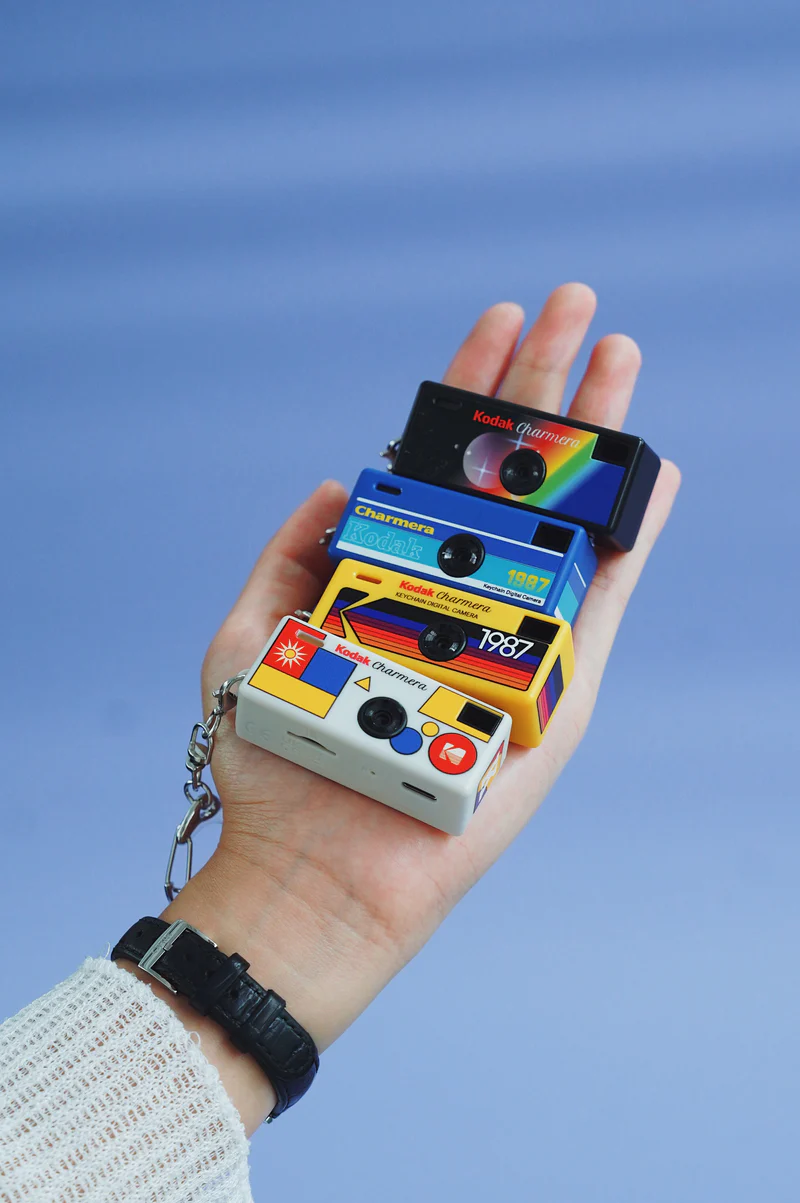
The Kodak Charmera Millennium Edition takes the viral blind-box Kodak keychain camera and reskins it for the year 2000. Reto, the company behind the original Charmera, built this refresh around Y2K nostalgia, glossy metallic finishes, and early-internet visual effects. The hardware stays familiar, yet the digital experience shifts hard toward 2000s-era filters and frames. Because every unit ships inside a sealed blind box, the mystery of which color you get drives much of the appeal.
This release speaks to two audiences. First, collectors who chased the original Charmera and want the next variant in the lineup. Second, younger shooters drawn to lo-fi digital photos and retro design. Since the camera sells in blind boxes, the experience blends photography with the thrill of an unboxing. Reto set each box at $35, while a full set of six costs $210.
Picture a keychain camera small enough to clip onto a bag strap. You point, you press, and you get a 1.6-megapixel JPEG with a deliberately rough, early-digital look. Notably, the Millennium Edition layers on frames and filters modeled after the year 2000, so your shots carry video-player overlays, old TV-tube effects, and pixelated color washes. Instead of chasing sharpness, this little camera rewards a playful, low-stakes approach to shooting.
Key Specs at a Glance
The Millennium Edition keeps the same core hardware as the first run. For shoppers comparing options, here are the full specifications in one place.
| Specification | Details |
|---|---|
| Image sensor | Type 1/4 CMOS |
| Lens | 35mm equivalent, f/2.4 fixed aperture |
| Photo resolution | 1.6MP JPEG (1,440 x 1,080 pixels) |
| Video | AVI format, up to 30 frames per second |
| Storage | microSD card, 1GB to 128GB (not included) |
| Power | Built-in rechargeable battery, USB-C |
| Filters | 7 total: black and white, cool, warm, plus 4 pixel filters |
| Frames | 4 new Y2K-themed frames |
| Colors | 6 base colors plus 1 secret mirror silver |
| Price | $35 per box, $210 per set of six |
What’s New in the Millennium Edition
The shape and sensor match last year’s originals, so the upgrade lives entirely in software and styling. Reto rebuilt the on-camera experience to mirror the dawn of the internet age. Specifically, the company added a fresh suite of 2000s-era filters and frames, including a video-player interface, old TV-tube effects, and pixelated digital looks.
You get four new frames in total, each leaning into the glossy, high-contrast graphics of the era:
- A green pixel-art border styled like a retro computer screen
- An orange Kodak sticker frame loaded with early-camera UI icons
- A vintage Kodak software window framing your shot
- Playful Kodak stickers and stars scattered across the image
On the filter side, the Millennium Edition offers seven options. Three cover the classics: black and white, cool, and warm. The other four go further with so-called pixel filters in coral, honey, teal, and violet. These pixel modes add a lo-fi, blocky texture, similar in spirit to the retro looks behind the retro film-look camera bundle from Insta360. The variety here is generous for such a tiny sensor. Together, these filters and frames define the Y2K identity of the new edition.
The Blind-Box Format and the Secret Mirror Silver
Reto keeps the blind-box mechanic at the center of the Kodak Charmera keychain experience. You buy a sealed box without knowing which color sits inside, so every purchase carries a small gamble. This format fueled the original run, which sold out in 24 hours after launch. As a result, the chase, not only the photos, became the product.
The new series ships in six base colors. Beyond those, Reto hid one secret variant: a mirror silver finish with a reflective, chrome-like body. Collectors treat this chase camera as the prize of the set, since it appears far less often than the standard colors. For anyone who enjoyed building a set the first time around, the secret silver gives a clear new target.
If the build-your-own appeal pulls you in, the format echoes other novelty designs like the DIY keychain camera projects gaining traction with hobbyists. Both trade outright image quality for personality and play. Here, though, the surprise lives in the box rather than the assembly.
Image Quality and Sample Photos
Manage your expectations on sharpness, because the numbers stay modest. A Type 1/4 CMOS sensor paired with a 1.6-megapixel output produces soft, grainy images by design. The 35mm f/2.4 lens has no zoom and no manual focus, so you frame, hold steady, and shoot. For a true Kodak Charmera review of the output, think disposable-camera energy rather than smartphone clarity.
Reto shared sample photos from the camera, and they tell the story well. A llama on a green hillside shows muted color and a gentle haze across the frame. Meanwhile, an arcade scene and a ferris-wheel close-up carry the slightly washed, low-resolution charm people expect from early digital cameras. The frames and filters then push those images further into Y2K territory. Even so, the base photo stays low-resolution, so the effects do the heavy lifting.
This look has real demand right now. The same nostalgia driving the retro point-and-shoot price surge also feeds interest in lo-fi digital shooters. For social posts and casual memories, the rough texture becomes the appeal. Still, no one should buy this expecting prints or professional results.
Price and Where to Buy

Reto sells the Kodak Charmera Millennium Edition through its official store. A single blind box costs $35, and a full set of six runs $210. Memory cards are not included, so budget for a microSD card between 1GB and 128GB before your first shoot. You charge the built-in battery over USB-C, which keeps running costs low. As a pocketable Kodak keychain camera, it asks for almost no upkeep.
Because the format stays blind-box only, buying the six-pack guarantees the base colors but still leaves the secret silver to chance. For comparison, this pricing sits a notch above other novelty designs like the Starbucks Y2K retro digital camera, which launched around $28. You buy directly through Reto’s official Kodak Charmera store online.
Millennium Edition vs. the Original Kodak Charmera
In a Kodak Charmera review of both editions, the choice comes down to looks and effects, not performance. Both share the same sensor, the same 35mm f/2.4 lens, and the same 1.6-megapixel output. If you own the original and shoot mainly for the raw lo-fi image, the upgrade adds little on pure quality.
The Millennium Edition wins on personality. Four Y2K frames and four pixel filters give you creative options the first run never offered, and the metallic colorways feel fresh. Meanwhile, the original leans on its 1987 Kodak Fling inspiration, with a more straightforward retro vibe. Collectors who want the newest chase variant, the secret mirror silver, have only one path here.
For a first-time buyer, the Millennium Edition is the stronger pick. You get the broader filter and frame set at the same $35 price, so the newer release simply offers more. Owners of the original should decide based on whether the Y2K styling and pixel filters justify a second purchase. For collectors, the secret silver alone often settles the question.
Final Take
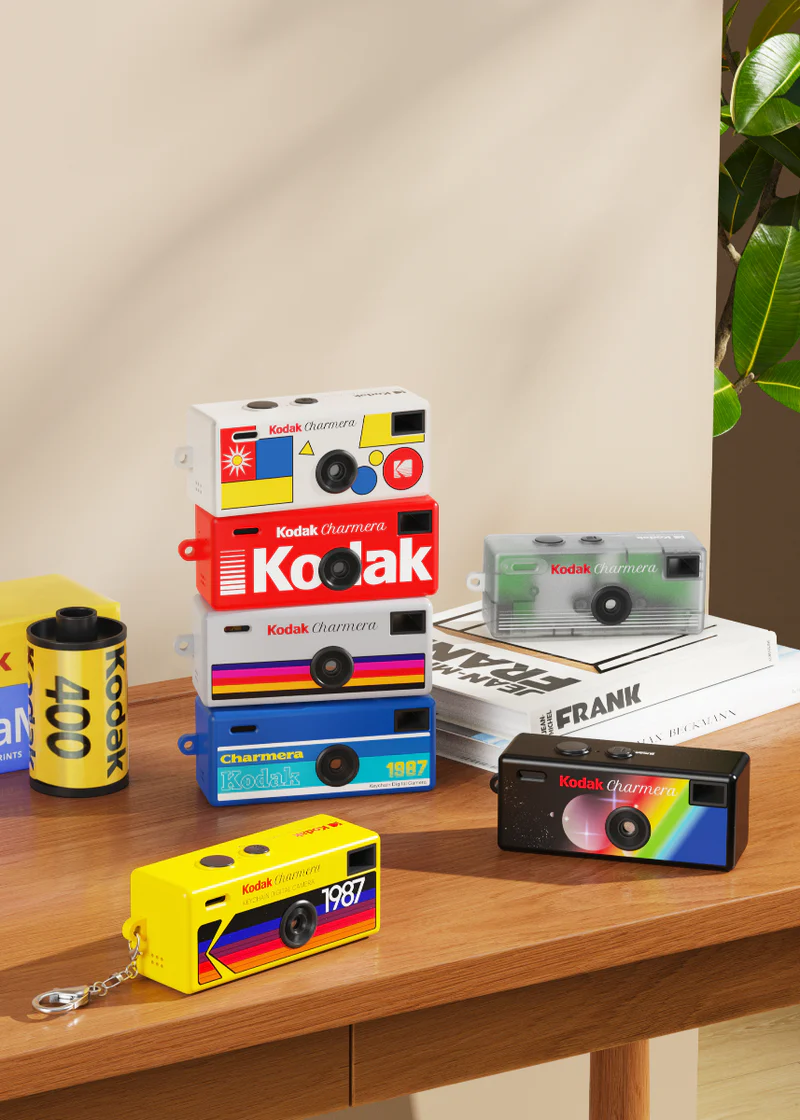
The Kodak Charmera Millennium Edition does exactly what a follow-up should. Reto kept the proven hardware, lowered the risk, and poured the effort into styling and software. For collectors and Y2K fans, the four new frames, seven filters, and secret mirror-silver camera give plenty of reasons to chase a box at $35.
The trade-offs stay the same as before. A 1.6-megapixel sensor and a fixed-focus lens mean soft, grainy images, so anyone after sharp results should look elsewhere. The blind-box model also means you trade certainty for surprise, which suits collectors more than shooters who want a specific color on day one.
For most buyers, the appeal lives in the fun rather than the photos. If you loved the original Charmera camera or you enjoy the lo-fi digital aesthetic, this edition earns a spot on your keychain. Shooters who need dependable image quality in a small body should instead consider a used compact camera or a modern point-and-shoot.
Frequently Asked Questions
Where do you buy the Kodak Charmera Millennium Edition?
Reto sells the Millennium Edition through its official online store. You buy blind boxes individually or as a set of six. At launch, the official store is the main source, so check there first.
How much does the Kodak Charmera Millennium Edition cost?
Each blind box costs $35, and a set of six costs $210. Memory cards are sold separately. Factor in a microSD card before your first shoot, since the camera needs one to save photos.
What is the secret Kodak Charmera?
The secret variant is a mirror silver camera with a reflective, chrome-like body. It appears far less often than the six base colors. Collectors treat this chase camera as the rarest find in the Millennium set.
What are the Kodak Charmera specs?
The Kodak Charmera keychain uses a Type 1/4 CMOS sensor and a 35mm f/2.4 lens. It shoots 1.6-megapixel JPEGs at 1,440 x 1,080 and records AVI video up to 30fps. Storage runs on a microSD card from 1GB to 128GB.
What size SD card does the Kodak Charmera take?
The camera accepts microSD cards between 1GB and 128GB. A card does not come in the box, so buy one separately. Even a small card holds thousands of these low-resolution photos.
How is the Millennium Edition different from the original charmera camera?
The hardware matches the original, but the software and styling change. You get four new Y2K frames, four pixel filters, glossy metallic colors, and a new secret mirror silver. The sensor, lens, and resolution stay identical.

